This product has been discontinued by the manufacturer. It's been replaced by the Garmin Fenix 6 Series, you may want to check out that review instead.
Last month at CES in Las Vegas, Garmin introduced their most advanced wearable device with an optical heart rate (HR) sensor in it – the Fenix3 HR. This device took Garmin’s Elevate optical HR sensor and added it to their hugely successful Fenix3 watch, which has become Garmin’s most advanced watch for multisport athletes (seemingly surpassing the higher end Epix along the way with new features).
I’ve been using a few different versions of the Fenix3 HR since that timeframe. However, this review is shaped on runs/rides/activities since the unit started shipping about three weeks ago. As such, it’s a final production device with the final firmware on it. Like always, once I’m done with this review I’ll wrap it back up and ship it back to the Garmin folks in Olathe, Kansas.
Within this period I’ve used the device virtually 24×7, attempting to understand all its ins and outs. I’ve taken it running, swimming, cycling, skiing, and done general gym workouts as well. Plus of course just using it as a day to day smartwatch. Based on that, I’ve got a pretty good grasp on how well it works (and where it stumbles).
However – I’m doing something a bit different with this review. Specifically, I’m just focusing on a few core features of the Fenix3 HR that are different from the Fenix3 that I’ve already reviewed. That’s because the Fenix3 has a massive feature set. Realistically there are hundreds of features in the unit, all of which would take months to review again in full-depth. And realistically, 99% of those haven’t changed since the first edition. So rather than you have to wait till spring to tell you what you already know, I’m just going to focus on the new stuff. If you’re looking for some of the basics around how the Fenix3 works in general, swing on over to my existing Fenix3 In-Depth Review.
Sound good? Let’s get cooking!
Unboxing:
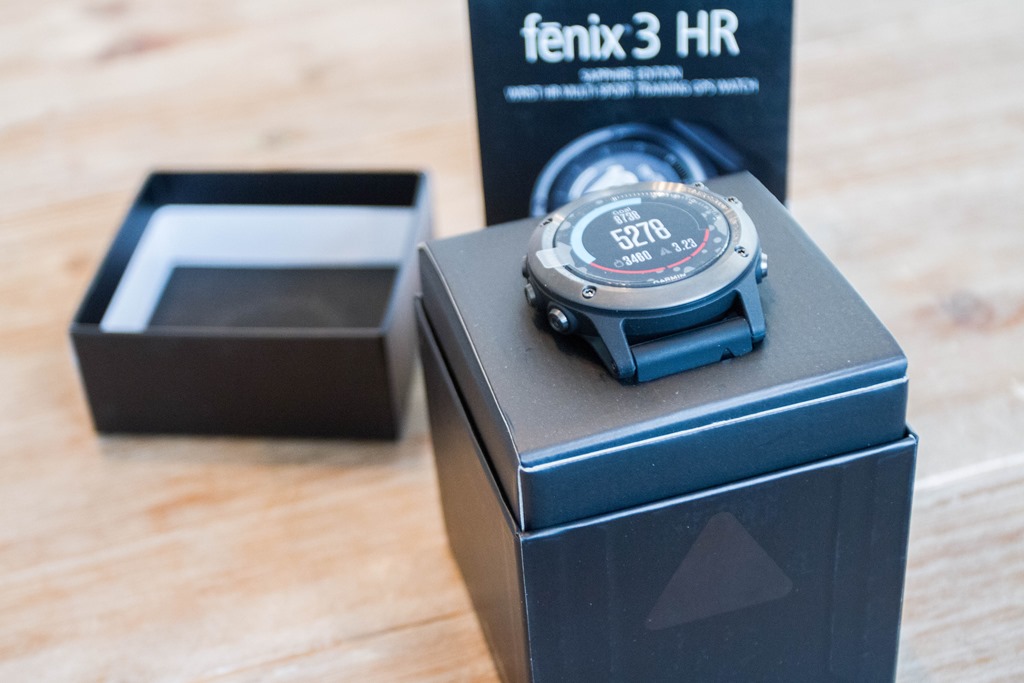
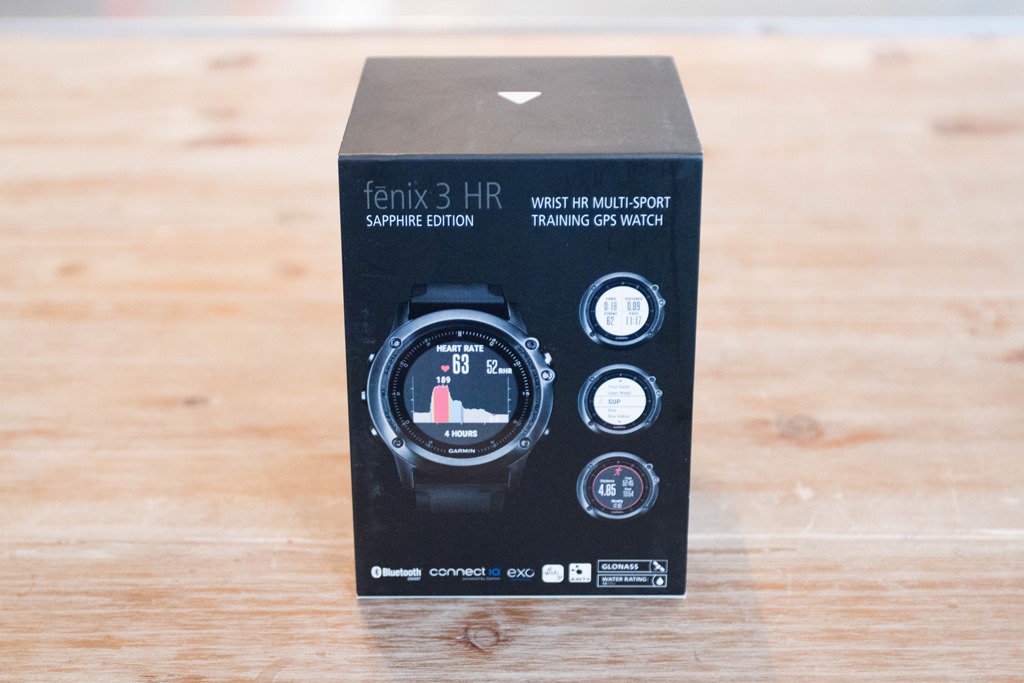
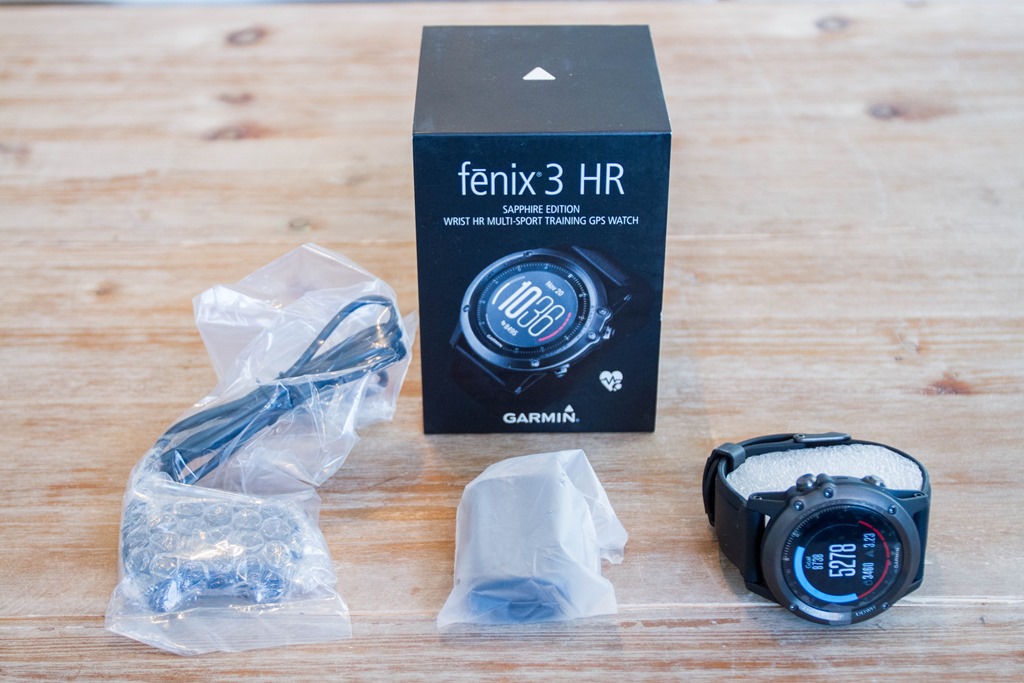
First up, we’ve got to get this thing unboxed. Thankfully, that’s a rather simple process.
After taking apart the three-piece box, you’ll find basically three things:
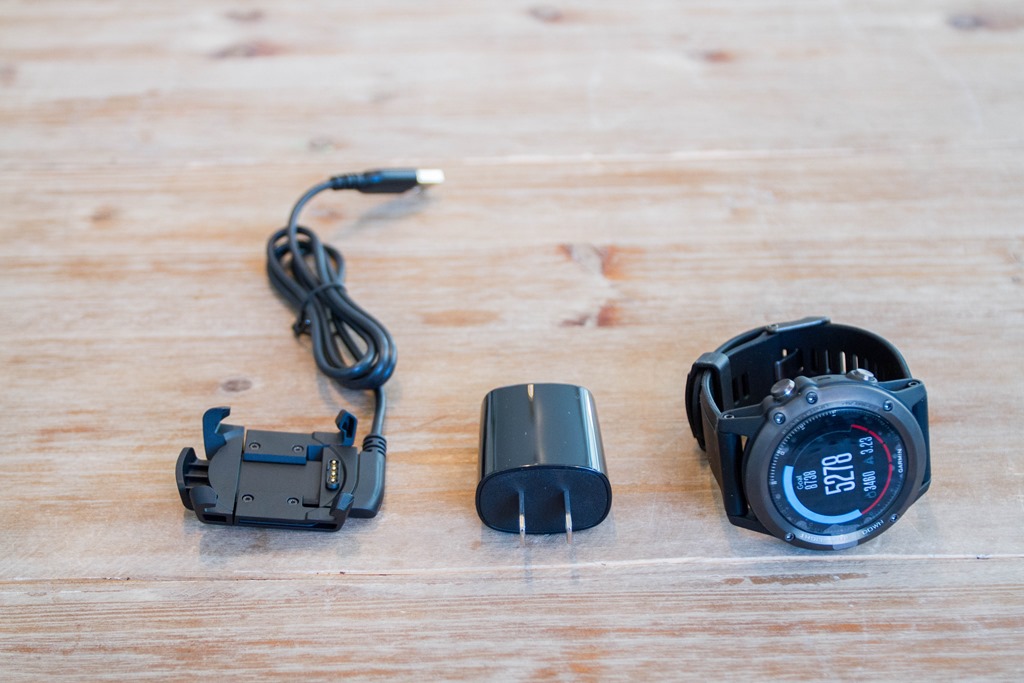
You’ve got the charging cable, the watch, and the power adapter.
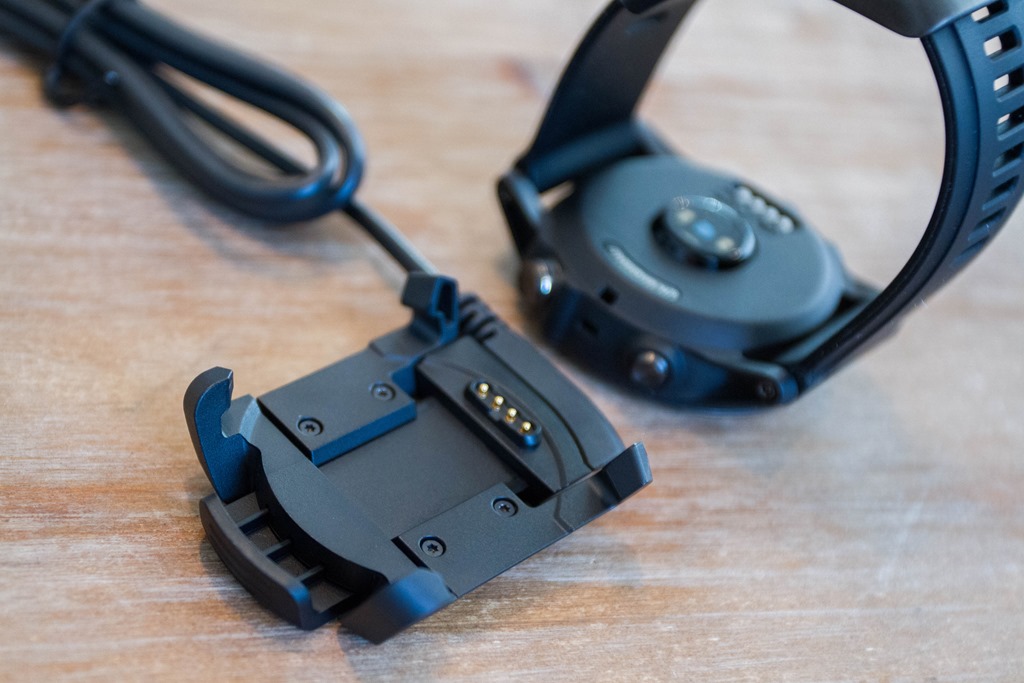
Starting with the charging clip, it’s very similar to the existing charging clip for the original Fenix3:
The difference though is that you’ll see a slight chunk taken out of the middle of it, which is where the optical sensor sprouts out of the watch.
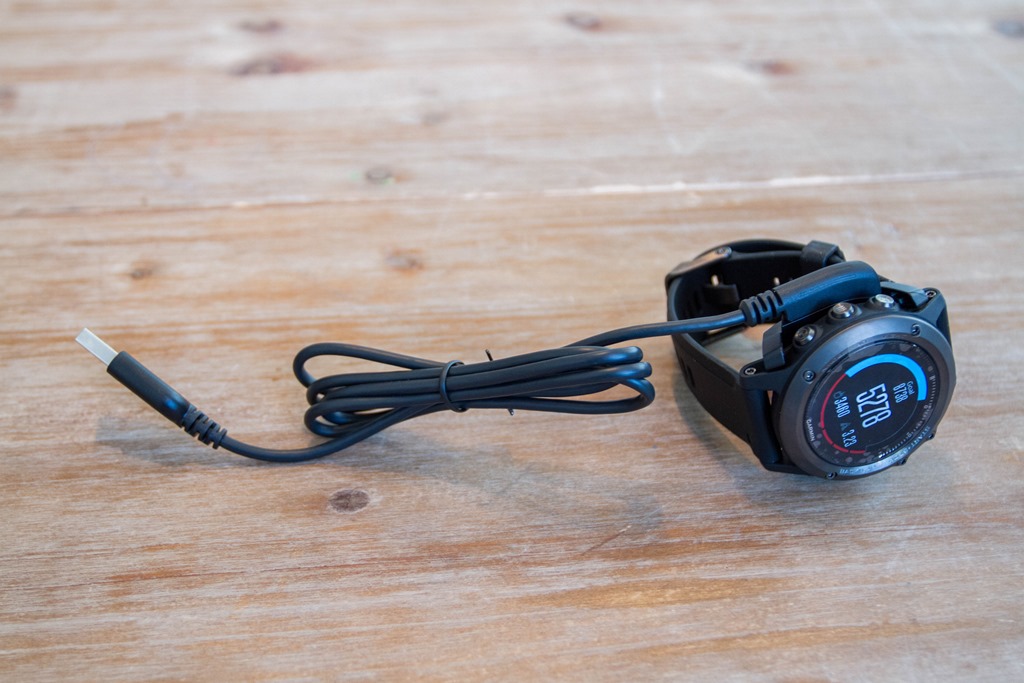
That said, in a pinch, you can actually use the original Fenix3 charging cable, just don’t snap in both sides (kinda leave it alone sitting there). Inversely, you can easily use the Fenix3 HR cable with a regular Fenix3. There’s also the small wall adapter. Or, you can just plug it into any USB port you find and it’ll happily charge.
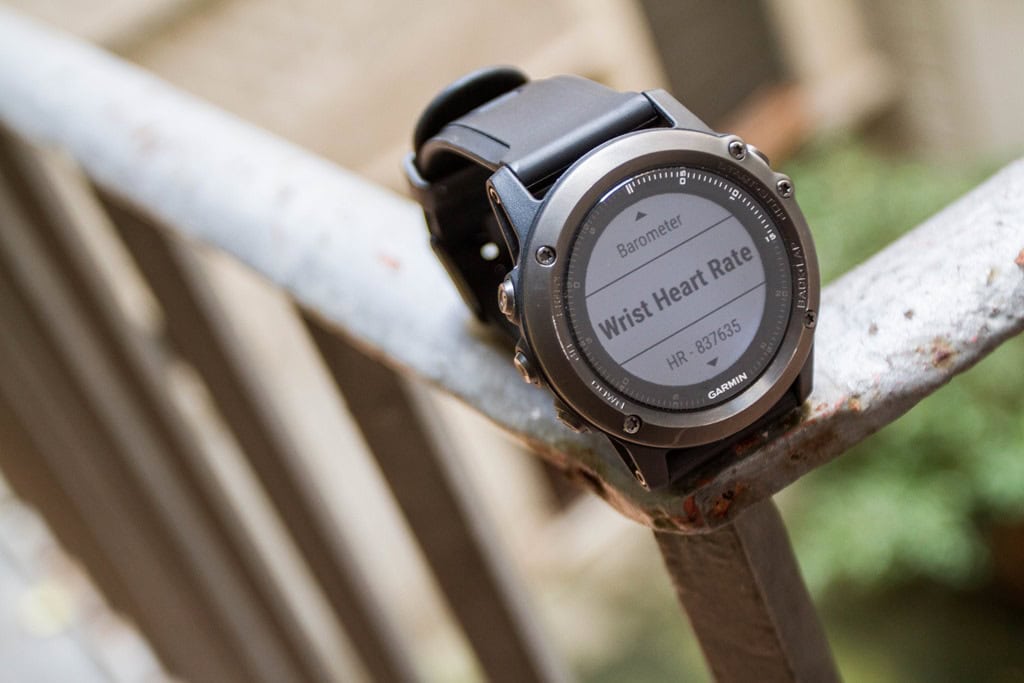
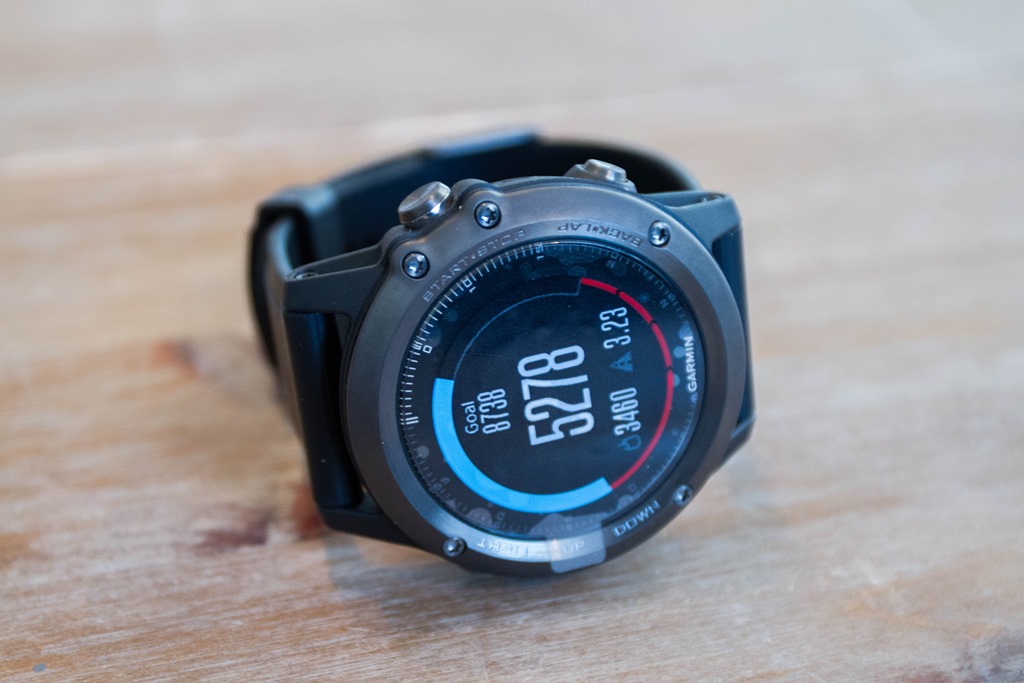
Last up you’ve got the watch itself. Basically, it looks just like the original Fenix3 from the front, but has the tell-tale optical HR sensor bump on the back.
Note that the Fenix3 HR comes in a few different strap variants. This review includes the regular strap, but there’s also a leather strap available. You can use pretty much any Fenix3 strap you’d like though, assuming it doesn’t block the optical sensor (more on that later).
Size & Weight Comparisons:
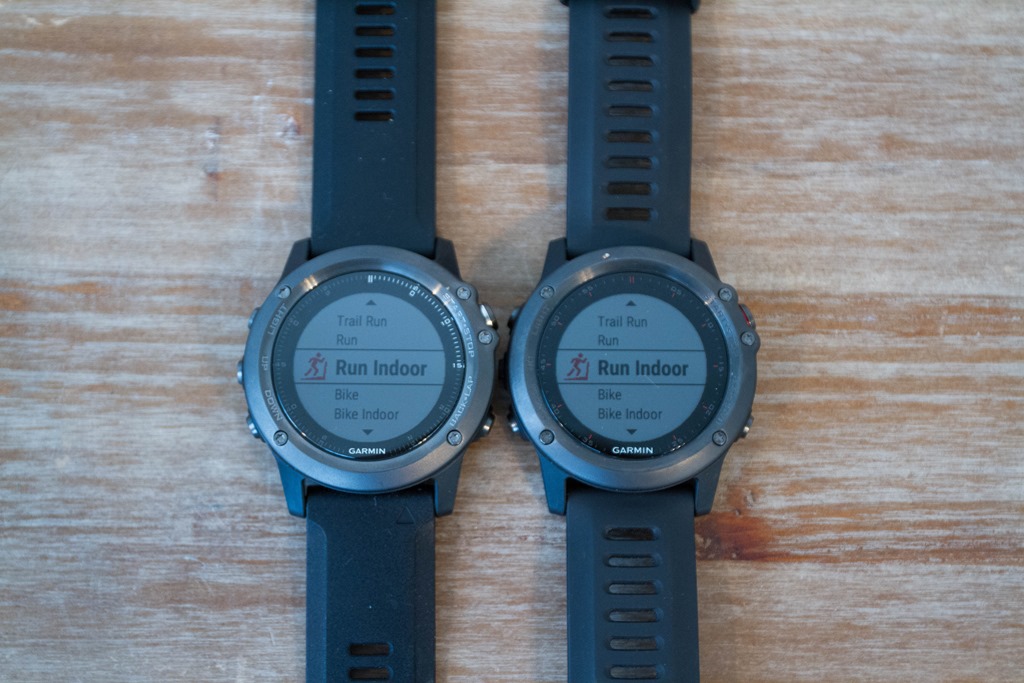
For the most part, the Fenix3 HR isn’t really that much different from the regular Fenix3. The exterior front-facing shell is identical. So much so that outside of some very subtle style tweaks to the front, you’d be unable to tell the difference apart unless you really knew what to look for.
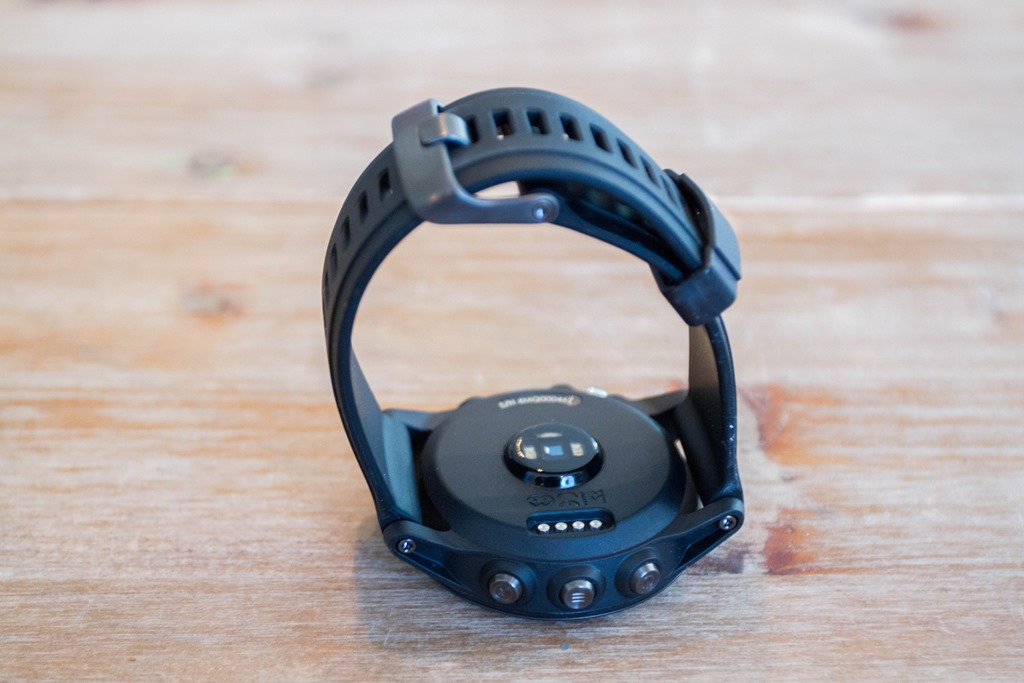
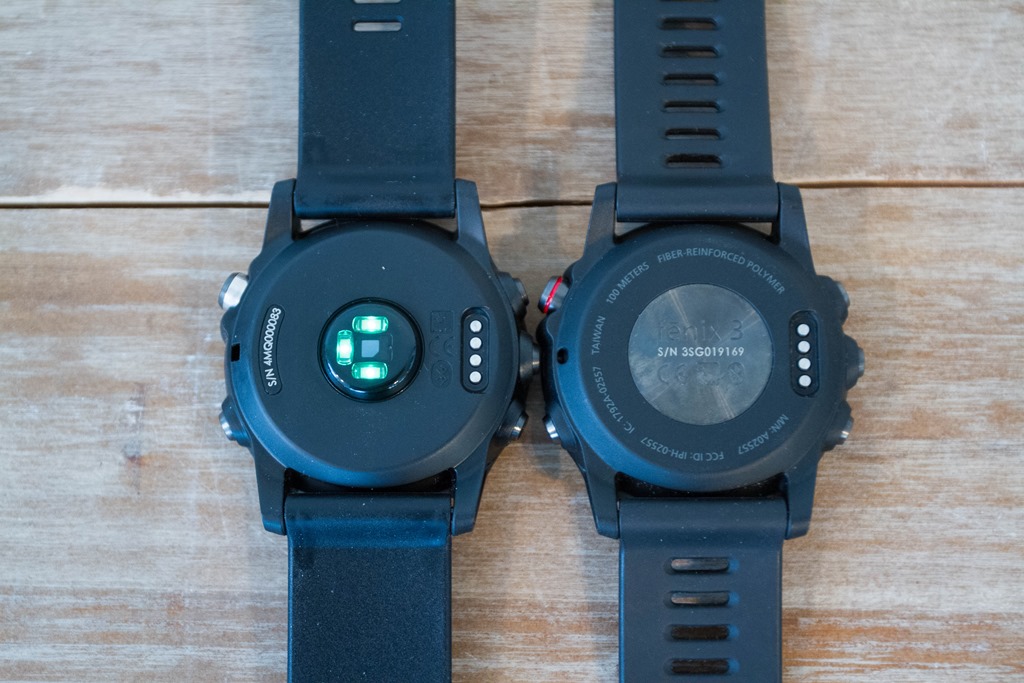
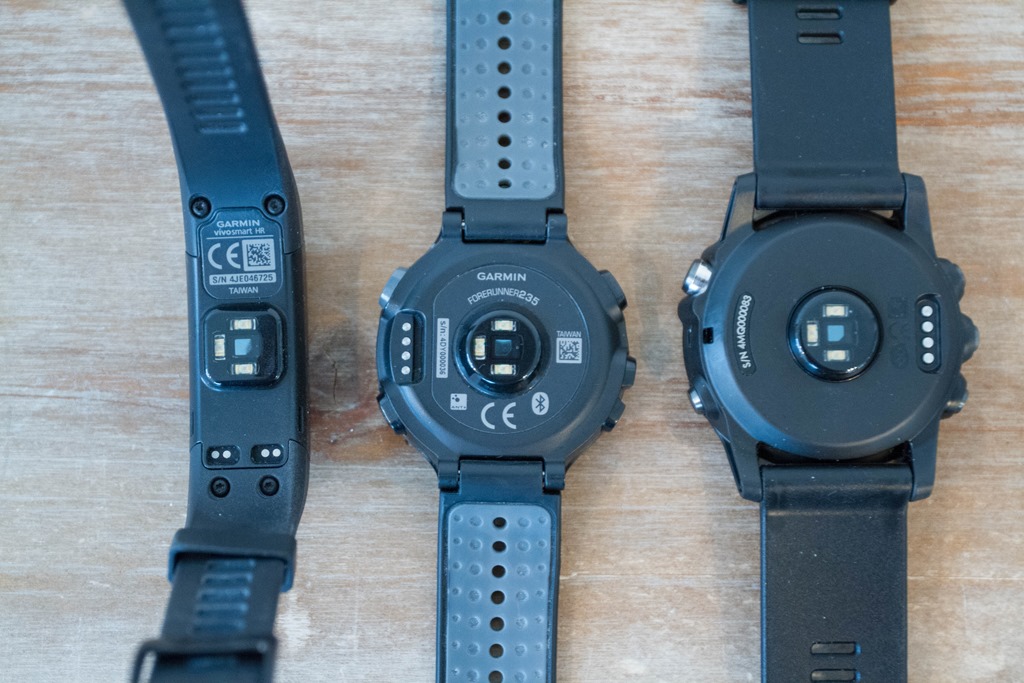
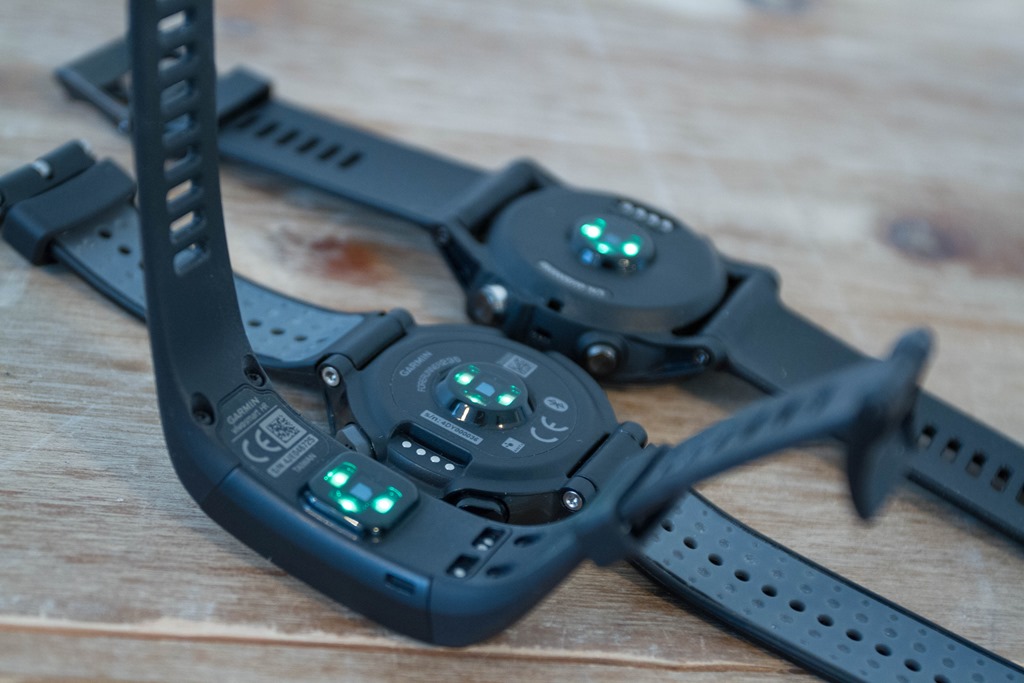
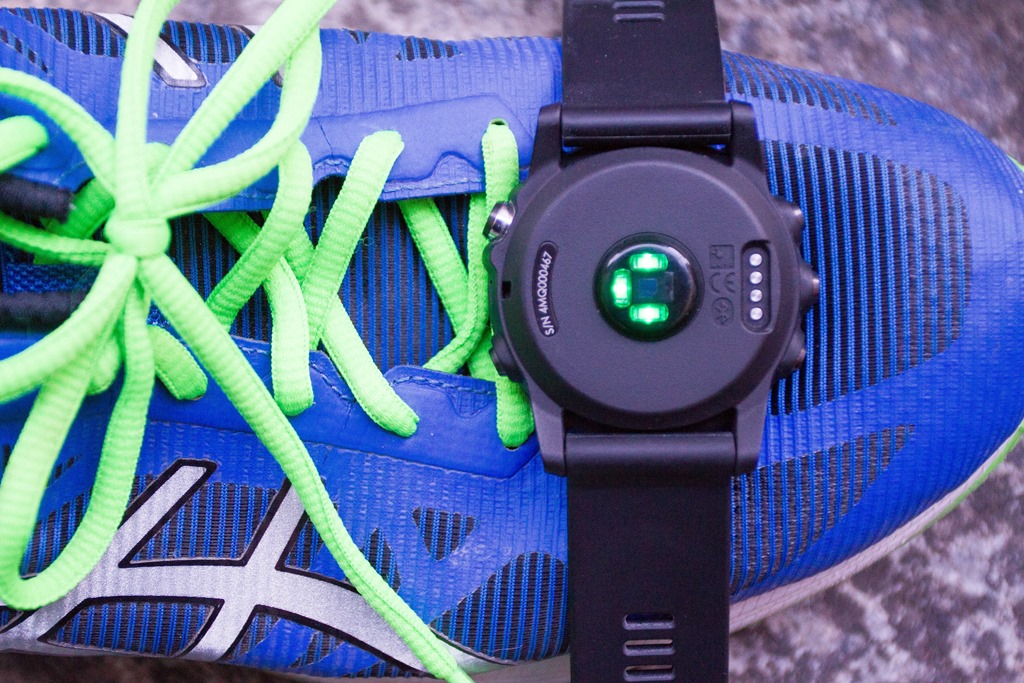
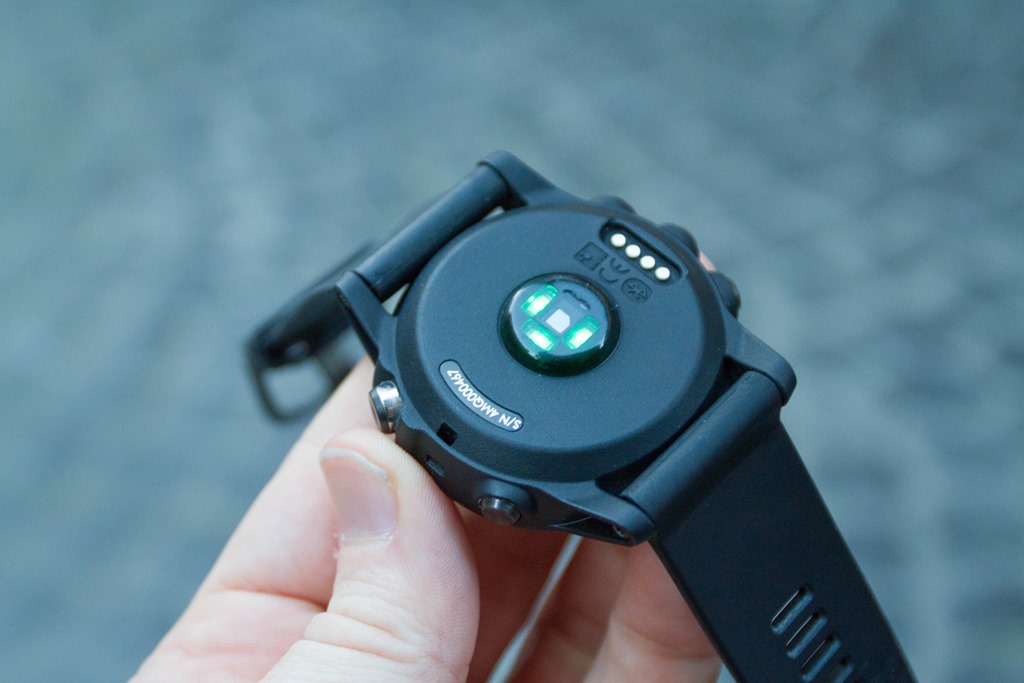
Of course the real changes are on the back of the unit – which houses the optical HR sensor. It’s here that you find the small sensor bump.
This sensor bump is no different than that found on the FR235, Vivosmart HR, and Vivoactive HR – all of which contain Garmin’s Elevate sensor.
It’s a small bump that I honestly don’t feel at all, since that portion of your skin is fairly soft and so for me it’s just not something that I notice. There are however a handful of people that do notice sensor bumps (from any number of companies).
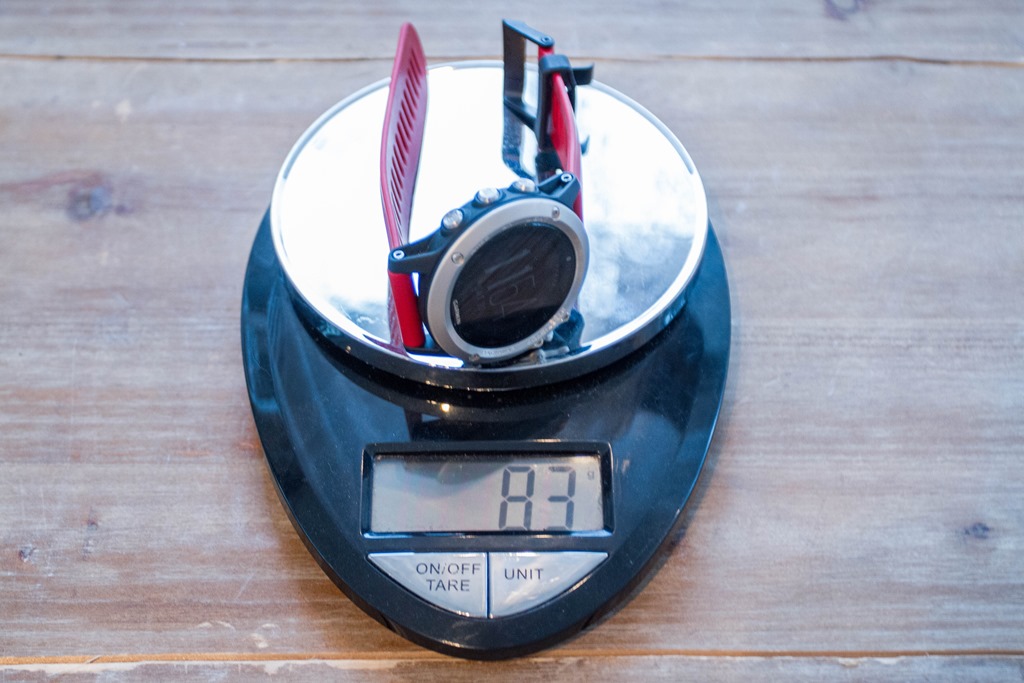
When it comes to weight, it’s not terribly different there either. You can see it below coming in at 90g, versus the original Fenix3 (red variant) being 83g.
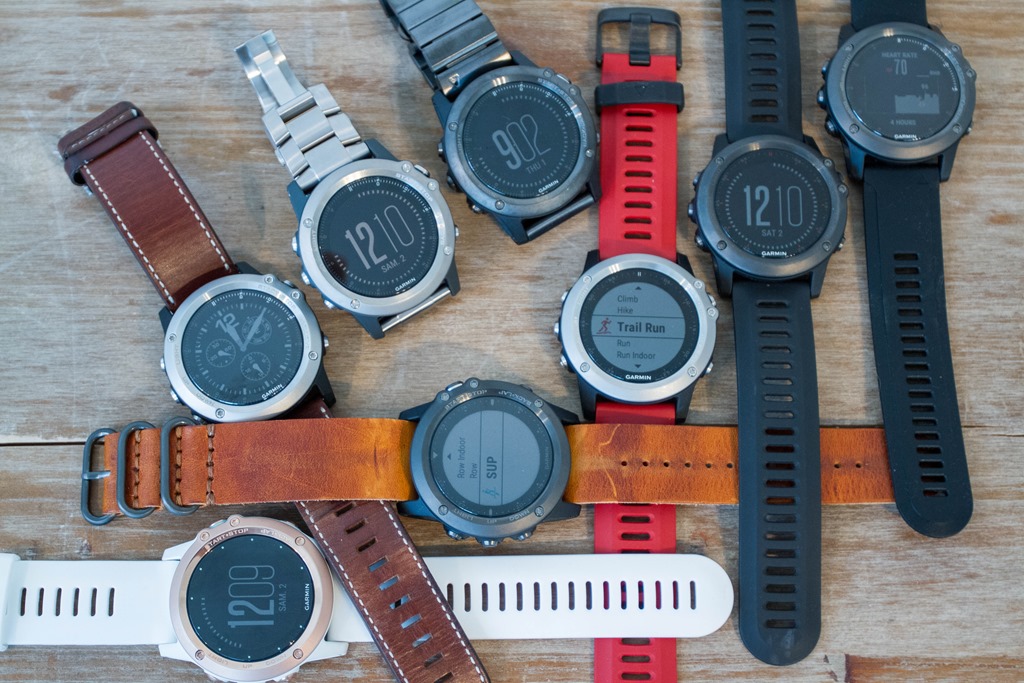
Note that depending on the exact band you place on the unit, you will get different weights or widths/textures. There are no doubt a lot of options today in that category:
However, keep in mind that you are unable to use any strap/band system that blocks the optical HR sensor (at least if you care about the HR sensor). For example, neither the fabric/nylon NATO-style straps will work (since they’d block the sensor) or the Fenix3 Quick Release Kit. Both of which block the sensor entirely. Again, you can use nylon straps, but you just won’t get optical HR readings and will want to disable the sensor and use a chest strap via ANT+ instead. Whereas the quick release kit simply won’t fit.
24×7 Optical HR Tracking:
The Fenix3 adds in the same tracking capability as other recent Garmin fitness wearables with the optical HR sensors. Meaning, if you’re familiar with those (FR235, Vivoactive HR, Vivosmart HR) – it’s almost exactly the same here.
To start, Garmin has all the standard daily activity tracking such as steps walked, distance, and so on. That’s all pretty much dial-tone baseline these days.
However, what’s new over the last few months is the 24×7 continual HR monitoring piece. This means that it leverages the optical HR sensor to track your heart rate throughout the day. It does this by turning on and off the green LED sensor at various times and then gathering your HR to record it. The unit uses the accelerometer to know how active you are. If you’re more active, it updates and records more frequently. Whereas if you’re less active (asleep), it does so far less frequently.
I wrote an entire post about this just last week in far more depth, so you may want to check that out there for more clarity on how the rest of the industry works (including Garmin). What I see though is that the Fenix3 HR acts fairly similar to how the FR235 does, and updates more frequently than the Vivosmart HR does. I just get far better battery life. About 1-2 weeks with roughly 1hr per day of GPS time (more on weekends)
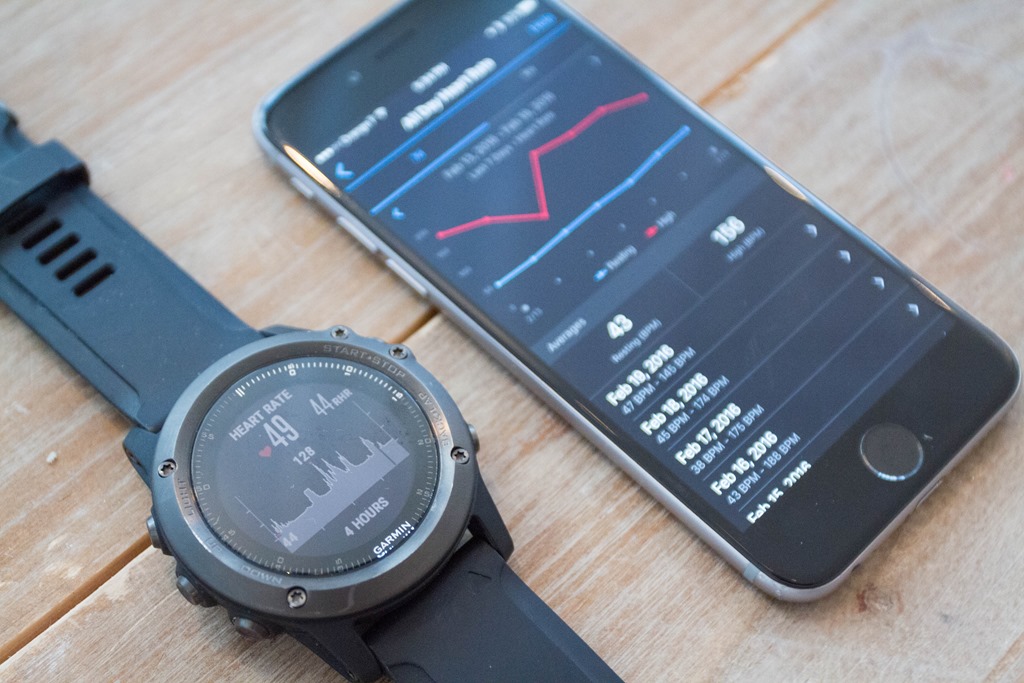
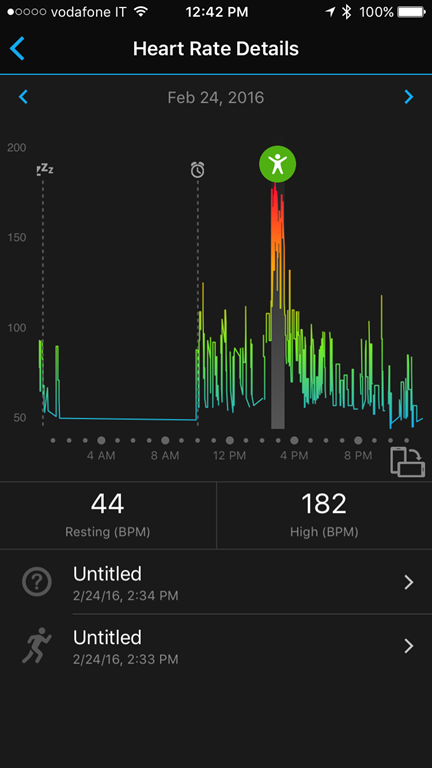
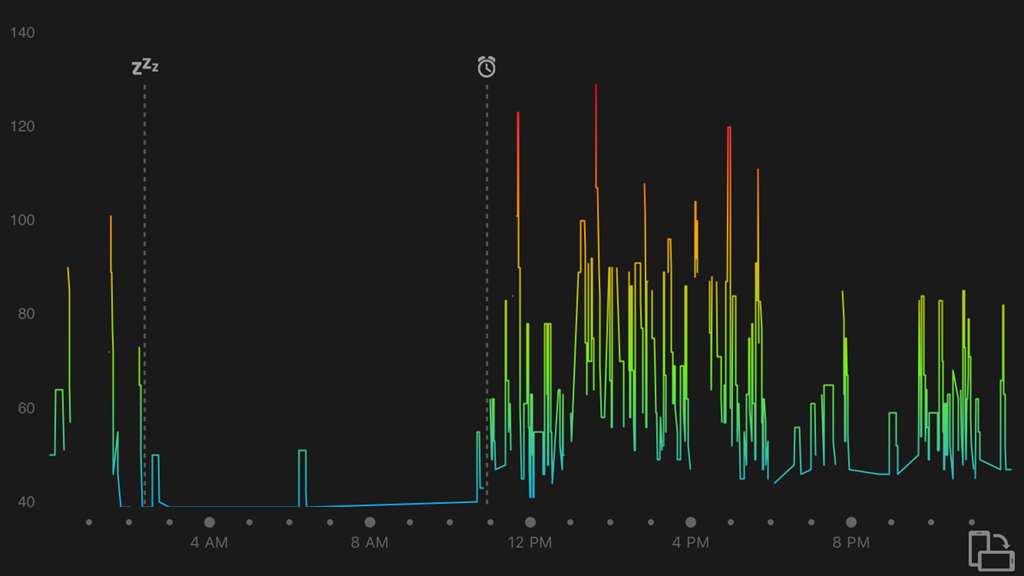
However, I’m still prone to getting long multi-hour stretches without any resting HR updates. Here’s a handful of images of a few recent days that show the update rates.
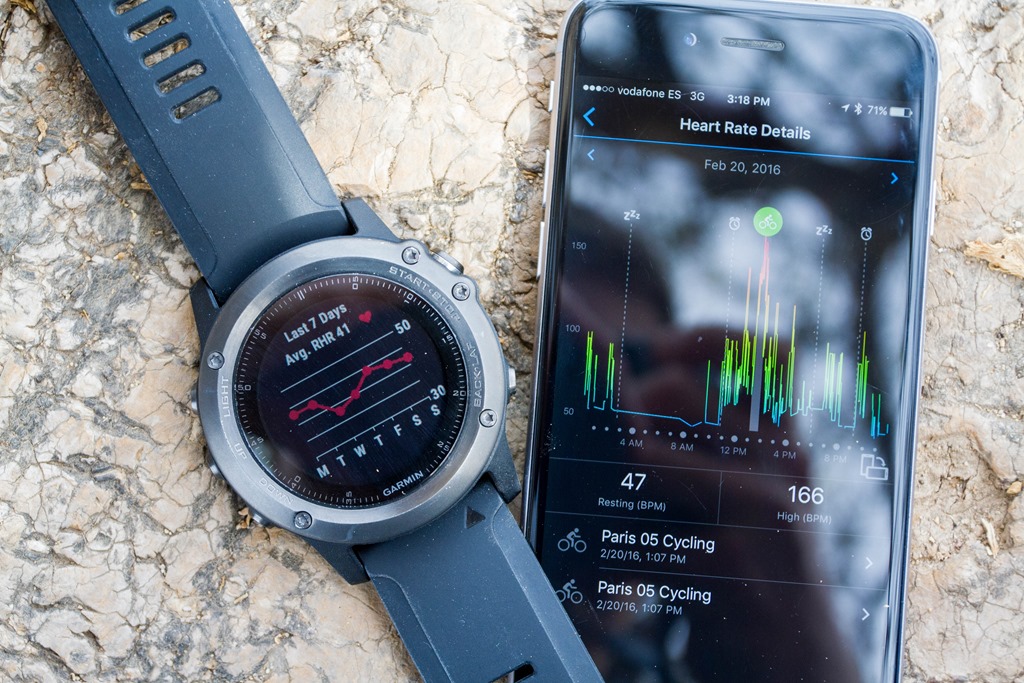
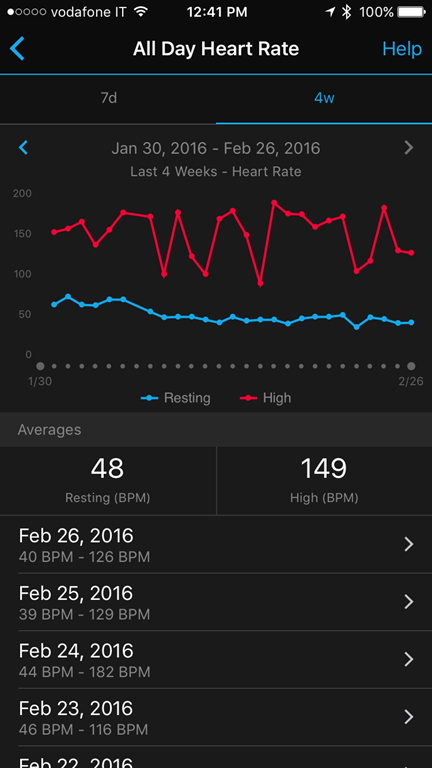
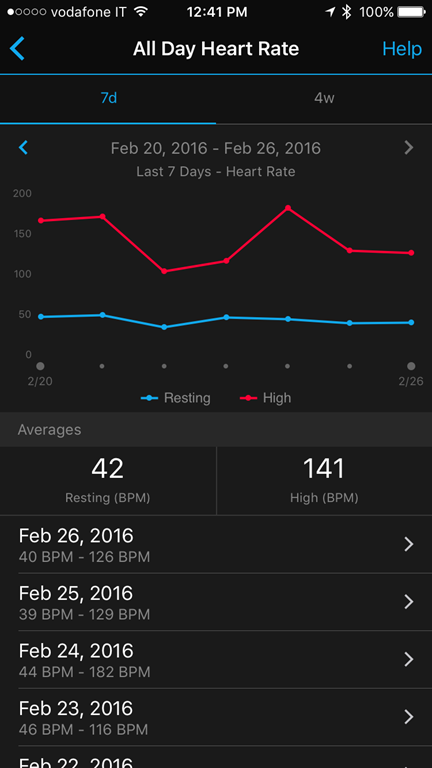
All of this data is available in two spots. First is the mobile app, as seen above & below.
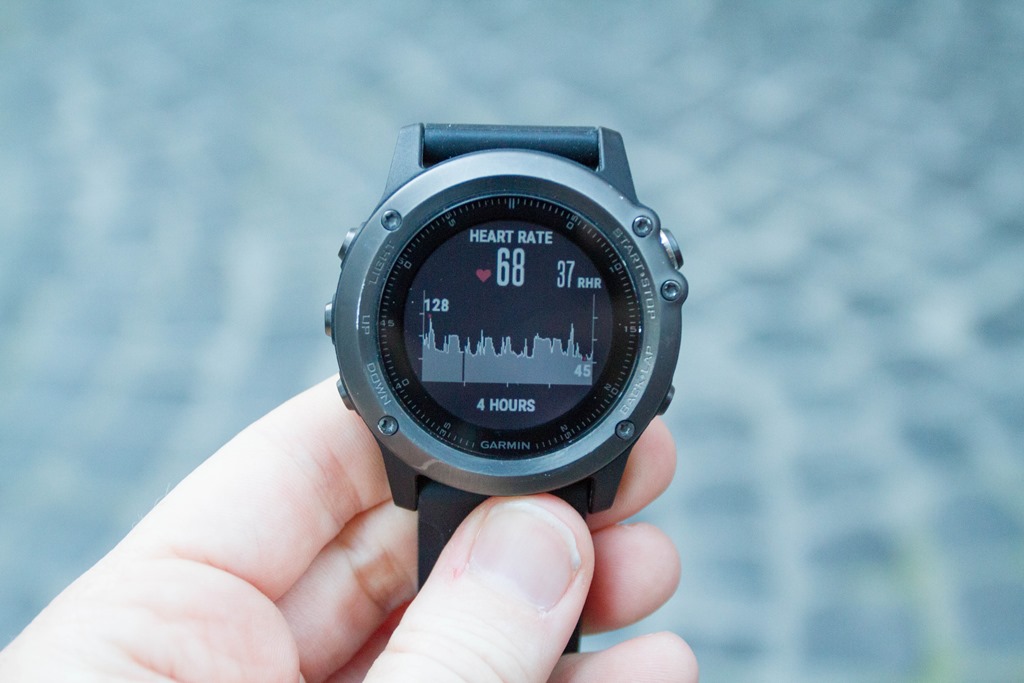
And then second, is on the device itself via the ‘Heart Rate’ widget, which you can access by simply pressing the up/down buttons. It’s basically like a dashboard page.
Within that page you can view the last four-hour graphical history, as well as a 7-day rolling history, which shows you the average RHR too (seen a few photos up).
For the most part, despite the lower recording rates while I’m asleep or semi-inactive (such as typing like this), it does seem to get my RHR metrics in the right ballpark. Typically for me my resting HR is in that 39bpm-42bpm range, and it seems to mostly be correct there.
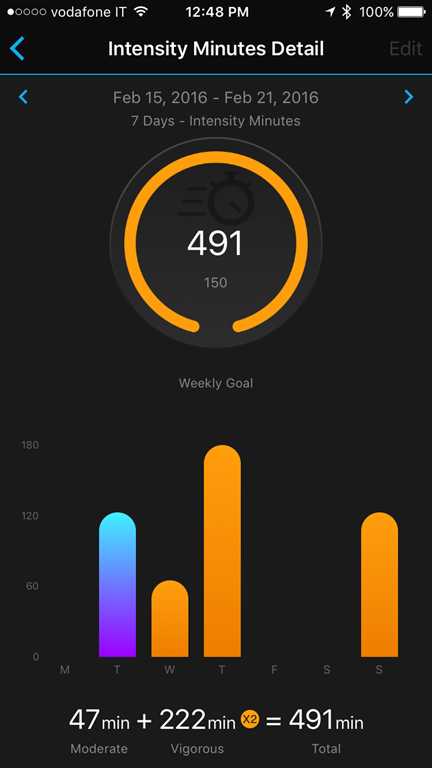
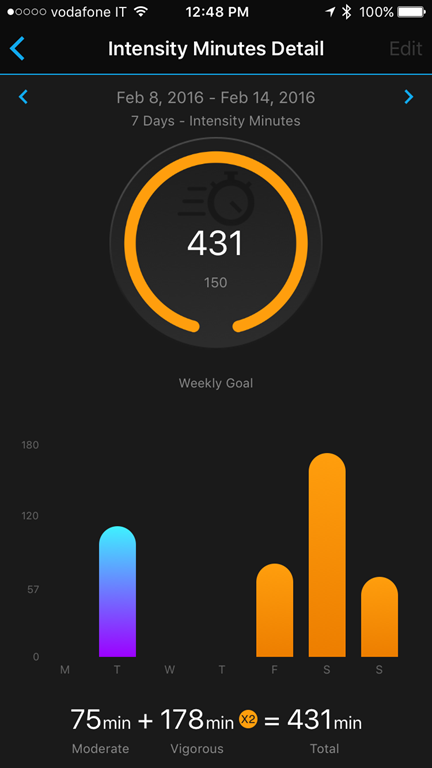
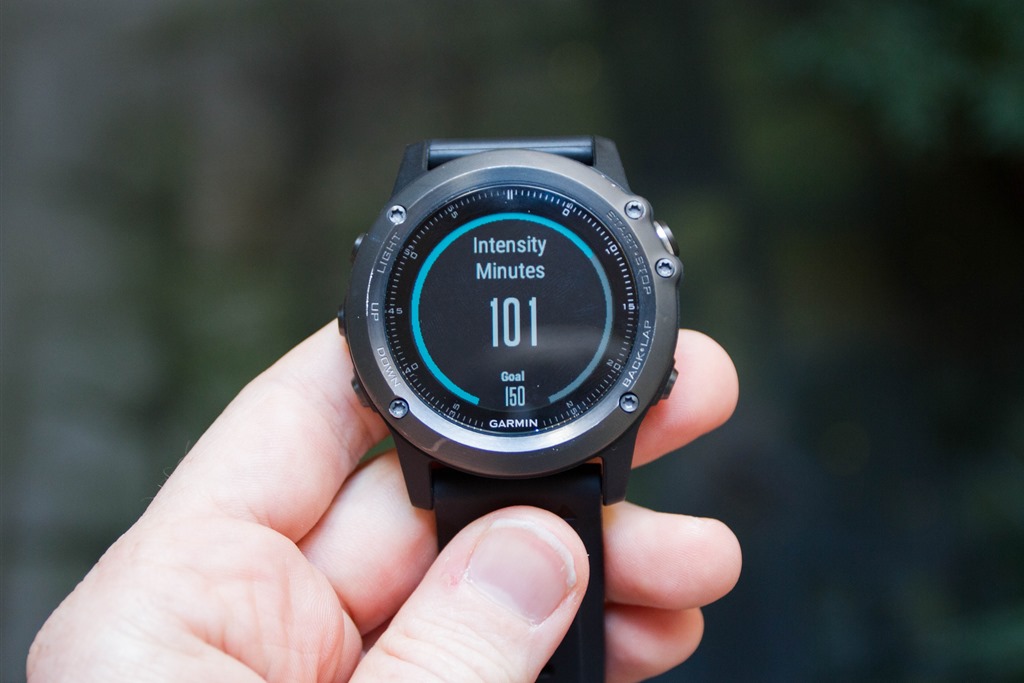
Next, it’s worthwhile point out that the Fenix3 HR also adds in Intensity Minutes, which was also added to the original Fenix3 back in January. Intensity Minutes is a new metric that Garmin added this past fall to other wearables that aims to track your total weekly exercise efforts. This is based around the 5 days by 30-minute guidance that many heath organizations recommend. So in this case, Garmin just totals it as 150 minutes of exercise per week – and then allows you to mix and match however you see fit.
You can also edit the amount as well, as seen below.
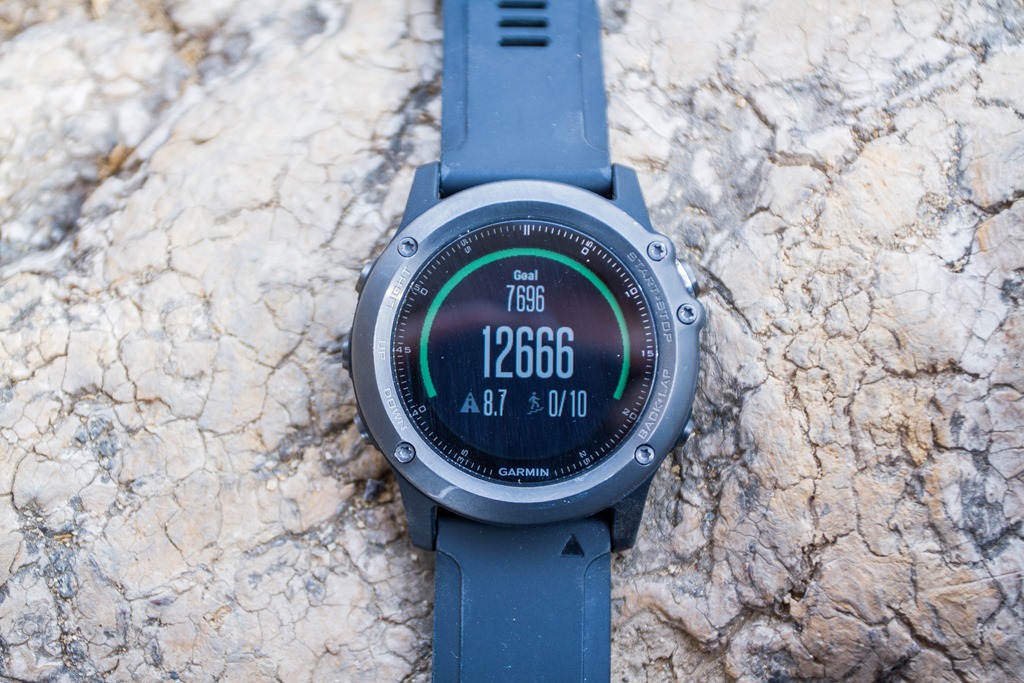
You’ll also see this on the watch itself, however by default the widget is in the ‘hidden’ state, so you’ll just need to enable it.
For most serious athletes who are looking at the Fenix3, they’ll likely hit this without too much thinking – which is probably why Garmin doesn’t show the screen by default. However, if you’re more of a casual athlete, then the 150 minutes guidance is a great goal to try and hit each week and is something that’s fairly achievable. Note that you don’t need to kill yourself on these workouts to count – so don’t fret too much there.
Optical HR in Workouts:
Now that we’ve covered the portion of the day where you’re not working out – let’s dive into the workout aspects. Like the 24×7 pieces, these too leverage the same HR sensor as other recent Garmin wearable products – so there isn’t a huge degree of hardware difference. However, there are some minor differences. Further, there is a bit more flexibility in battery than that of the other battery-constrained units (i.e. the Vivosmart HR).
The first thing to know is that the optical HR sensor isn’t enabled in all activities. Rather, only ones in which Garmin believes accuracy is high enough to be usable. So for example, it’s enabled in running and cycling – but not in swimming activities. For activities that it’s disabled in, you’ll need to leverage an ANT+ heart rate strap (and more on that later for swimming).
You can always disable the optical HR sensor on your own accord though, via the sensors menu. Think of it like a permanently paired sensor. You can choose when or whether it’s enabled.
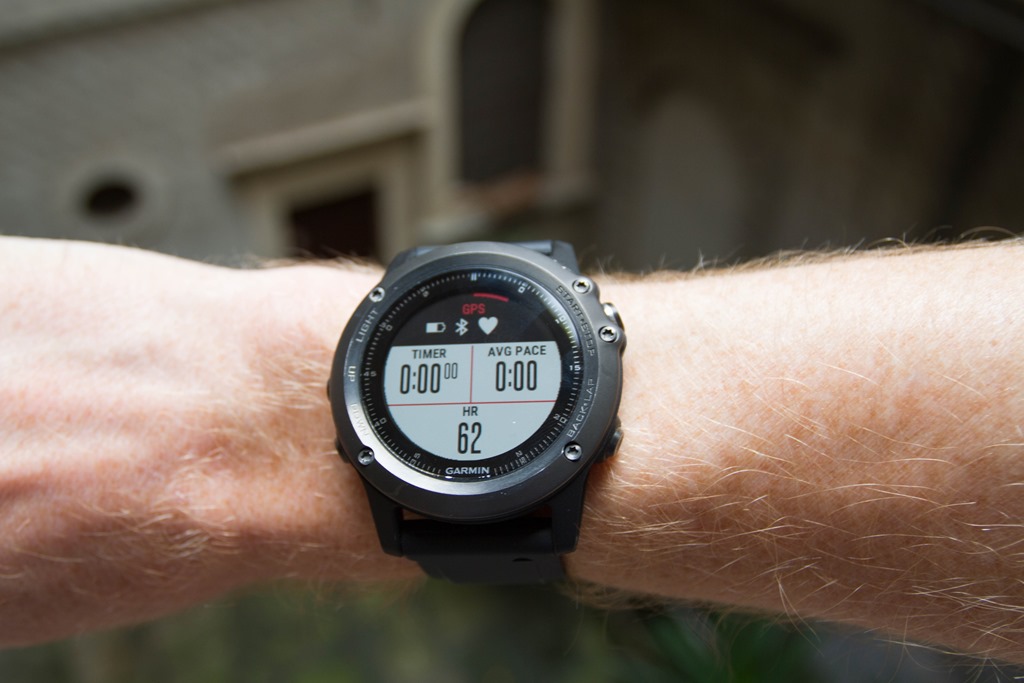
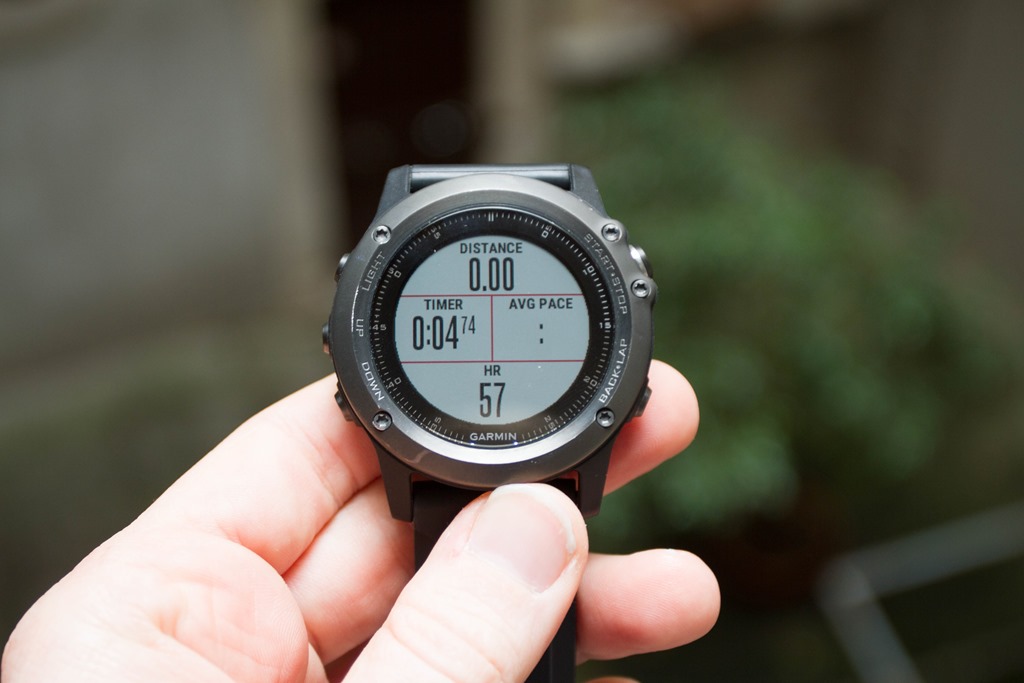
When you start a workout, it’ll start to acquire your HR. In most cases, this won’t take more than a few seconds. You want the little HR icon to illuminate a solid ‘red’ color. If it’s blinking, then it doesn’t have a (good) lock on it yet. So definitely wait until it’s happy. But again, this almost always happens in a couple seconds. In the below picture I have HR lock, but not yet satellite lock (the red circle around the outer edge).
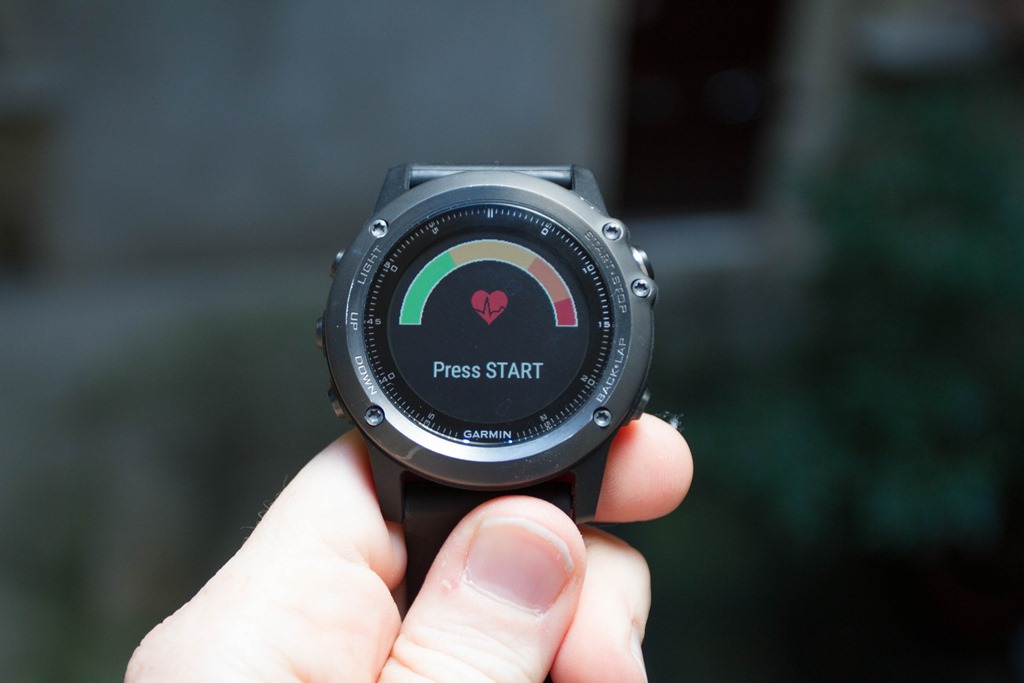
At that point you’ll want to wait for your GPS to acquire, again, more on that in the later section on GPS accuracy. Just ensure it’s green (not orange or red), then add a bit extra time for good measure. Now, you’re ready to roll!
While working out, the optical HR sensor gives you baseline HR data no different than that of the ANT+ HR strap. You’d never know the difference from looking at the main screen, since it’s just BPM (or whichever data metric you’ve configured).
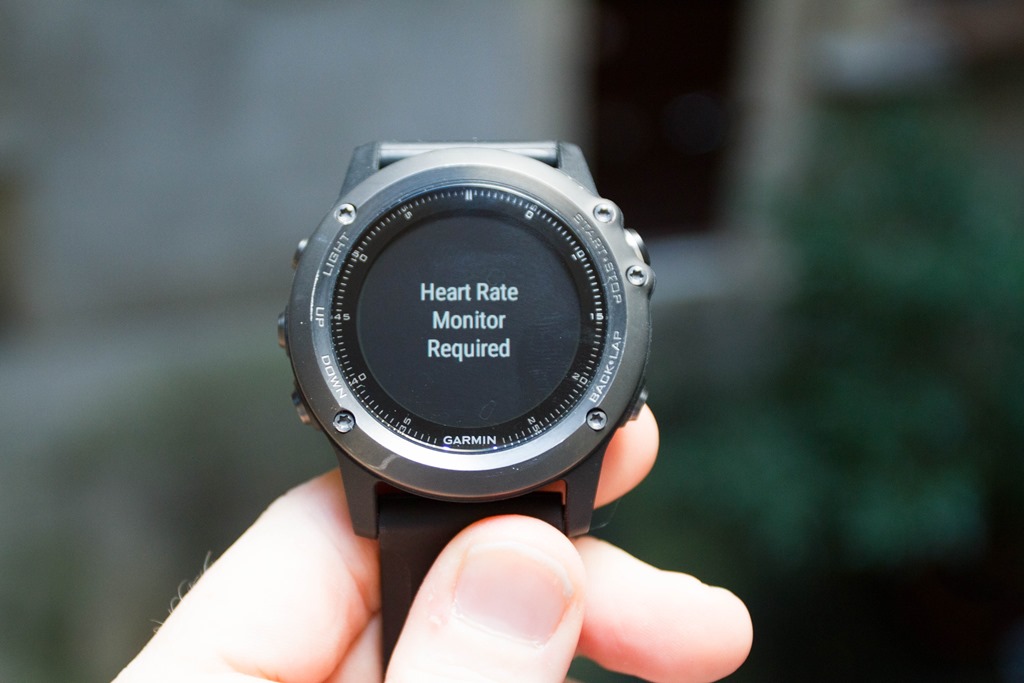
However, there are some features that are unable to use the optical HR signal fully. These are primarily due to the optical HR signal not giving enough data around heart rate variability (HRV) for these features to function.
Additionally, some Running Dynamics features require a separate accelerometer based in a chest strap (HRM-TRI or HRM-RUN) to be able to properly measure. So those ones won’t work either. Here’s what won’t work:
Some Specific Running Dynamics Metrics: Ground Contact Time Balance and Vertical Ratio (others like cadence work just fine)
Performance Condition and Stress Score
Swimming HR: Both pool and openwater will require the HRM-TRI or HRM-SWIM HR straps.
Without a HR strap, those features will not work.
Just for clarity purposes, the following DO work with the optical HR sensor over the Fenix3 HR:
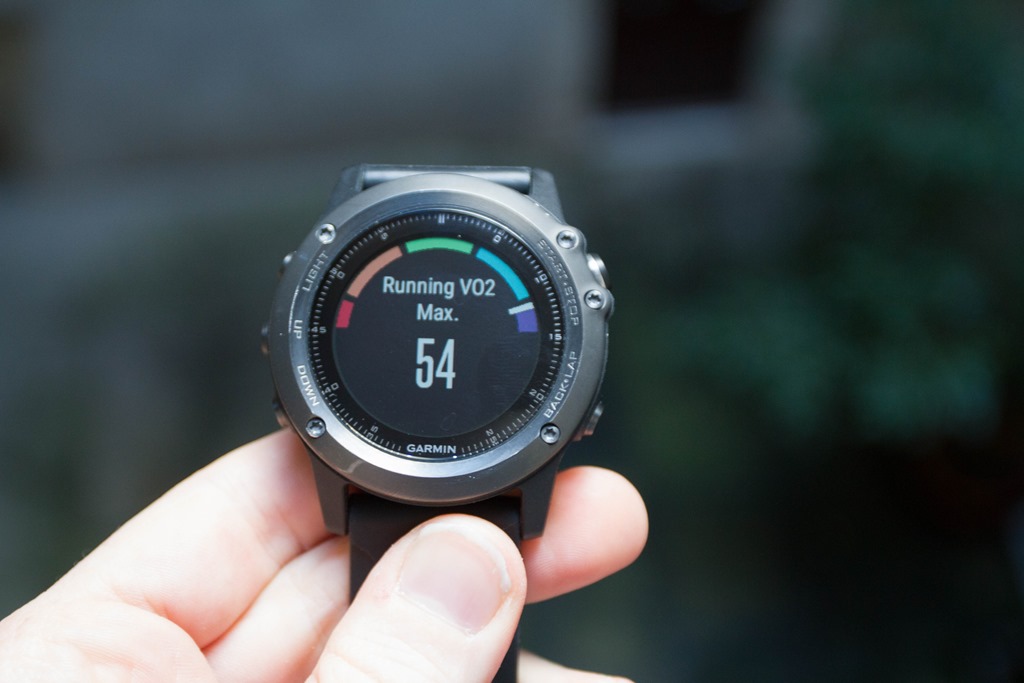
VO2 Max metrics, Lactate Threshold metrics (auto or manual), Recovery Advisor, Race Predictor, Records
Note that you won’t always trigger a VO2Max (or Lactate Threshold) result each run. For example, in my case with the Fenix3, I appear to have only triggered it four times over the last four weeks. Note that for cycling VO2Max, you also need a power meter.
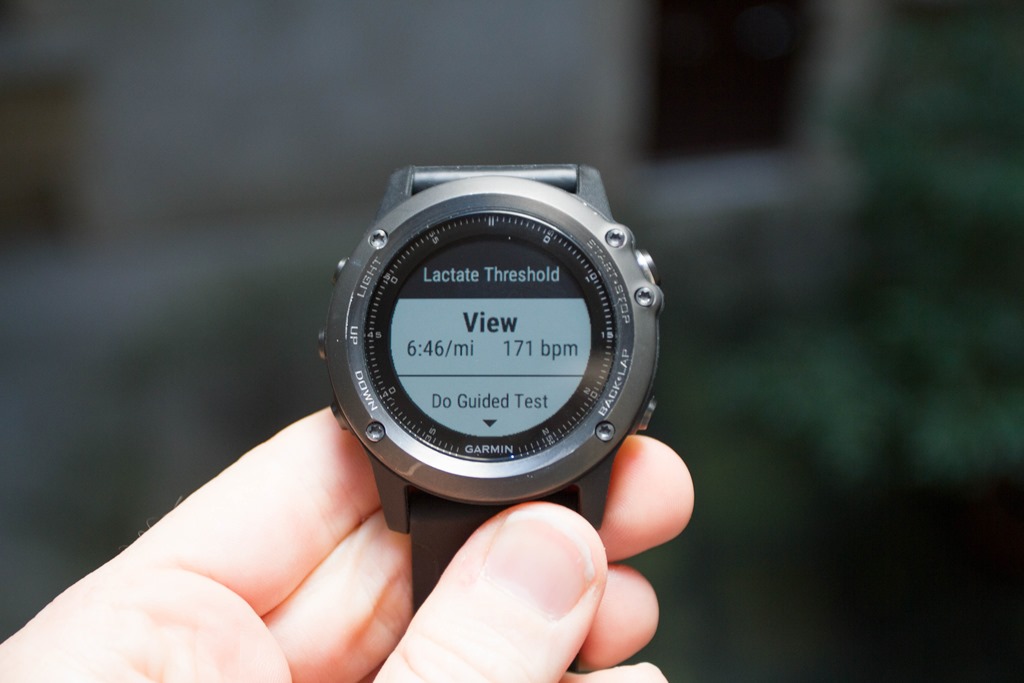
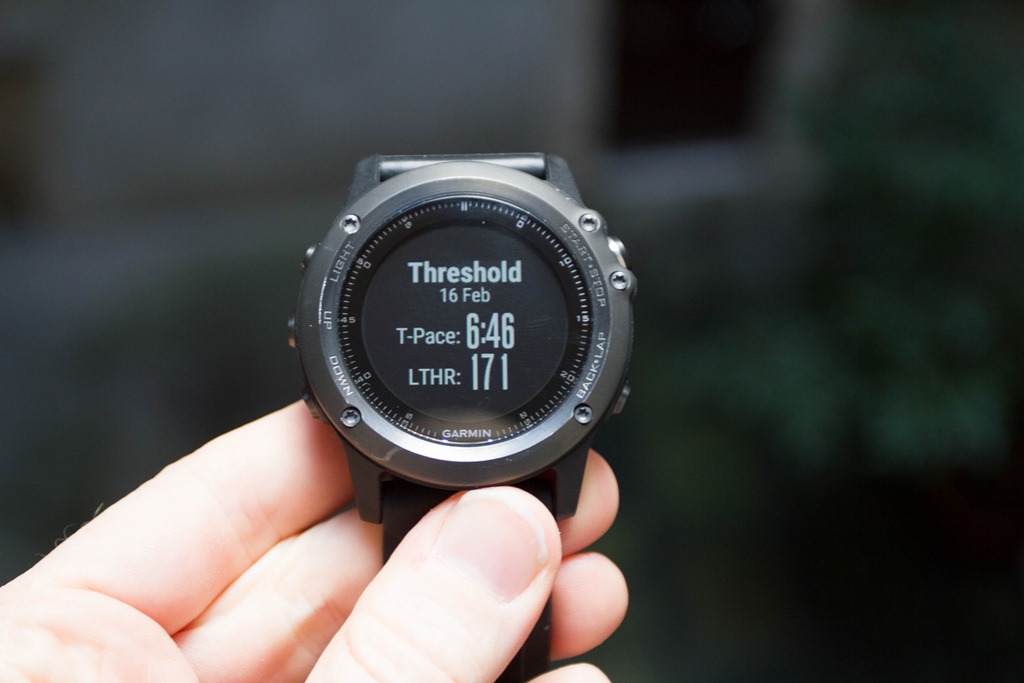
I have however managed to trigger a couple of Lactate Threshold test results along the way using just the optical HR sensor of the Fenix3 (via Auto Detect). This functionality was introduced with the FR630, and was carried through into the Fenix3 HR:
In my case, I suspect the Lactate Threshold test result was still a bit high, but as we saw with the FR630, it takes a number of ‘the right workouts’ (using auto detect mode) to get the correct result. If you do a guided test, you’re far more likely to get a more accurate result upfront. As to what the ‘right workouts’ are, it’s a bit hard to know exactly – other than usually more intense workouts with a longer period in the higher intensity zone.
HR Broadcasting:
Before we talk HR accuracy, I should briefly mention that the Fenix3 HR allows you to re-broadcast your heart rate over ANT+. This means that the Fenix3 HR will take your optical HR reading and then re-transmit it so that other ANT+ capable devices, such as a Garmin Edge, can pickup your HR reading.
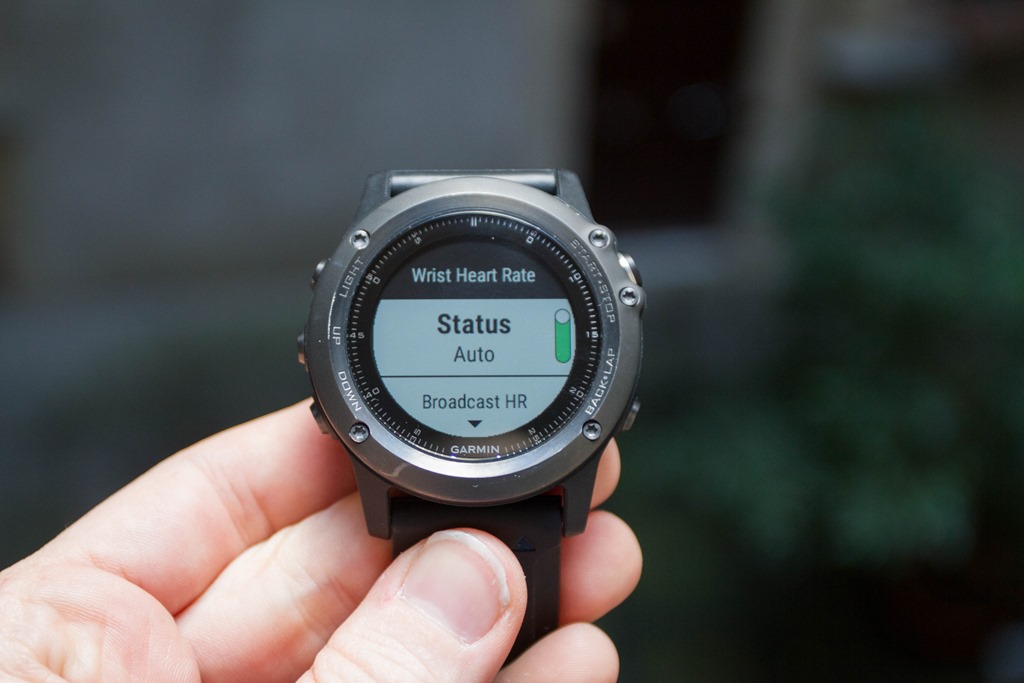
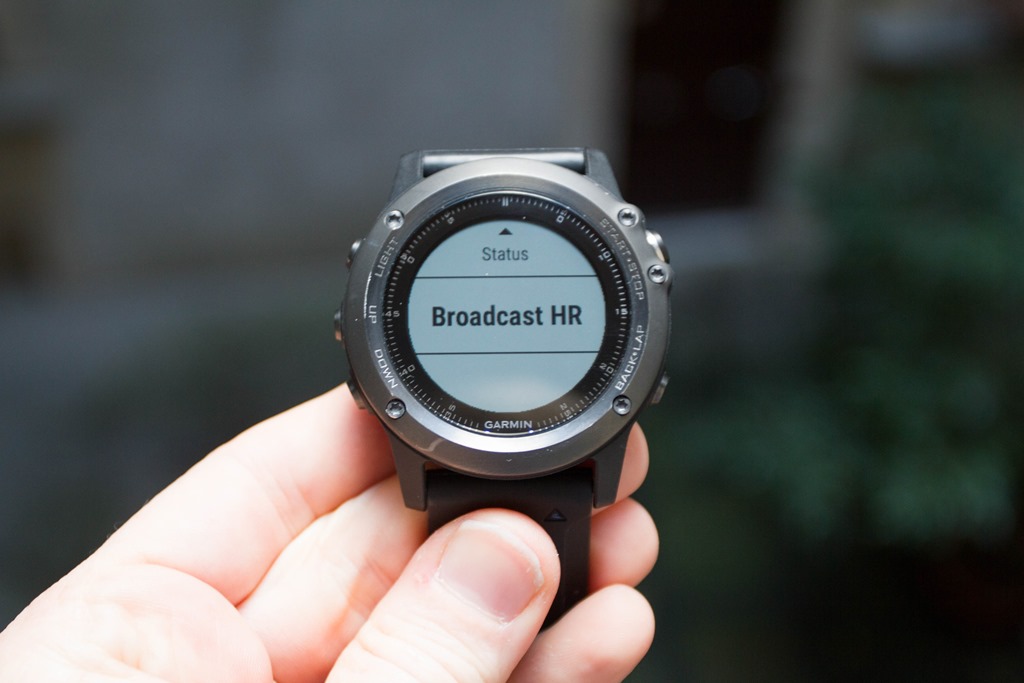
To enable this you’ll go into the sensor menu (which is somewhat buried), and then select ‘Broadcast HR’:
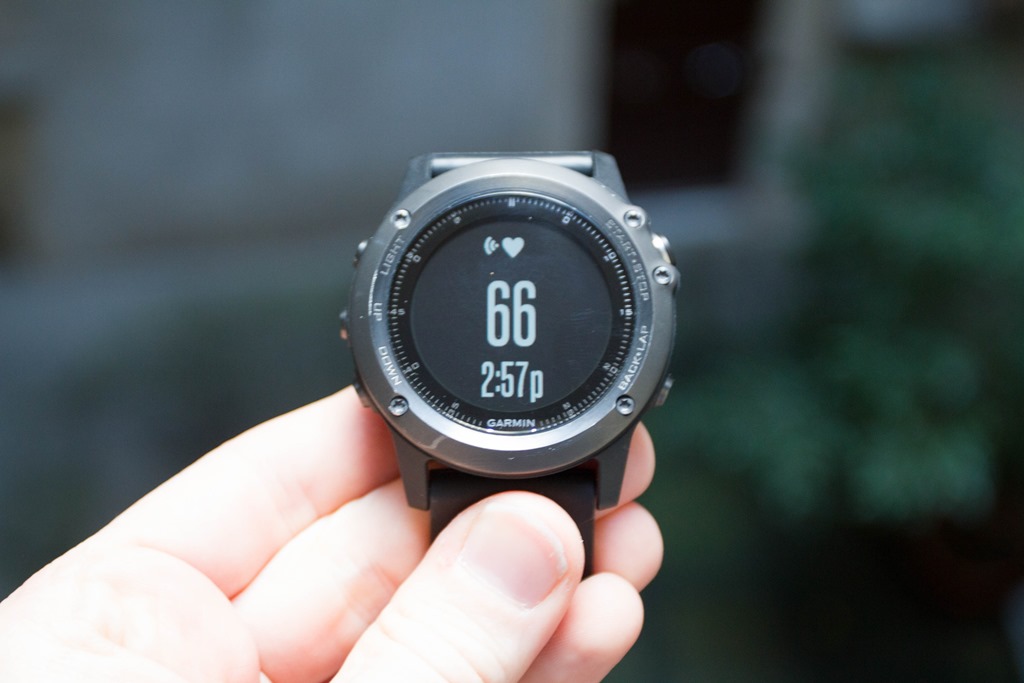
It’ll now show your current HR, and the time:
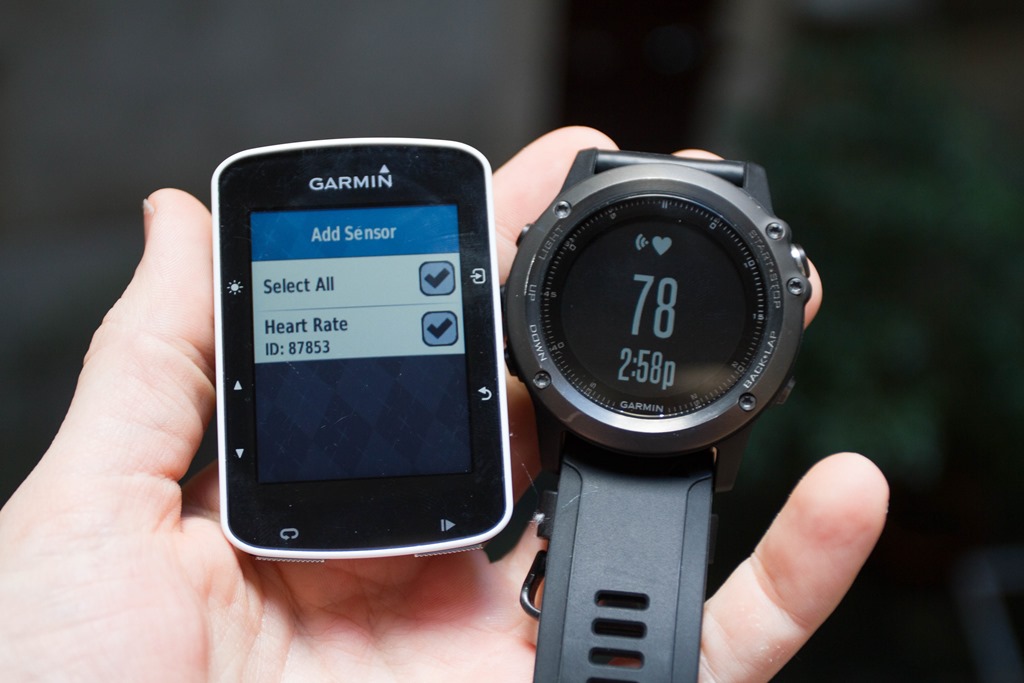
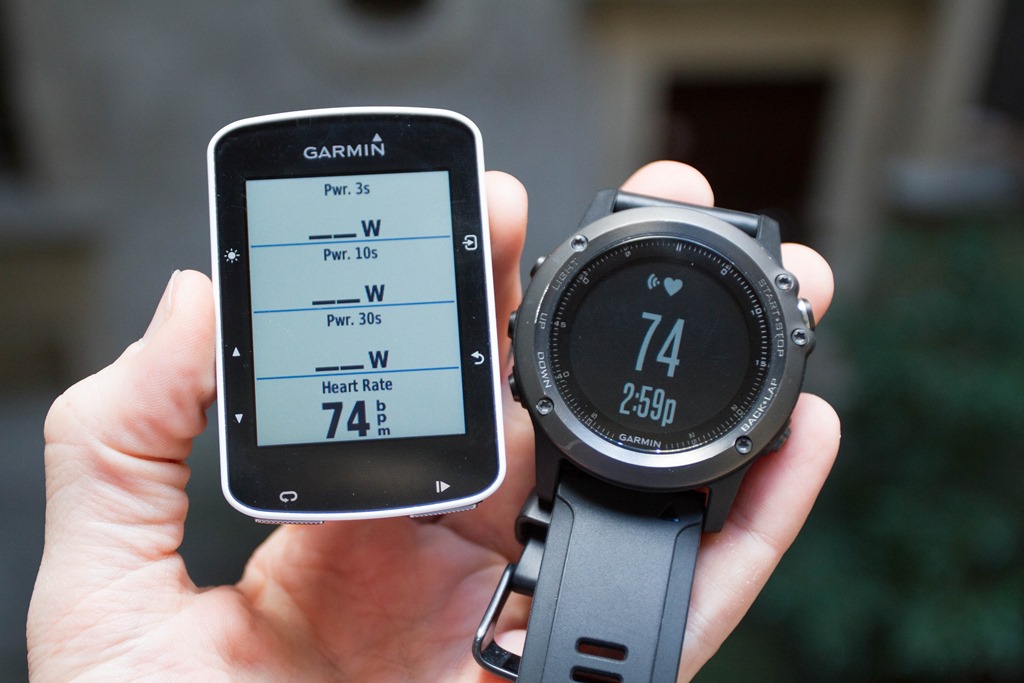
Meanwhile, if you grab something like a Garmin Edge device, you can pair it to the Fenix3 HR and receive your HR:
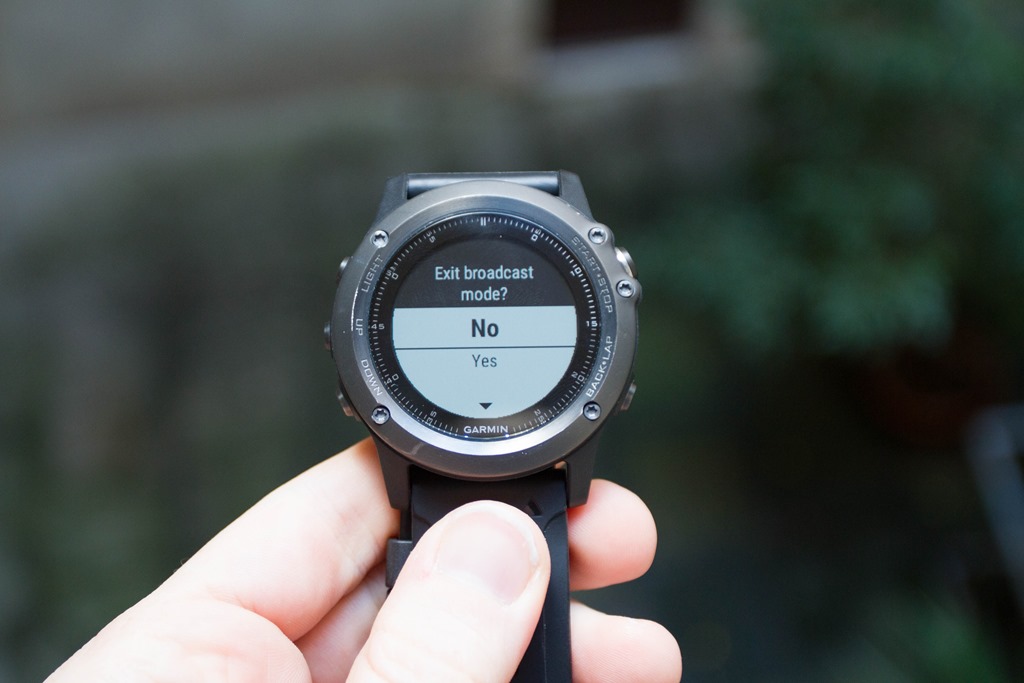
Note that one caveat is that you can’t see your regular activity screens in this mode, it requires you exit the broadcast mode:
You can however actually start a GPS activity first, and then enable broadcast mode. So that does work, it’s just annoying that you can’t enable the broadcast mode and perhaps have it simply turn off at the end of the session when you save the file. I note this because the Vivoactive HR does actually allow you to enable broadcast mode and not impact your ability to otherwise use the watch.
HR Accuracy:
Now it’s time to dive into whether or not the optical HR sensor is actually accurate. The short version is that I found it built fairly well on top of the optical HR sensor of the FR235, and seems to have implemented a few software tweaks since then to improve in some of the edge cases of the FR235 that caused me challenges. Note that because all of these units share the same physical optical HR sensor, we tend to see Garmin update the firmware across the board. So while it’s been 3-4 months since I tested that, it has received firmware updates since then addressed at optical HR sensor tweaks. I expect that to continue.
We’ll start with running, then talk cycling, and finally finish up swimming. Basically, a backwards triathlon. And yes, I said swimming. What? You thought I wasn’t going to at least try it?
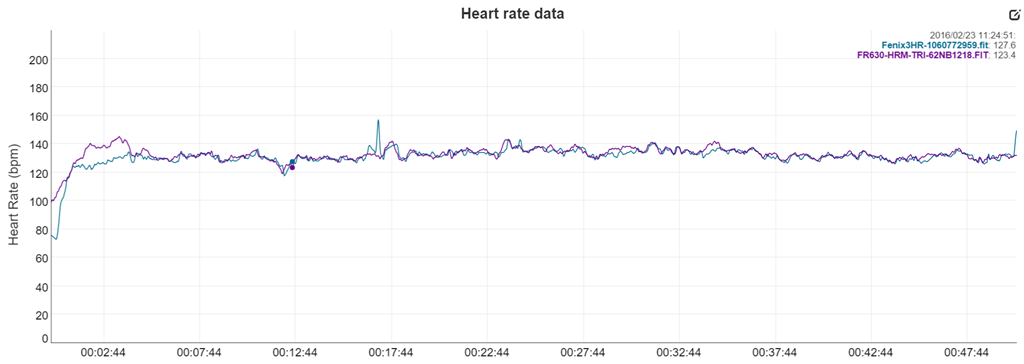
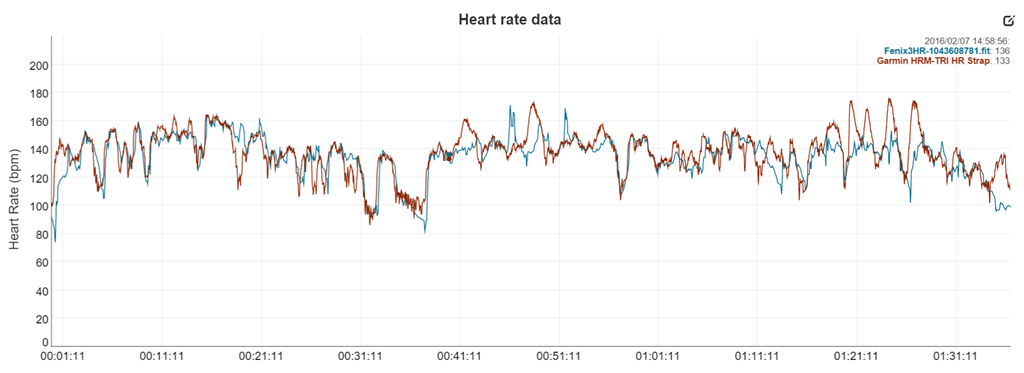
Ok, first up is something rather easy – just a simple easy-paced run. Now it’s funny in that this particular graph makes it look far less stable than it was. That’s mostly because my HR was basically 130, +/- 3bpm. So the scale on this graph makes it look kinda jumpy, when it’s really not that variable for the majority of it.
Here’s another run that was somewhat similar, from Barcelona this past weekend. In this case, you see a bit of variation at the beginning and then they match except for one spot around the 17-minute marker. For that first portion variation, I’d guess that the chest HR strap was actually wrong there, as it was an easy run that we eased into, so it’s unlikely that I’d have spikes with the chest strap then. I also had the Apple Watch on this run, but the data from it was mostly useless in this regard.
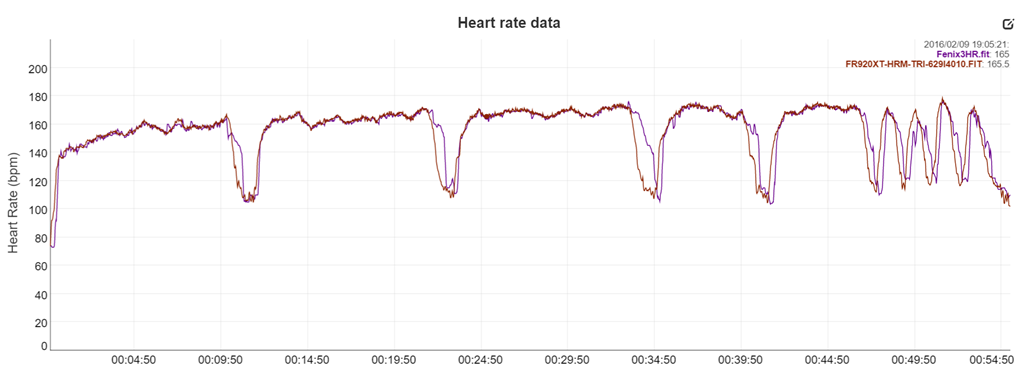
Next, we’ve got a tempo run of sorts. This nearly hour long session has four main chunks after the warm-up, with 2×10 minutes, then 2×5 minutes, then 4xSprints. You’ll see that it generally does quite well on tracking the harder intensity tempo portions. It does have a very slightly delay when I end each tempo section though, in that there’s some lag when I go from running hard to walking. It’s more apparent in the middle sets, though it does fairly well in the last 5-minute set.
You see that during the final 4xSprints, which are basically 30 seconds long and at full-out running intensity, than things get fairly close. It managed 3 out of 4 properly, which is actually much better than I’d see on the FR235 or many other wrist based optical HR sensors. You’ll note that in another similar run, it struggled a little bit on these. So sometimes it’s going to vary.
(Side note: There actually was a 3rd HR sensor on this graph, the Apple Watch. However the track was so horribly wrong that it distracted from the graph, but you can find the same run in the Apple Watch review, should you wish to see it.)
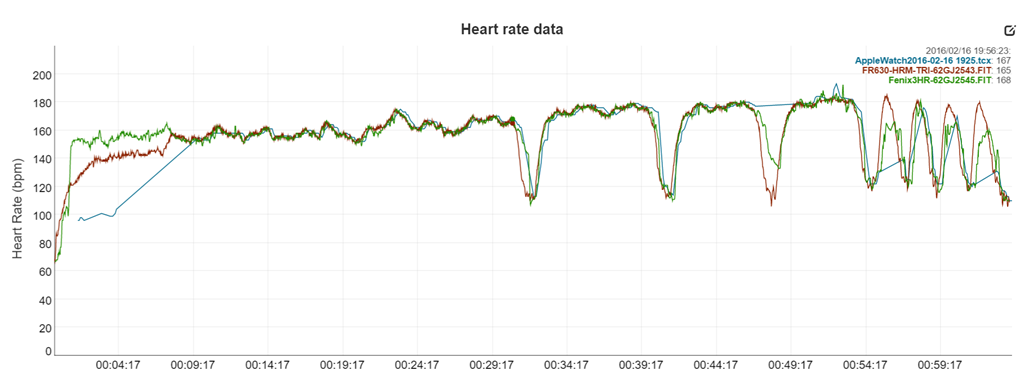
Here’s another tempo-ish run of sorts. It increases intensity over the first 30 minutes, then I do 3 different interval chunks of increasing intensities. In general, the unit tracked very well on the bulk of this. At the beginning, I see variations between the three units. I’m honestly not sure which track would be right. It wasn’t the Apple Watch, but it could have been either the Fenix3 HR or the HR strap. This is one of those examples where in low temperatures chest straps can struggle a bit.
You also see that slight delay at the end of a hard set, as well as being a bit short during the 30-second intervals.
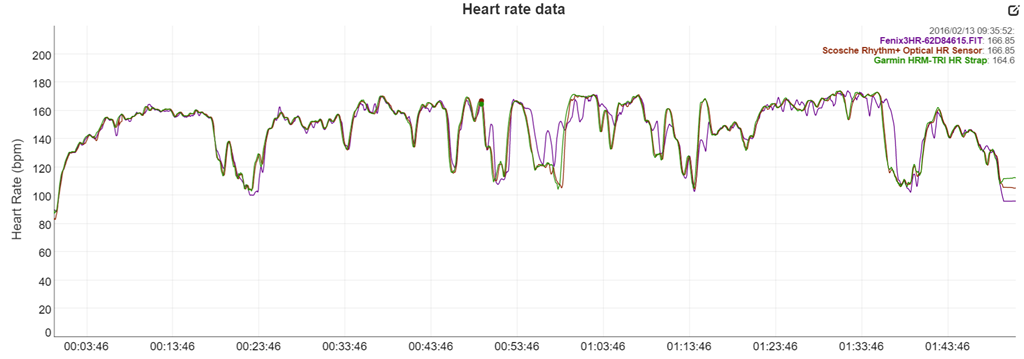
Next, a longer run from this past weekend. This run was split up into 10 minute chunks with varying intensities. You can see rather easily that it tracked quite well across all of these. Interestingly, at one point at the 57-minute marker while running (and not stopping) I adjusted the strap to make it tighter. For about the following minute, the unit wasn’t terribly happy about that. Lesson of the day: Don’t adjust the strap while running high cadence drills.
(Note that on this particular run I was running a beta build, in the last few minutes of the run, the unit did suffer a crash and restarted. So I’ve focused on the 1hr 25mins prior to that point. Again, it was a beta build.)
How about a switch up to cycling? This is where I’ve seen some improvement compared to the FR235 (or the Vivosmart HR). Take for example this ride, which was on the relatively smooth roads around the Spanish island of Mallorca. In this case, the unit does very well except for one brief section at about the 55ish marker. This is ironically when I was actually OFF the bike, taking a couple of quick photos before riding back home. So you can judge that failure however you see fit. My guess is that the much sharper cadence of my cycling shoes on the concrete tricked it (cadence often tricks optical HR). You see a slight delay again in the last big dip as I crested a hill and started descending, but it’s not horrible.
However, it’s not always so good. I find that the more variability I introduce into a ride, the more it struggles. For example, on this ride across the city (full of cobbles, rough roads, stop/go, etc…), it seems to have some tough times. I can’t say I’d use the sensor much in cycling when it looks like this.
To help settle this a bit, let’s go inside on a trainer for a workout. In this case you can see that it tracked fairly well across the majority of the workout. You see a few brief seconds where it momentarily separated or didn’t catch a significant shift. But otherwise, it’s fairly similar.
Thus proving that the rougher roads is really the problem here, not so much the position of cycling. So the summary there for cycling is that it’s likely OK when you’ve got smoother roads and more stable efforts. However, when you’ve got rougher roads it seems to struggle more and is less reliable.
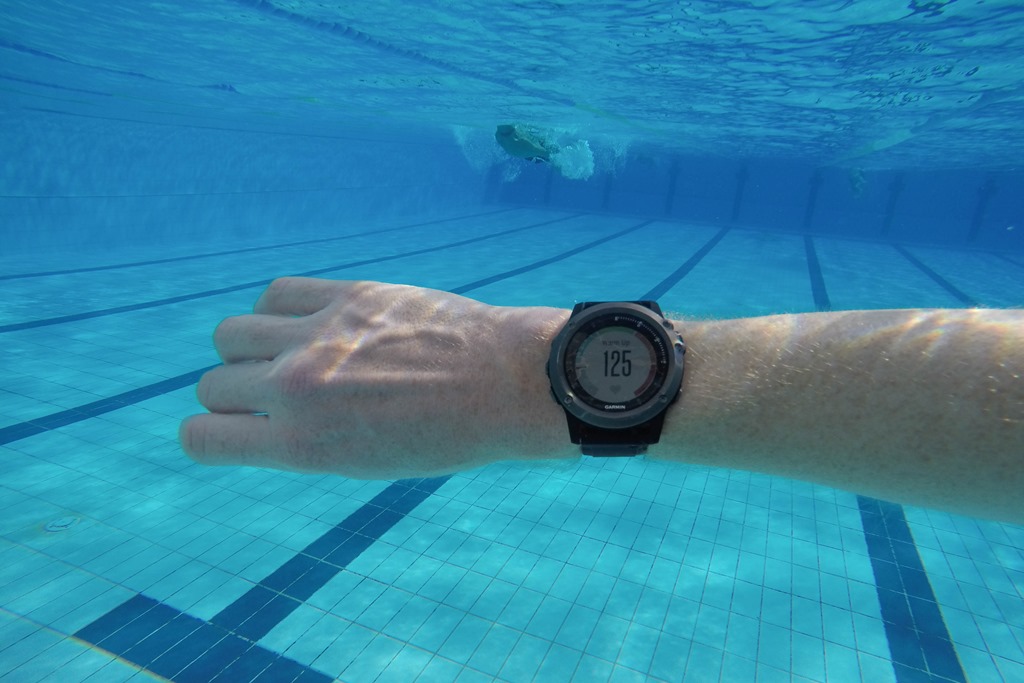
Finally, a brief look at swimming. Yes, I had to try it out even though it’s disabled for swim mode. To track it, I simply put the watch into indoor running mode. This meant I didn’t get any swim metrics (pace/laps/distance), but I did get HR.
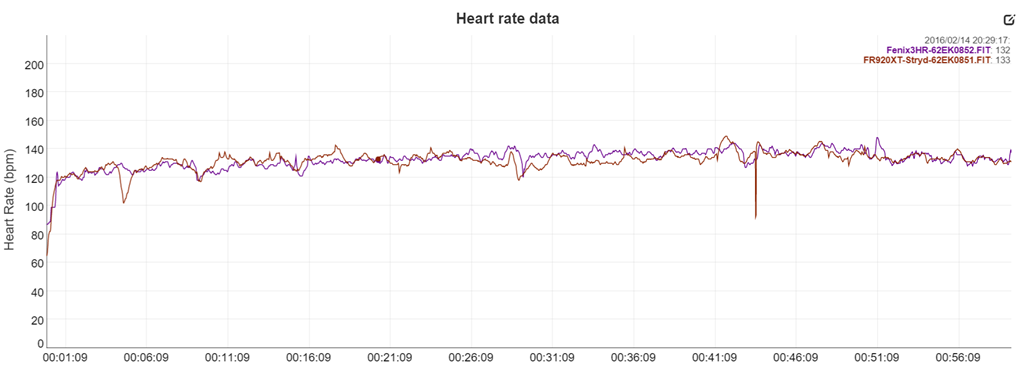
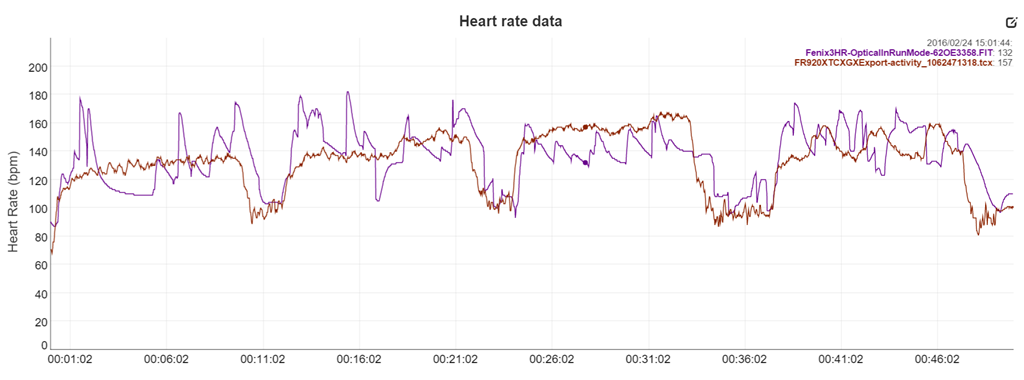
For my swim I wore the HRM-SWIM paired to a FR920XT on one wrist, and then the Fenix3 HR on the other wrist
I then went about my swim sets, which included 3x500m, followed by alternating 50m hard/50 meters easy. This was the result. Purple is the Fenix3HR, red is the HRM-SWIM.
For those that aren’t clear – no, it doesn’t track well. Garmin says they’re continuing to work on accuracy in the water, and if they can get it to an acceptable level, they’ll enable it for the Fenix3 HR.
GPS Accuracy:
I wanted to briefly touch on GPS accuracy within the Fenix3 HR post, despite the fact that Garmin claims no components have changed between the original Fenix3 and the Fenix3 HR.
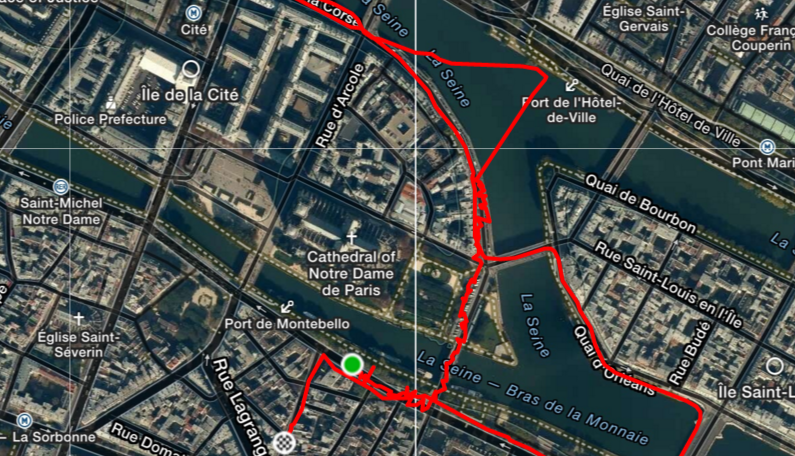
There has been much ado in some circles about the GPS accuracy of the Fenix3, specifically (mostly) in trail environments, though occasionally in city environments. The majority of my running is in the city, though I do go out into the trails from time to time (including during this review cycle). My city is the dense concrete buildings of Paris, which aren’t quite as tall as skyscrapers of NYC, though they make up for it in tiny little one-lane streets. I also ride out of the city as well, so I’ve got plenty of non-city terrain too. For example, my recent long-weekend in the mountains of Mallorca.
Overall, I’ve seen generally good performance with the Fenix3 HR. There have been a handful of times (two specifically) where it has struggled. However, out of the 30+ days of workouts otherwise, I haven’t seen any issues. Nor has the eagle-eyed followers on my Strava account. My Fenix3 HR is setup to wirelessly sync there, so the vast majority of the time it’ll sync via WiFi well before I get out of the shower on a workout. As a result I’ll find more than enough comments from the gallery on what folks think.
A prime example being this run from a few weeks ago, where the Fenix3 HR shortly after starting went for a swim around some 8-10 story buildings. What’s interesting is you can really see it struggling the first portion until that point. So even though I had the green go on the satellite track, I only waited about 1-2 seconds before pressing start (because The Girl was giving me the Death Stare that we better get going). Normally, I’d end up waiting 20-30 seconds longer – which seems to help significantly. It’s as if the unit isn’t really quite ready yet.
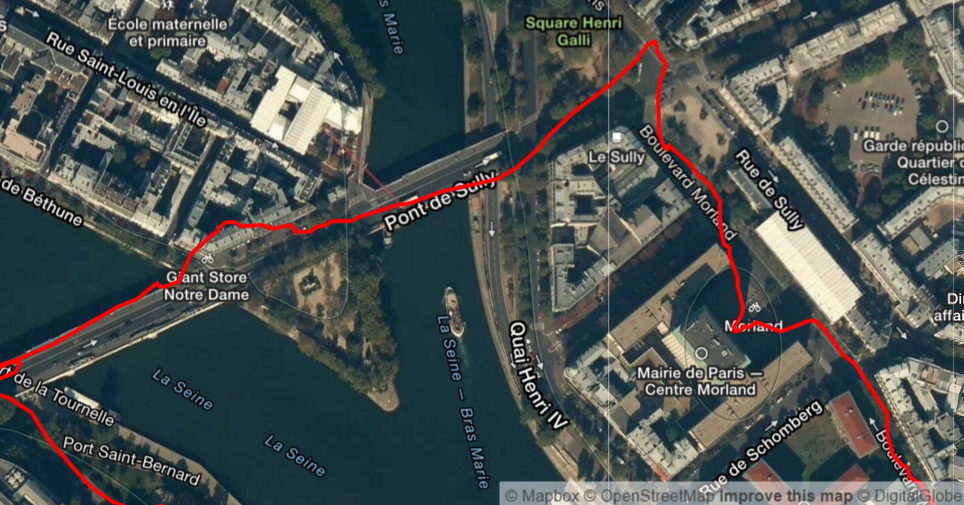
Or nearby again, where it struggled the following night crossing a bridge. It’s odd, I see this little section causing pain for many GPS devices, not just the Fenix3 HR though. Perhaps it’s the taller buildings causing issues on the right side there.
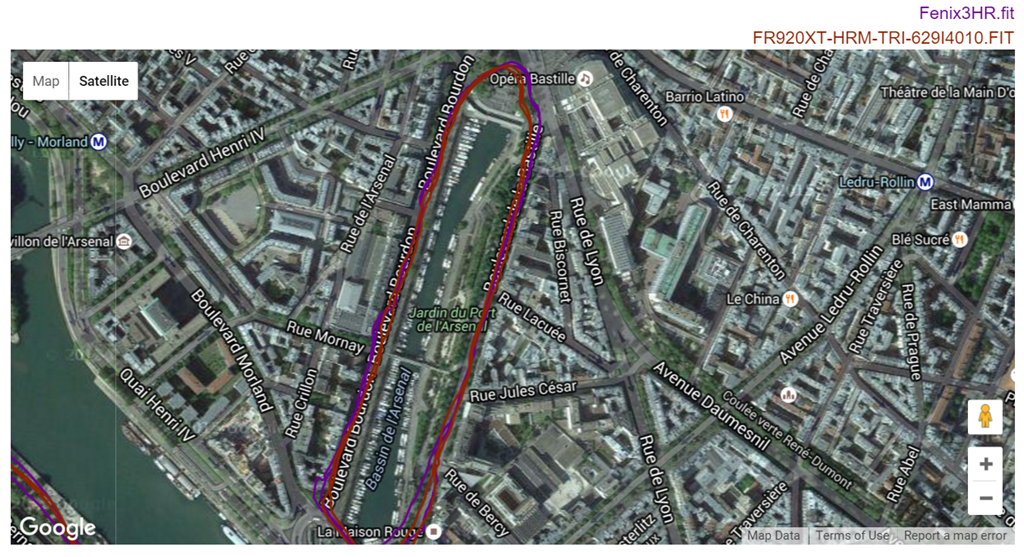
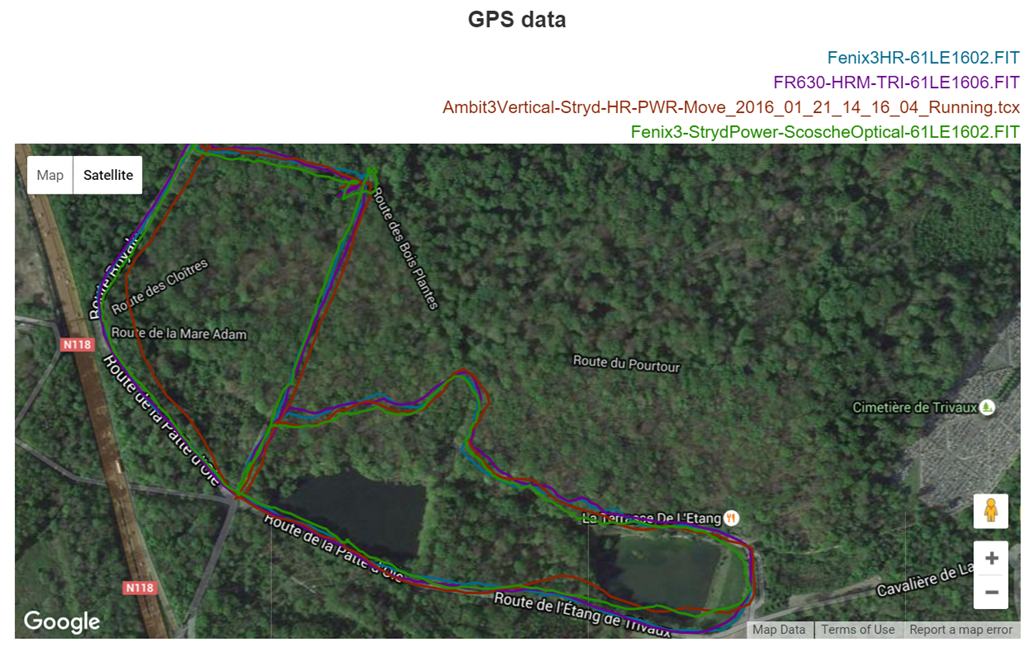
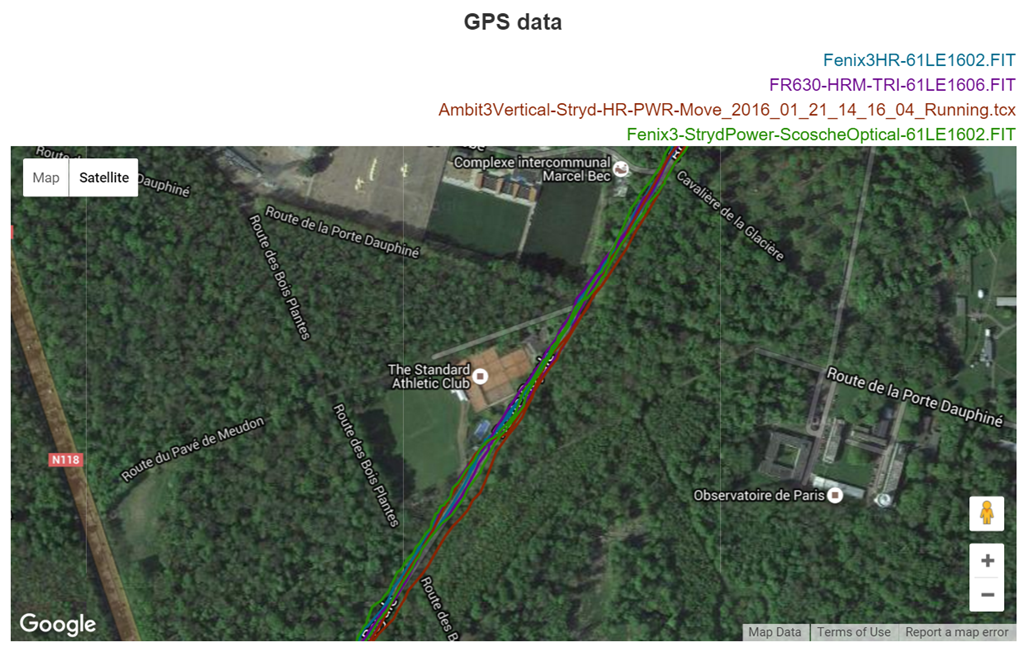
However, the vast majority of the time the unit performs solidly. I’m able to zoom in on complex sections throughout many runs and find it’s tracked well or on par with the FR920XT:
One of the challenges with the Fenix3 in general is that it’s sold so well (well into the hundreds of thousands of units, if not closer to a million units). As such, you see a higher volume of discussion on it, more so than really any other unit. So even if the total ‘bad-track’ volume is the same as other watches on any given random day, then you’re going to hear more of it – just because there’s 20, 30, or perhaps 50 times more Fenix3’s out there than Suunto Ambit or Polar V800 devices. Just my two cents.
(Note: All of the charts in these accuracy sections were created using the DCR Analyzer tool. It allows you to compare power meters/trainers, heart rate, cadence, speed/pace, GPS tracks and plenty more. You can use it as well, more details here.)
Product Comparisons:
I’ve added the Garmin Fenix3 HR to the product comparison tables, so you can mix and match any of the products I’ve reviewed to see which features they have. For the below comparison purposes, I’ve placed the Fenix3 HR next to the Fenix3 (original), and the Suunto Ambit3 Peak. But remember you can create your own product comparison table as you see fit anytime with the product comparison tool here.
And remember again, you can mix and match your own comparison chart using the product comparison tool here.
Summary:
So is it worth the extra cash over the regular Fenix3? That’s really what this all comes down to, right?
It depends a bit on how you train and what sports you use it for. For most people in running, it’ll likely do the trick most of the time. There are certain pieces that lag a bit, but the majority of the time it’s good. Meanwhile, for cycling it’s going to depend on the road conditions a bit. I’d probably just use a HR strap there for now. And lastly, for swimming, it’s not yet enabled – so you’d need a strap anyway if you wanted swimming HR. Do keep in mind that if you use a quick release kit today with a FR920XT or Fenix3, then this won’t work with that. But if you step away from the typical swim/bike/run triathlete realm that this multi-sport device is designed for, and instead focus on a less intense athlete – then it’s likely to fit the bill rather well.
The 24×7 piece, while it could use some more tweaking, is getting there. I just wish they’d allow me to control the rate of optical HR update (and thus battery burn) to get a bit more accurate data at rest (sitting or sleeping).
As for the rest of the watch, Garmin has added boatloads of small features to the Fenix3 lineup over the past year. None of which are earth-shattering, but many are appealing to specific niche requirements that folks have had. And in the process, they are burying Suunto and Polar in terms of the feature arms race. Some might argue however that at times, that arms race has led Garmin to introduce more bugs than their competitors. And that’s likely true. However, I’d also wager that the vast majority of the bugs tend not to impact everyone (or even 1-2% of everyone). Additionally, their semi-new open beta program has helped to keep those bugs for the people that love being on the bleeding edge (and providing feedback).
Overall, it’s pretty hard to beat the Fenix3 series, HR or otherwise, in today’s high-end GPS watch market. On the flip side, one can buy more reliable 3rd party optical HR sensors for less than the added cost between the Fenix3 HR and the base Fenix3. It then really comes down to a choice between accuracy and convenience (and 24×7 HR monitoring value).
Found This Post Useful? Support The Site!
Hopefully you found this review/post useful. At the end of the day, I’m an athlete just like you looking for the most detail possible on a new purchase – so my review is written from the standpoint of how I used the device. The reviews generally take a lot of hours to put together, so it’s a fair bit of work (and labor of love). As you probably noticed by looking below, I also take time to answer all the questions posted in the comments – and there’s quite a bit of detail in there as well.
If you're shopping for the Garmin Fenix3 HR or any other accessory items, please consider using the affiliate links below! As an Amazon Associate I earn from qualifying purchases. It doesn’t cost you anything extra, but your purchases help support this website a lot.
Since the Garmin Fenix3 HR is no longer sold, I recommend looking at Garmin Fenix 6 Series:
And finally, here’s a handy list of accessories that work well with this unit (and some that I showed in the review). Given the unit pairs with ANT+ & Bluetooth Smart sensors, you can use just about anything though.
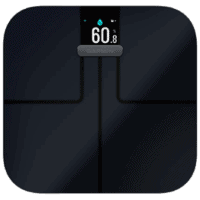
This wifi-connected scale will track your weight and related metrics both on the scale display and in Garmin Connect (plus 3rd party apps like TrainingPeaks). It'll also then sync your weight to your watch/bike computer, to ensure accurate calorie data.
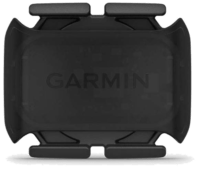
This is a dual ANT+/Bluetooth Smart cycling cadence sensor that you strap to your crank arm, but also does dual Bluetooth Smart, so you can pair it both to Zwift and another Bluetooth Smart app at once if you want.
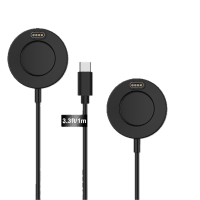
Seriously, this will change your life. $9 for a two-pack of these puck Garmin chargers that stay put and stay connected. One for the office, one for your bedside, another for your bag, and one for your dog's house. Just in case.
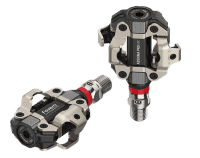
These are one of my favorite power meters, due to both cost and accuracy. These have mostly become my defacto gravel pedals, and also get used on a lot of other comparison testing.
The Garmin Rally series is effectively 3 power meters in one, for three pedal types. I use these often in accuracy testing. While they're a bit more expensive than the Favero pedals, they offer the ability to swap pedal types easily.
The HRM-PRO Plus is Garmin's top-end chest strap. It transmits dual ANT+/Bluetooth Smart, but also transmits Running Dynamics & Running Pace/Distance metrics, stores HR data during a swim, and can be used without a watch for other sports. Also, it can transmit XC Skiing Dynamics as well.
And of course – you can always sign-up to be a DCR Supporter! That gets you an ad-free DCR, access to the DCR Shed Talkin' video series packed with behind the scenes tidbits...and it also makes you awesome. And being awesome is what it’s all about!
Thanks for reading! And as always, feel free to post comments or questions in the comments section below, I’ll be happy to try and answer them as quickly as possible. And lastly, if you felt this review was useful – I always appreciate feedback in the comments below. Thanks!
Thank you for the review Ray.
And now for the obvious battery questions :)
Will it really do 16 activity hours with the optical HR?
And how many with a chest strap and optical HR off?
Once you disable the optical HR, you’re in the same league as the Fenix3. I haven’t done a 16-hr GPS activity with optical enabled though.
Part of the challenge in doing such a test is that if I just ran the optical HR sensor as I went about my day for 16 hours, it would place an unusual stress on the GPS chipset because I’d be indoors. When it has a hard time finding GPS, it increases power (thus reducing battery).
During the Dolomiti di Brenta trail in Italy on the 9th. of September 2017 it lasted 11.3 hours. At a distance of 48.5 km and about 2850 mtr of climbing I got the warning message of a low power battery. So I saved te run a couple of km’s before the finish in order not to lose the entire recording.
Thanks for yet another great review Ray. But I don’t quite agree with your closing remark. You make it sound like non-HR Fenix3 + e.g. RHYTHM+ = F3HR. But you’d be missing all the 24/7 HR tracking. Very sad, said the Fenix3 owner.
BTW. The 8 hour battery life of the Scosche, limits this a bit too, even if Garmin was talked into enabling the feature on the non-HR version.
I was thinking the same thing. I really like the idea of F3HR. It’s what I thought I was waiting for. But with battery life impacted I started to consider the possibility of wearing a separate heart rate monitor for the standard F3 to pick up (I also looked into the Rhythm+). But I suspect the software of the F3 is not configured in such a way that it could do this (but maybe it could be). I’m also unaware of an optical HRM with more than 8 hours battery life. And with F3 constantly receiving a signal from a separate device the battery may be affected just as much as the built in HRM anyway.
Thus I ended up concluding the F3HR is the complete package I have been waiting for.
Awesome update. I so want to love optical HR, but I’ve yet to have a satisfying experience. I’ve tried the Scosche Rhythm+, Fitbit Charge HR and latterly the Vivosmart HR and I find it hard to trust the data. Always just too unpredictable for me compared to a chest strap – just yesterday I went on a run averaging 140bpm +/-5 for around 65% of the time, maxing at 164bpm and the vshr never went above 90bpm and gave me zero minutes of intense activity. The previous day I’d done a similar run and it was within 1 or 2bpm for much of the profile. I could live with a chest strap for activities and the oHR for non-activity monitoring if they allowed better manual adjustment to the reading frequency. I don’t doubt they’ll get there some day, but not convinced at the moment. Love my Fenix 3 and thnkfully no incentive to upgrade here for me. Can’t help wondering if the Suunto might just nail it first time, they seem to be suspiciously absent and the Ambit 3 sales must be non-existent these days unless from the bargain bin.
I have a Fenix 3 non-HR and I have a little feature envy with the 24 hr heart rate on my wife’s 235.
Is there a way on the standard Fenix 3 to get 24 hour heart rate data using an external hr sensor?
I have used my rhythm+ whilst sleeping to get through and my fenix 3 records (not recording an workout, just normal activity tracking) it and shows it in the all day heart rate chart of garmin connect. Obviously can’t get all day from the rhythm+ but it lasts as long as I sleep (~8hrs) so I get a decent rhr.
As an aside, I wear the rhythm+ on my ankle whilst sleeping and it doesn’t bother me at all
Thanks Ray
It seems Garmin have been adding functionality to the Fenix 3 and leaving the 920XT behind.
Is there any reason to get a 920XT over a Fenix 3?
Thanks
It has a bit bigger screen, and is a bit slimmer than the Fenix3.
I think with regards to the FR920XT not getting as many updates, it is an older unit – and it’s also a cheaper unit than the Fenix3. So they’re basically betting people will pay for premium (FR920XT > Fenix3) to get additional software features. Thus far, it seems like people are.
It depends. For some people, they don’t mind having a watch on their person the entire race. So for them, sure, it’ll work.
Note if you want to gather HR data during the swim (I don’t think it’s that valuable, but some might), then you’d need a strap anyway. In which case, you’re probably looking at the quick release…so at that point I’d just save the cash and get the original (albeit at the cost of 24×7).
Hmm, i sure hope they provide a quick release kit for this one too.. :-) We spend enough -early adoptor- cash on perks like the Fenix 3 HR to deserve full triathlon capabilities.
i’ve got it on me for one day now and compared to the TomTom Spark2.. the wrist strap is definitely better on TomTom for smaller/slimmer arms :-( . The ‘closing mechanism’ is really pinned into my arm wheres the TomTom strap is far more elegant/slimmer/easier on the skin. Apart from that & being more bulky.. it’s looks like the great device you reviewed about here. Thanks for that!
On the topic of using this for a triathlon… I am currently using a 910 XT and pairing it to a Mio wrist based HR monitor (I was waiting for the 920xt to come out with a HR option but still no luck there). I turn my heart rate monitor on before the event starts (don’t get any hr data during the swim but i don’t have to fiddle with turning the HR monitor on in transition, i just go, and it lasts through a half IM). I do not take my watch off during a tri (I use a separate garmin bike computer on the bike) so the quick release strap is not an issue for me. what i am concerned about is how I will get HR data during a tri? Will i have to stop in T1 to turn on the HR function for the bike/run portions? Will I be able to see my HR on my garmin edge 800 during the bike portion? (In the review you talked about having to enable broadcast mode to see HR on your bike computer-but then you don’t see your normal screens on your watch, but obviously i wouldn’t want to do that in T1 either, then have to turn it off in T2 so I can see my normal run screens). This is getting a little confusing on how it would work for a tri? I had high hopes to get rid of 2 straps (watch and HR monitor) on my wrist, but it kind of seems like this watch just won’t work for a triathlon to get HR data for the bike (on both watch and edge 800) and on the run on the watch without having to do anything extra in transition?
Incidentally, do you also get 24×7 HR-based calories?
Couldn’t find calories mentioned in the text or in any of the screenshots.
Thanks again for a great review.
By any chance did the Mio Slice make an appearance at MWC? I was under the impression it was going to get officially introduced in Barcelona but i havent seen any news on it.
No, I didn’t see it there. Mio was in a bit of a ‘shared’ booth with other Canadian companies, but I didn’t see a rep handy when I swung by. So in many of these shared booths, it’s kinda like a desk/table at an airport. It’s yours, until you leave the chair – then it’s someone else’s. Mostly for ad-hoc meetings.
Since I’m tracking my daily calories with myFitnesspal for loss/maintenance (had bad nutrition habits), this would be an interesting 24×7 HR monitoring aspect to see – as in how close are calculated BMR calorie values vs. monitored ones and if using such monitoring would actually give a better total picture.
An in depth post on calorie calculation both in and out would be very useful. As I understand food manufacturers are allowed error rates of up to 20% on food labels (source: Novotny, J.A., American Journal of Clinical Nutrition (1 Aug 2012); 96(2): 296–301) and from experience I know calculations of calories used can vary wildly from one sports manufacturer or service to another. Meaning anyone relying on calorie deficit for diet for example is potentially going to be misled by a large margin.
Been following your posts on all the great new Garmin products. I’m curious about the functional differences between the Vivoactive HR and the Fenix3HR.
They both seem to have the same features aside from one being a touchscreen and the other not? Is there somthing im missing in the difference between the two?
Hmm, good call. Maybe I’ll put together a bit of a basic overview between the two of them and add them in. There’s a lot of advanced features that are missing, but some of the core stuff is that as a triathlete, the Vivoactive HR doesn’t have a multisport mode, so you’d have to end/start each portion of the triathlon separately (and, it doesn’t have an openwater swimming mode).
A direct comparison of the two devices would be greatly appreciated. I was planning on getting a Fenix 3 HR via this site till I saw your Vivoactive HR preview (thank you for both!).
Thanks for raising this question/idea. Was wondering the same thing (Vivoactive HR vs. Fenix 3 HR). Thanks for your ongoing quality reviews. Amazing how you can do it all so thoroughly. Much appreciated
I was looking specifically at being able to connect and record a power meter on the bike, and it seems that the VivoActive would only connect if someone creates a 3rd party app for it, and even then would not be recording it as part of the ride file. That looks like another difference between the two models.
Hi, I am planning to get a watch for my sport life and thinking to buy fenix 3 HR or vivoactive HR. I like both of them have 24/7 tracking. I am a very normal user and don’t do some very serious training, I only go to swimming 3 days a week and bike when the weather is good. I would love to track my indoor swimming pool performance. I am not planning to do triathlon yet. But I will start to train running this summer.
As the price is big different, you think vivoactive HR can fit everything i need? I know Fenix 3 look much better.
I think the vivoactive HR would fit your needs. The Vivoactive is simpler with fewer features but you said you’re a pretty normal user. Indoor swimming and biking would be done by both watches, and the Vivoactive (i have the first one) does both very well.
Thanks a lot for this great review.
Am I understand you right the optical HR would not be the best choice for a mountain biker riding off road because the hard impacts would spoil the measurement ?
So the regular strip is the best choice for offroad use?
And whats about using it in a gym ?
I pre-ordered the Fenix 3 HR and I MTB around 5 days a week.. I tried the OHR of the Fenix 3 HR while using a chest strap connected to my Edge 1000 for comparison. I have a XC Full suspension bike and the jarring made the HR go all over the place.
I’m not sure if it was the jarring itself or the watch moving on my wrist (I do wear the band tight but you know how many bumps there can be on a MTB).
I have decided to wear the chest strap while MTB as it’s not really much of a hindrance anyways.
I’ve decided to just use the built-in OHR during gym workouts as it seems to track closely during my workouts.
Hi Ray, great review as always. The most exciting new feature with this and the vivoactive HR for us paddlers out there is a mode which measures stroke rate, stroke distance etc. Does this mode still record HR? I believe the swimming mode doesn’t. And anyone done any verification on how well it measures these paddling metrics? Thanks!
Hi Ray, great review. I’m close to purchasing a new watch mainly for running, everyday use, and hiking. Would also use it for the odd triathlon, cycling when I forget my computer, and miscellaneous.
Been looking at this watch and the Suunto Ambit 3. However, I’m wondering if a new Ambit (4?) will be released soon. Would it be worthwhile waiting for news on the Ambit 4?
You wrote a little on the GPS, even though Garmin says it didnt change any components. That would be a smart thing for them to say, since it would kill off F3 sales. That said. What does your gut tell you. Does the F3HR seem to track better. In your experience that is. I”m pretty happy with F3. I’ve had some terrible tracks (like during chicago marathon), or during some 50milers. I dont get broken up on that, but I would still prefer a nice track :)
I can confirm that the semiconductor part of the GPS is exact the same on both models.
They could have done some minor tweaking on the antenna but they would do that for both models.
Any firmware improvements would be on both models to.
So the answers would be simply be: the Fenix3HR has exact the same accuracy as the latest Fenix3 models have. The Fenix models however don’t have the best accuracy of the watches on the market today, but that’s a choice Garmin made (based upon more characteristics than only (expected) accuracy).
My gut tells me that already made changes at some point in the Fenix3 lineup, and this carried them through. However, my gut also tells me they probably made at least a few minor further tweaks here.
As for chipset models – it’s one of the least important things. Antenna position/design and chipset (and watch) firmware have repeatedly proven themselves to be the most important factors in GPS performance. It’s just that everyone wants to use the ‘easy button’ reference of GPS chipsets, when in reality that’s not a huge factor.
One can look at many previous Garmin watches to see that, or even Suunto – which uses the same/very similar GPS chipset between the Ambit3 Peak and Traverse/Vertical, yet, the 2nd ones have worse GPS accuracy due to new antenna position
What GPS watch is the most accurate? Trying to decide if i should keep my Polar v800 or get a FR630 or a Fenix3. The Fenix3 looks best, but is it as accurate as the FR630?
Wih my Garmin 220 I experience a lt of probs with inaccurate strap readings. It peels of the chest, gets crazy when I sweat too much, sometimes moves. Now, if the same happens with the new strap used with Fenix HR, should I simpl revert only to the optic reading on hand? thank you!
Can you pair an external Optical HR monitor (like a scosche rhythm +) for a swim activity? Or must it be the Garmin HRM swim/tri unit? i.e. will it display real-time HR during a swim if it can pick up an ANT+ signal?
Yes — I’m using the Mio Link. under the Fenix3 HR watch band, on outside of wrist. Works great for swimming. but no storage of the HR data, like previous Fenix3.
I would love to know too..how does it feel? Not that F3 rubber band is bad, but silicone band (being more soft and pliable) should be another league and could help more snug fit.
I’m looking for an upgrade to my Basis Peak and have been eyeing this as a proper upgrade to 24/7 hr tracking and feature set. In your opinion, would this be a good upgrade? I’m typically running, cycling, or in the gym with weights. Thanks!
Based on the comments in this review, and what he wrote about 24/7 HR tracking devices in general, few devices (and nothing from Garmin) match the Peak’s true 24/7 HR monitoring.
Is it feasible to use the optical hr sensor for 24/7 hr recording, but then use a hrm run strap for workouts? Does it require you to disable the optical sensor and enable the strap sensor and then do the same in reverse each time you begin and end an activity? Or is there a way to set a priority or a default sensor for hr data for each activity?
Hi Nick – I have the Garmin Forerunner 235, and I do exactly what you’re describing here. I use the optical for 24/7 hr recording, but I use a HR strap for workouts. The watch detects it automatically when you chose an activity, and it will always prefer an external HR source over the built-in optical.
Fantastic review thank you! Just waiting for UK release :) do you think the oHR will be released in silver and if so when? I have bezel scratch anxiety.
No set date (it’s honestly not a high priority item), but if you’re doing a lot of charting I can add you to the beta program.
You can also use MyGPSFiles.com as a good option for basic HR & GPS graphs. Or, you can also use Golden Cheetah to a degree, and exporting from there to Excel (how I used to do things).
Thanks a lot!!!! Finally answered my battery life questions befor a purchase ( still running on Felix 2)….
One question remains though. How tight do you have to wear it to get accurate HR measures? I like to wear it a little loose, say like I can put a pen below the strap for example.
It should be snug. I need not leave an imprint, but it shouldn’t shift at all. If the pencil slides in easily, then it’s too loose. But if the pencil is very snug, it’s probably OK.
Hey, thank you very much for the review that was ver good, I do have a question, and sorry to drag on the whole swimming hrm thing but I’m still curious, as it is not enabled during swims, how does it look on the 24hrs hr monitoring? do you see a gap during say an hour swim or does it continue to record separately from the activity? say like it does with step counting (it keeps adding steps during swim activities). Do you see a spike in your daily heart rate monitoring due to a swim or a gap?
One this that really annoys me on the Fenix3, is the music control. It can only control the native Music app on iOS. Not your favourite streaming service.. And it lacks the volume.
The good folks at Garmin said it someting to do with BLE vs regular BT, when I argued that my old Pebble does it just fine…. Don’t quite get how the new version BT can do less…
Same there. However, my understanding is that it’s (Spotify/3rd party music control) actually a general iOS limitation related to (for example, it works on Android with Garmin devices).
Thanks for another great review! As someone who doesn’t wear a heart rate strap, I’m enjoying the F3HR so far – feel like I’m getting pretty much the same battery life as I did on F3 and GPS is definitely locking faster for me. A few questions:
– You mention that ‘outside of some very subtle style tweaks to the front…’ – I haven’t noticed any but can you describe what you’ve observed?
– On Running Dynamics, I’m actually showing Stride Length
– Do you know how to access VO2m data? I see it popup at the end of a run if I have a new high, but then can’t find a history of it.
– Cool on the Lactate Threshold! How do you set it to Auto Detect (or do a manual test for that matter)?
RE: Style tweaks: You can see little things like the strap has a very subtlety different pattern, the watch-face has different markers. You can use this picture to compare side by side and see the few tweaks: link to dcrainmaker.com
Great review Ray! But a little confused now so, your opinion is to buy the F3 without OHR or with and would be helpful for triathlon or should I check something else or wait for something else? I am not looking for a specific answer but your opinion in general with the watches exist now let’s for a multipurpose sports what would be your order in watches from 1 to 5 for example
OK, I see. Yes, the strap is different (and I actually find the F3 strap to be ‘cooler’ due to the larger/more holes). I attributed the dial markings to be a function of the sapphire version (same as before).
Thanks for checking on stride length – checked again on more recent runs and still have it!
Great review thank you…I’m currently a vivoactive owner and a FR 225, but I DID have a Fenix2SE which I returned when the Bluetooth simply fell over and wouldnt get back up. My question is about navigation, I want to set uup routes and then follow then via the app…but I don’t think *anyone* has really nailed this in a wrist-worn form factor —is that fair? Is the orig Fenix3 the best I will get with that for the time being…?? If so I might wait and get the Fenix3HR to get HR and nav in one device…
Also, I used bikehike to create routes, and with the “follow road” in Google maps feature, the Fenix2 would buzz with a change in direction every few steps – was this because it was detecting many little course points in the GPX file?? and therefore when creating a route, should I be a bit more careful in when I put my course points, so that I only get a BUZZ when i actually need to change direction (rather than just following the curve of the street?) and therefore NOT “follow roads”??
@Jon P – I am not sure if you have seen this thread on the Garmin forums – link to forums.garmin.com
In summary, one clever soul has created an app that takes a .tcx file (in my case from http://www.ridewithgps.com) converts it into .fit file which you upload onto your Fenix3 and access it from Navigation -> Courses for turn-by-turn navigation. It works very well!
That is impossible to say as Garmin has not announced the Fenix 4 yet and looking at the fact they released the Fenix 3 with HR it looks like they wont for at least another year.
However it seems most likely that Garmin will put in an HR as the Fenix is a top tier range and most features from the lower ranges are included.
Thanks for the review. Since the Fenix 3 HR bundle only comes in Sapphire lens minus the metal band, It is not a fair comparison to the Fenix 3 sapphire bundle when iprice wise. They both cost $649.99
On GPS accuracy:
My Fenix was BY FAR the worst GPS I ever owned (starting with MotoACTV way back when, plus I own(ed) 1/2 dozen Garmins). Thank you REI for letting me return it. The most comprehensive test I know of also shows terrible results (link to fellrnr.com). As do generally all MediaTek devices. For me, it was useless. Sorry.
On price:
$599? No.
If they switched back to SirfStar and made it $350-400, I’d most certainly go for it. Too bad.
Couldn’t agree more. The Fenix lineup continues to disappoint on GPS accuracy. The Fenix 3HR manages to lower the bar even further (is this even really possible?) I test everything on the market, and the 3HR is unsurpassed in underachievement. Sad, as I thought Garmin had made forward strides with the 235 which tracks surpringly well with the Ambit 3 and V800, both of which are excellent.
Thank you for the review Ray! Is the performance on the Fenix3 HR compelling enough to make you want to stop using the standard Fenix3 and Scosche? How would you say the two optical units compare?
It’s not only a question of 24h HR – optical sensor can be also used in some activities to provide reasonably enough data.
Battery life is almost the same (once your disable an optical sensor).
Style options… Yes. Although F3HR is just launching so I think that they will add more options for it later. And you can install a different strap easily (ones that don’t block the sensor).
Cost… Yes, this is the main thing.
Thanks for the review Ray. Any word on a Rose Gold model? My wife is very interested, but only if she can get the rose gold model as it is more suited for work and training.
Thanks as always for the amazing review, Ray.
Its not making my next purchase decision any easier; I’m looking for the best way to balance measuring road riding stats (200km plus per week, with power measurement coming) and 2 X basketball games a week plus walking, workouts and sleep tracking. I currently use a gen 1 Vivofit, paired with a chest strap for hoops and a 520. I’d really like to have 24×7 heart rate, and while I’m in the Apple ecosystem and the Watch appeals to me, the idea of getting the Fenix3 HR with the Run strap (that way I can leave the watch off but still measure stats) to replace all my devices is really appealing. Plus I like the idea of getting my geek on and writing an app that uses the HRM-Run data in hoops specific ways.
I’ll most likely wait for the Vivoactive HR review before committing, unless you (or any of your awesome readers) have better ideas…
Thanks as always for the amazing review, Ray.
Its not making my next purchase decision any easier; I’m looking for the best way to balance measuring road riding stats (200km plus per week, with power measurement coming) and 2 X basketball games a week plus walking, workouts and sleep tracking. I currently use a gen 1 Vivofit, paired with a chest strap for hoops and a 520. I’d really like to have 24×7 heart rate, and while I’m in the Apple ecosystem and the Watch appeals to me, the idea of getting the Fenix3 HR with the Run strap (that way I can leave the watch off but still measure stats) to replace all my devices is really appealing. Plus I like the idea of getting my geek on and writing an app that uses the HRM-Run data in hoops specific ways.
I’ll most likely wait for the Vivoactive HR review before committing, unless you (or any of your awesome readers) have better ideas…
Thanks for the review Ray.
I was wondering did you try or plan to try the new sport mode Rowing ? do you know how is it going to work? what data can we obtain from it? and how accurate it is ?
I have no tried rowing, in large part because I lack a boat (or a rower). However, I do have it on my list of things to write-up a general ‘how it works’ on…once I find both of the above.
I do know though that it works both indoors and outdoors (two modes), but beyond that, not too sure. Sorry!
Gabriel from those Garmin forums it looks like this mode don’t give you stroke rate. If it don’t give you stroke rate I don see the point of it.
I am actually a kayaker not a rower and I don’t normally use indoor equipment. For the outdoor mode it would be really good to see the combination of stoke rate with speed. With a stroke rate alert when it fell out of a certain range.
The calorie count on rowing mode with a regular fenix 3 is way off. It just assumes an average pace based on your HR (I think).
I’d be very curious how the well the optical heart rate works on the rower. I did try rowing with a MS band one and it struggled quite a bit. However the apple watch was pretty good.
Hey Ray, awesome review. I wonder if you’ve had a chance to check out the rowing features on the Fenix 3 HR? Worldwide, I would think most of us rowing indoors are using a Concept 2, which gives reliable data for wattage; the rower will then give you an estimation of calories burned per hour. The calorie value from my Fenix 3 HR is about 25% lower than the Concept 2 estimation… Do you think the calorie count from the Fenix 3 HR is the more accurate one, even though it is based on the optical heart rate (which is slightly less accurate than a chest strap)? Thanks.
Thanks. Just to throw it out there for anyone interested… while indoor rowing I’m finding that generally the optical HR reported is much lower and more erratic than the data from the HR strap. Tightening or loosening the strap doesn’t seem to help. Oddly, doing a round of pushups before rowing seemed to improve the optical data, but I’m not sure if that was a fluke yet.
That said, the heartrate data while running is accurate for me, and I love the fitness tracking. This is a quality piece of equipment for sure.
The option is on every Fenix3 HR (just under apps), but once you try and open it it’ll say it needs to connect to a HR strap (the pictures you see in the post here).
Ray – thanks for the great review. A couple of questions:
I noticed the REI link on your site – is there a way that you can get money from them if the watch is ordered there?
You mention that the Fenix 3HR has been in production for a few weeks. I have been regularly checking Amazon, Garmin, and REI websites and they all say something to the effect that the watch ships within 30 days (Garmin says they will email you when the watch is available – I’ve not received an email). Any suggestions on how to get this watch.
The REI link on the side there does indeed support the site. :)
REI has/had (for another 3-4 days anyway) an exclusive of on the Fenix3 HR, as such, basically every site is saying the same thing. In the case of REI, they did ship out units back earlier this month, but inventory will be rather varied. With exclusives, it doesn’t mean that they’ll have a ton of units, just that they’ll have them first.
As for Amazon and Garmin.com, they tend to get them last (fwiw).
Ray – thanks for the response – it is very helpful. One other question. I have been concerned that the apparent delay in production rates could reflect a potential quality issue with the Fenix 3 HR rather than just a shortage of parts. Has initial quality been a problem with previous Garmin products? I had an older Forerunner which was great, and I am looking forward to enjoying this product as much as I did the previous one.
Nah, low-volumes are totally normal for Garmin in the first few months. As is usually the case, Garmin overestimates when they’ll start manuf, and then retailers overestimate when and how many units Garmin will send to them. And consumers in turn translate “Q1” to “Two weeks ago”, even if there is still a month left in Q1. ;)
Contrast Issues. I bought a Garmin FR 235 and will have to return it. The contrast is not enough especially when I wear it as a daily watch. Outdoors in bright light it is fine. I still have a FR 410 and it is fine. I primarily want a GPS smartwatch that I can wear daily, with good contrast that I can add speed and cadence sensors (cadence most important). I primarily cycle (85%) . I have a Microsoft Band which I have no contrast issues but I have limited capabilities especially add on devices like cadence
Ray – got mine yesterday, and successfully used it today during my workouts. Found all of the features worked as you described, and I was very happy with the fenix 3 HR. Most notably, the fenix 3 heart rate behaved very reliably compared to an elliptical machine, and the calculated calories in Garmin Connect were very different than those that the machine reported (I believe the Garmin since they are base on Firstbeat technology). Don’t believe that I could have been as successful without reading your reviews. I am very appreciative of the value you provide to folks trying to select these devices. Best regards.
I enjoy your reviews and your all inclusive and fair approach. As a lady distance running I am trying to decide between the Fenix(r) 3HR and the Forerunner(r) 235. I have taken weeks to review features. I am concerned with the size and weight of the Fenix vs. the 235 and the battery live for long runs (50k, 100k and 100 miles). Any information on what women are saying? I have also checked the women’s page of your website. Keep up the great research that is helping us enjoy our sports.
It’s going to depend on your wrist size a bit. For The Girl (my wife), she simply finds the Fenix3 (any version) far too heavy and big for her wrists. She’s 5’2″ tall. She loves the smaller Forerunner lineup though (she currently uses a FR620).
Di – I can’t speak to the battery life for the long distances, but I am a woman who uses the Fenix 3 and I love it. It is on the heavier side, but I’ve gotten used to it. I wear it 24×7 and never notice it. I swap out the bands for cooler girlie colors. I’m a fan of the perlon straps which you can find in 24mm width, which fits this watch fine (although 26mm is technically the proper size). There is more customization with the Fenix than there is with a FR. I would go with Fenix. FWIW, I have a 6″ wrist.
Ray do YouTube an idea if you can adapt the bikemount from the normal F3 and use it on your arm
You could make a hole and than use it But you still won’t get skin contact
Ray do you have an idea if you can adapt the bikemount from the normal F3 and use it on your arm
You could make a hole and than use it But you still won’t get skin contact the question would be if it still work for 24/7 monitoring
So I am someone who has never owned a fenix 3, but I am trying to decide between the HR and the standard sapphire model, do you personally think it is worth it to get the HR version, or do the added benefits not outweigh what you would get with the standard sapphire package?
Ray, thank you for the review. Garmin customer support said that the F3HR could be worn either on the outside or on the inside of the wrist with no problems. Have you tried wearing it facing inward towards your body? If so, any issues on HR or GPS? Thanks for any info!
Facing inwards should be even easier for optical HR as the skin is thinner there. (but this depends on individual’s position of blood vessels which is unique for every human)
Either option is fine. I’ve used both and for me, I don’t notice too much of a difference in most situations. However, in general those that are on the ‘edge’ of optical HR working often find better luck with the sensor on the inside of their wrist. The softer skin means that the sensor is able to ‘dig in’ a bit deeper and reduce light. It also tends to be less hairy, and is usually slightly less tanned. Sometimes those tiny differences can be make or break for some people.
It stood up well to scratches, except one whack against a non-sanded sharp metal adjust of a counter at an airport last week. You can see the scratch just barely on left edge of bezel.
Otherwise though, I hit it on numerous rocks/walls/objects without issue.
No idea on other colors, but I’d bet eventually. But probably not anytime soon.
Hi Ray, great review again. Since this is a “new” garmin product. Do you think they will add in some of the newer features from other devices such as support for the varia line I.e. Rear radar and or eye piece thingamy? Or will those stay specifically for the edge devices ? Have you heard anything from Garmin regarding this.
I have a F3 and the rear radar plus eye piece would be perfect for me for cycling.
When I talked to them about it, it was something they said they were looking at and keenly aware of feedback on (for both F3 and 920xt). But that’s where things stand. Given the Vivoactive HR got support for it, I can’t imagine the watches costing 2-3x as much will be far behind.
Nope, thats not a typo. I only placed my order about a week ago so there may be some with pre-orders due to be fulfilled before mine, but mid-April was definitely what i was told.
And info from Garmin about other versions of F3HR? I’m mostly interested in a non-coated (“silver”) bezel and/or titanium band. (don’t like coated metal bezels as they are prone to scratches and I tend to use watches for more than 2-3 years)
When I asked this question, they replied that it is _currently_ available only with grey bezel, but I can leave feedback/suggestions on relevant section of their site. Which I did and would definitely ask others to do.
This may have been answered in previous fenix 2,3 posts, but I am still using my Fenix 1. Has Garmin fixed the issue of using both bluetooth and ANT+ at the same time yet?
@Jonathan: I’m in the same boat as you still using the Fenix1 – just in case, to add to Phil’s comment, Fenix1/2 are limited on the hardware side re concurrent Bt & ANT+ use.
I was wondering if there is a cell tower near that area that is problematic with multiple GPS devices. I have noticed the only time my Fenix 3 has issues is when it is a certain distance from a cell tower. There is a cell tower that is right next to one of my running areas and I have GPS spikes in exactly the same spots in a fairly circular pattern around it. Has to be far enough away that the signal hits you but not too far. Appears to be in the 500-1200ft range from the top of the tower.
Scott… I have used the Fernix 3 for golf a good bit. Pretty much every Saturday for awhile now. The watch does not provide any swing metrics like swing speed or tempo, it just basically tells you how far you are to the front, middle, and center of the green. It has some other distance functions, like length of shot, that I do not use. I have used many GPS golf devices and I have to say this watch works fine. It does not switch over to other holes when you hit way off of the fairway and it really does not drain the battery down. A few of the Garmin golf specific watches really drain the battery fast. This is not the case with the Fenix. I like it. My golf buddies give me shit because they say I have a belt buckle on my wrist but other than that it is fine.
Some folks have done so with luck on both Scosche and Mio. I’ve had slightly more luck with Mio, only because I find it easier to get the HR strap to stay on my wrist (since it’s designed for that).
Both the Scosche and Mio posts have numerous folks posting test swimming results in the comments section (wearing units right next to watches).
I’ve had very good luck with the Mio while swimming. Cinch it down snug, and place it right next to the watch (In my case, an Ambit2).
Will I be able to pair the Mio with the Fenix HR in swim mode and get real time HR? i.e. will the Fenix3 just treat the Mio as if it’s a Garmin Swim/Tri monitor? Or will it only pair with the Garmin strap when in swim mode?
Hi Ray – again another quality review however I think it seems to leave the OHR in the OK area. Do you think it is a firmware or hardware issue? Finding it difficult to justify an extra £150 for it and would like to see basemaps added too. I know the jury is out on the benefits of measuring HR whilst swimming however if the technology is there it is always great to have data (maybe it is just the data nerd in me). Hopefully in the future 24 x 7 monitoring is closer to recording data 24 x 7 and not just if you are moving.
I don’t see there is a chance we will see this review from Ray. Epix is already close to a year on the market.
I use epix for around 5 months already and for my needs (triathlon, hiking, endurance MTB and 24×7 watch) it is still the best device on the market.
Does the Fenix 3 or Fenix 3 HR have audio alerts when running or cycling? So when I have the lap at a mile it will send an audio notification through my phone to my earphones with the lap info?
Yes, they should both support audio alerts through the GCM app. The option is called “Audio Prompts” and is under the device settings in Garmin Connect Mobile (on Android, at least).
I’m about done with my android wear device and becoming very interested in a Garmin. My main complaint with android wear is that the Bluetooth connection keeps dropping between the watch and the phone. It’s happened with more than one android watch now. How well would you rate the Fenix 3 on this issue? Once it’s paired, does it have a consistent connection? Thanks.
Yeah, well I ordered from Clever Training Jan 6!!! That’s 2 months ago.
And still have no idea when it will be shipped. Sc#$! Garmin and Clever Training. Garmin needs to work on both communication and execution. I definitely got hosed by going with Clever Training and will likely think twice in the future, but Garmin what is wrong with you?
Haha… After writing this I got an email saying it was pushed back to March 21st. Umm… You guys will have had my money for like 3 months by the time I get this – nice for you Clever Training
Pretty much all Fenix3 HR’s have been delayed, outside of the initial REI shipments per the 30-day exclusive they got (albeit didn’t communicate to any retailers until afterwards).
Also note that specific models often dictate differences in delivery dates (i.e. straps, bundles, etc…).
Good to know! I was considering one for my birthday this month to finally replace my 310XT. I’d get it with any newer generation Garmin watch but in addition to the convenient heart rate monitoring when I want it I’m really excited about faster GPS locking here in NYC.
Ray,
thank you for yet another outstanding review!
I am in the market for a GPS watch for a beginner triathlete. I used the comparison feature of your site to compare the F3, F3 HR, and the 920XT. Based on this I cannot see a reason to not go with the 920XT.
I have read that the screen size is limited on the 920XT, could you confirm this?
Any other major reason to go with the F3, or F3 HR if not too keen on optical HR?
I need to decide between a regular fenix3 or the fenix3 hr. It all really comes down to having 24/7 HR monitoring. I am confronted with two questions:
1. Is the fenix3 HR generally too bulky to be wearing 24/7? I am a regular size guy but is it just me that finds the proposition of wearing something this bulky all day even when sleeping a bit much? This is for someone who doesn’t even wear a regular watch.
2. Is 24/7 HR monitoring absolutely necessary? What actionable insights can you get from such data? I have read Rays HR article. Need to read it again. But really, why do I need to know my heart rate 24/7? Also if it’s that necessary, can that data be gathered over a period ( say a week) using the regular garmin and a scosche+
1. Try it and see if you like it. Most retailers have 2 week type return/exchange policies. The Vivoactive HR will be a lot lighter so that might be an option as well. Of course, from reading other posts in this thread, it’s going to be a long wait for these watches. I want one now.
2. Need is too strong of a word. It’s nice to have it as an option and it does not add very much weight. I’m not sure how much heart data matters as everyone is different.
Victor, I never wore a watch before getting my fenix 2 I wore it most of the time after getting my vivoactive I wore that one 24/7 so I didn’t know if I would be able to wear the fenix3 HR 24/7 coming from the vivoactive. I am 5’8 and weight 157 and I have been wearing this watch 24/7 with no issues. I went wit the HR version for the simple reason if I did not like the OHRM I would just turn it off I now know what my resting HR is that data going to help my training…to early to tell but one thing is certain it’s not going to hurt it. For light workouts and 24/7 for me the OHRM works real well for intense workouts I simply wear my TRI or swim strap.
“Is the fenix3 HR generally too bulky to be wearing 24/7?”
My current watch is Citizen Skyhawk with metal band. Great watch, but is almost 180g. It took me several month to get used to its weight and I still sometimes remove it during the day. But, in general – not bad. So from my perspective, Fenix 3 (/HR) with its 80g is almost weightless :)
It terms of size, it will depend on your wrist. Mine is almost 19cm.
“Is 24/7 HR monitoring absolutely necessary?”
I want this as I generally have too high RHR and work on reducing it. Also had some history of heart conditions amongst my relatives, so would be useful to monitor my heart.
“over a period ( say a week) using the regular garmin and a scosche+”
I thought that scosche+ has a battery live of only 7-8 hours. Garmin supports 24/7 HR only with build-in sensor (possibly, due to power consumption).
I’m looking at getting either the Fenix 3 (non optic HR) or the Suunto Ambit 3 Peak. I’m joining the military soon, so ruggedness and battery life is a must. However, I’ll also be using them for longish runs (15-20 miles), and potentially triathlons and open water swims. Which would you suggest?
Maps on Fenix series?
looks like the Fenix 3 family is getting bigger and bigger with al the different models. (Basic, Sky, HR, Tactics)
I am still not sure if the watch is ideal for me because one of the things i would realy love to have is some very basic local maps when running trails (area 15x15km) no pre-defined routes so i make decisions a-la minute in the field (hoping they are not dead end).
Now my eye fell on the brand new Quantix 3.
In pictures on the site you can clearly see screens with maps !
When looking at the specifications the line “Full Color CourseView Maps” is added. (Built-in memory unchanged)
Can you ask garmin if the maps are comming to the “normal” Fenix 3 series as well?
Or do i have to buy a Quanix 3 ? (hope it will support not only nautical but also topo maps)
Thanks for the info.
I’m aware of the Epix but that isn’t a sport watch anymore (size (lack of advanced hr strap support)). 90% of my time i just need a tri watch without the maps, the Fenix is 90% OK but i already have a watch that does 80% of my needs so the difference is only 10% (thats the bad luck of already having a device)
Bad news however, the picture i linked to is just a simpel garmin watch face! (downloadable in store) Not an active map or even a map streamed to the device.
“I’m aware of the Epix but that isn’t a sport watch anymore (size (lack of advanced hr strap support))”
This surprises me, as in Garmin’s model line Epix is positioned above Fenix 3, having all the same functions as F3 (apart from WiFi, if I’m right) plus maps. Are you sure about HR Strap support?
The only difference is that Epix has not had such commercial success as Fenix 3 and many retailers dropped its price significantly.
“the picture i linked to is just a simpel garmin watch face”
Well, Bravo D2, Taktix, Aquatix are still the same Fenix 3, with slightly different colours and firmware.
I swim, bike and run. Then, I come here and write about my adventures. It’s as simple as that. Most of the time. If you’re new around these parts, here’s the long version of my story.
You'll support the site, and get ad-free DCR! Plus, you'll be more awesome. Click above for all the details. Oh, and you can sign-up for the newsletter here!
Here’s how to save!
Wanna save some cash and support the site? These companies help support the site! With Backcountry.com or Competitive Cyclist with either the coupon code DCRAINMAKER for first time users saving 15% on applicable products.
You can also pick-up tons of gear at REI via these links, which is a long-time supporter as well:
Alternatively, for everything else on the planet, simply buy your goods from Amazon via the link below and I get a tiny bit back as an Amazon Associate. No cost to you, easy as pie!
You can use the above link for any Amazon country and it (should) automatically redirect to your local Amazon site.
While I don't partner with many companies, there's a few that I love, and support the site. Full details!
Want to compare the features of each product, down to the nitty-gritty? No problem, the product comparison data is constantly updated with new products and new features added to old products!
Wanna create comparison chart graphs just like I do for GPS, heart rate, power meters and more? No problem, here's the platform I use - you can too!
Think my written reviews are deep? You should check out my videos. I take things to a whole new level of interactive depth!
Smart Trainers Buyers Guide: Looking at a smart trainer this winter? I cover all the units to buy (and avoid) for indoor training. The good, the bad, and the ugly.
Check out
my weekly podcast - with DesFit, which is packed with both gadget and non-gadget goodness!
Get all your awesome DC Rainmaker gear here!
FAQ’s
I have built an extensive list of my most frequently asked questions. Below are the most popular.
You probably stumbled upon here looking for a review of a sports gadget. If you’re trying to decide which unit to buy – check out my in-depth reviews section. Some reviews are over 60 pages long when printed out, with hundreds of photos! I aim to leave no stone unturned.
I travel a fair bit, both for work and for fun. Here’s a bunch of random trip reports and daily trip-logs that I’ve put together and posted. I’ve sorted it all by world geography, in an attempt to make it easy to figure out where I’ve been.
The most common question I receive outside of the “what’s the best GPS watch for me” variant, are photography-esq based. So in efforts to combat the amount of emails I need to sort through on a daily basis, I’ve complied this “My Photography Gear” post for your curious minds (including drones & action cams!)! It’s a nice break from the day-to-day sports-tech talk, and I hope you get something out of it!
Many readers stumble into my website in search of information on the latest and greatest sports tech products. But at the end of the day, you might just be wondering “What does Ray use when not testing new products?”. So here is the most up to date list of products I like and fit the bill for me and my training needs best! DC Rainmaker 2024 swim, bike, run, and general gear list. But wait, are you a female and feel like these things might not apply to you? If that’s the case (but certainly not saying my choices aren’t good for women), and you just want to see a different gear junkies “picks”, check out The Girl’s Gear Guide too.



















Thanx for great review!
Thanks for another excellent review. The sooner they’re available in the UK the better!
Great review Ray!
Have your tried the F3 HR with a metal band? I am curious how comfortable or usable the wrist based heart-rate would be.
No, I haven’t tried it with a metal band.
too big for women
Excellent review Ray!
Nice review. Quick check in the comparison
RUNNING DYNAMICS (VERTICAL OSCILLATION, GROUND CONTACT TIME, ETC…) should also have WITH HRM-TRI/HRM (NOT WITH OPTICAL HR). Correct?
Good idea. Added (to Fenix3HR, and variants to Fenix3, FR920XT, and Epix).
New site for fenix 3 users! https://fenix3forum.com Hope you like it
Or use the official forums from Garmin that has a much larger userbase: link to forums.garmin.com
You are also more likely to get help from Garmin Moderators.
You mentioned in the summary something about a quick release kit for the Fenix 3? I wasn’t aware they had a quick release kit for the Fenix 3.
never mind, should have googled first.
Thank you for the review Ray.
And now for the obvious battery questions :)
Will it really do 16 activity hours with the optical HR?
And how many with a chest strap and optical HR off?
Once you disable the optical HR, you’re in the same league as the Fenix3. I haven’t done a 16-hr GPS activity with optical enabled though.
Part of the challenge in doing such a test is that if I just ran the optical HR sensor as I went about my day for 16 hours, it would place an unusual stress on the GPS chipset because I’d be indoors. When it has a hard time finding GPS, it increases power (thus reducing battery).
During the Dolomiti di Brenta trail in Italy on the 9th. of September 2017 it lasted 11.3 hours. At a distance of 48.5 km and about 2850 mtr of climbing I got the warning message of a low power battery. So I saved te run a couple of km’s before the finish in order not to lose the entire recording.
In Hands-On review I was just asking when… U R Great! :D
Thanks for yet another great review Ray. But I don’t quite agree with your closing remark. You make it sound like non-HR Fenix3 + e.g. RHYTHM+ = F3HR. But you’d be missing all the 24/7 HR tracking. Very sad, said the Fenix3 owner.
BTW. The 8 hour battery life of the Scosche, limits this a bit too, even if Garmin was talked into enabling the feature on the non-HR version.
That’s fair on lack of 24×7, I’ll add that in.
I do agree the battery life limits it, though, there are other options that get longer (Mio does for example).
I was thinking the same thing. I really like the idea of F3HR. It’s what I thought I was waiting for. But with battery life impacted I started to consider the possibility of wearing a separate heart rate monitor for the standard F3 to pick up (I also looked into the Rhythm+). But I suspect the software of the F3 is not configured in such a way that it could do this (but maybe it could be). I’m also unaware of an optical HRM with more than 8 hours battery life. And with F3 constantly receiving a signal from a separate device the battery may be affected just as much as the built in HRM anyway.
Thus I ended up concluding the F3HR is the complete package I have been waiting for.
Excellent! Right on target, thank you for your time!
Awesome update. I so want to love optical HR, but I’ve yet to have a satisfying experience. I’ve tried the Scosche Rhythm+, Fitbit Charge HR and latterly the Vivosmart HR and I find it hard to trust the data. Always just too unpredictable for me compared to a chest strap – just yesterday I went on a run averaging 140bpm +/-5 for around 65% of the time, maxing at 164bpm and the vshr never went above 90bpm and gave me zero minutes of intense activity. The previous day I’d done a similar run and it was within 1 or 2bpm for much of the profile. I could live with a chest strap for activities and the oHR for non-activity monitoring if they allowed better manual adjustment to the reading frequency. I don’t doubt they’ll get there some day, but not convinced at the moment. Love my Fenix 3 and thnkfully no incentive to upgrade here for me. Can’t help wondering if the Suunto might just nail it first time, they seem to be suspiciously absent and the Ambit 3 sales must be non-existent these days unless from the bargain bin.
I have a Fenix 3 non-HR and I have a little feature envy with the 24 hr heart rate on my wife’s 235.
Is there a way on the standard Fenix 3 to get 24 hour heart rate data using an external hr sensor?
No method there unfortunately.
I have used my rhythm+ whilst sleeping to get through and my fenix 3 records (not recording an workout, just normal activity tracking) it and shows it in the all day heart rate chart of garmin connect. Obviously can’t get all day from the rhythm+ but it lasts as long as I sleep (~8hrs) so I get a decent rhr.
As an aside, I wear the rhythm+ on my ankle whilst sleeping and it doesn’t bother me at all
Through should read rhr…. Samsung predictive text….
That sounds cool. Could you share a screenshot and also please describe the steps in your approach?
but dont you have to start an activity to be recording the HR. This is weird…
Thanks Ray
It seems Garmin have been adding functionality to the Fenix 3 and leaving the 920XT behind.
Is there any reason to get a 920XT over a Fenix 3?
Thanks
It has a bit bigger screen, and is a bit slimmer than the Fenix3.
I think with regards to the FR920XT not getting as many updates, it is an older unit – and it’s also a cheaper unit than the Fenix3. So they’re basically betting people will pay for premium (FR920XT > Fenix3) to get additional software features. Thus far, it seems like people are.
So, it’s sounds like there would never be a quick release for this…the sensor gets in way. So would you say no on this model for triathlon?
It depends. For some people, they don’t mind having a watch on their person the entire race. So for them, sure, it’ll work.
Note if you want to gather HR data during the swim (I don’t think it’s that valuable, but some might), then you’d need a strap anyway. In which case, you’re probably looking at the quick release…so at that point I’d just save the cash and get the original (albeit at the cost of 24×7).
Hmm, i sure hope they provide a quick release kit for this one too.. :-) We spend enough -early adoptor- cash on perks like the Fenix 3 HR to deserve full triathlon capabilities.
i’ve got it on me for one day now and compared to the TomTom Spark2.. the wrist strap is definitely better on TomTom for smaller/slimmer arms :-( . The ‘closing mechanism’ is really pinned into my arm wheres the TomTom strap is far more elegant/slimmer/easier on the skin. Apart from that & being more bulky.. it’s looks like the great device you reviewed about here. Thanks for that!
On the topic of using this for a triathlon… I am currently using a 910 XT and pairing it to a Mio wrist based HR monitor (I was waiting for the 920xt to come out with a HR option but still no luck there). I turn my heart rate monitor on before the event starts (don’t get any hr data during the swim but i don’t have to fiddle with turning the HR monitor on in transition, i just go, and it lasts through a half IM). I do not take my watch off during a tri (I use a separate garmin bike computer on the bike) so the quick release strap is not an issue for me. what i am concerned about is how I will get HR data during a tri? Will i have to stop in T1 to turn on the HR function for the bike/run portions? Will I be able to see my HR on my garmin edge 800 during the bike portion? (In the review you talked about having to enable broadcast mode to see HR on your bike computer-but then you don’t see your normal screens on your watch, but obviously i wouldn’t want to do that in T1 either, then have to turn it off in T2 so I can see my normal run screens). This is getting a little confusing on how it would work for a tri? I had high hopes to get rid of 2 straps (watch and HR monitor) on my wrist, but it kind of seems like this watch just won’t work for a triathlon to get HR data for the bike (on both watch and edge 800) and on the run on the watch without having to do anything extra in transition?
Incidentally, do you also get 24×7 HR-based calories?
Couldn’t find calories mentioned in the text or in any of the screenshots.
Thanks again for a great review.
Yes, like the FR235 the Fenix3 HR also uses HR during the 24×7 mode to determine calories.
It’s on my list to get a deeper understanding of how that works for an updated Garmin-wide calories post.
Thanks for the prompt reply.
By any chance did the Mio Slice make an appearance at MWC? I was under the impression it was going to get officially introduced in Barcelona but i havent seen any news on it.
Cheers,
No, I didn’t see it there. Mio was in a bit of a ‘shared’ booth with other Canadian companies, but I didn’t see a rep handy when I swung by. So in many of these shared booths, it’s kinda like a desk/table at an airport. It’s yours, until you leave the chair – then it’s someone else’s. Mostly for ad-hoc meetings.
Since I’m tracking my daily calories with myFitnesspal for loss/maintenance (had bad nutrition habits), this would be an interesting 24×7 HR monitoring aspect to see – as in how close are calculated BMR calorie values vs. monitored ones and if using such monitoring would actually give a better total picture.
An in depth post on calorie calculation both in and out would be very useful. As I understand food manufacturers are allowed error rates of up to 20% on food labels (source: Novotny, J.A., American Journal of Clinical Nutrition (1 Aug 2012); 96(2): 296–301) and from experience I know calculations of calories used can vary wildly from one sports manufacturer or service to another. Meaning anyone relying on calorie deficit for diet for example is potentially going to be misled by a large margin.
Some clarity on that would be great.
Thanks for citing that source – I had not been aware of that statistic, and find it pretty incredible. A 20% disparity is pretty significant!
Looking forward to the Garmin-wide calories post. Is this still in the works Ray? I am sure many would be interested in your findings. Thanks!
Eeks, still on a burner. Just not the front burner at the moment. Sorry!
Thanks for the great review.
Been following your posts on all the great new Garmin products. I’m curious about the functional differences between the Vivoactive HR and the Fenix3HR.
They both seem to have the same features aside from one being a touchscreen and the other not? Is there somthing im missing in the difference between the two?
Thanks.
Hmm, good call. Maybe I’ll put together a bit of a basic overview between the two of them and add them in. There’s a lot of advanced features that are missing, but some of the core stuff is that as a triathlete, the Vivoactive HR doesn’t have a multisport mode, so you’d have to end/start each portion of the triathlon separately (and, it doesn’t have an openwater swimming mode).
A direct comparison of the two devices would be greatly appreciated. I was planning on getting a Fenix 3 HR via this site till I saw your Vivoactive HR preview (thank you for both!).
Thanks for raising this question/idea. Was wondering the same thing (Vivoactive HR vs. Fenix 3 HR). Thanks for your ongoing quality reviews. Amazing how you can do it all so thoroughly. Much appreciated
I was looking specifically at being able to connect and record a power meter on the bike, and it seems that the VivoActive would only connect if someone creates a 3rd party app for it, and even then would not be recording it as part of the ride file. That looks like another difference between the two models.
Hi, I am planning to get a watch for my sport life and thinking to buy fenix 3 HR or vivoactive HR. I like both of them have 24/7 tracking. I am a very normal user and don’t do some very serious training, I only go to swimming 3 days a week and bike when the weather is good. I would love to track my indoor swimming pool performance. I am not planning to do triathlon yet. But I will start to train running this summer.
As the price is big different, you think vivoactive HR can fit everything i need? I know Fenix 3 look much better.
Just go with a Garmin 910XT.
But 910XT don’t have HRM for 24/7 tracking
I think the vivoactive HR would fit your needs. The Vivoactive is simpler with fewer features but you said you’re a pretty normal user. Indoor swimming and biking would be done by both watches, and the Vivoactive (i have the first one) does both very well.
Thanks a lot for this great review.
Am I understand you right the optical HR would not be the best choice for a mountain biker riding off road because the hard impacts would spoil the measurement ?
So the regular strip is the best choice for offroad use?
And whats about using it in a gym ?
I pre-ordered the Fenix 3 HR and I MTB around 5 days a week.. I tried the OHR of the Fenix 3 HR while using a chest strap connected to my Edge 1000 for comparison. I have a XC Full suspension bike and the jarring made the HR go all over the place.
I’m not sure if it was the jarring itself or the watch moving on my wrist (I do wear the band tight but you know how many bumps there can be on a MTB).
I have decided to wear the chest strap while MTB as it’s not really much of a hindrance anyways.
I’ve decided to just use the built-in OHR during gym workouts as it seems to track closely during my workouts.
Hi Ray, great review as always. The most exciting new feature with this and the vivoactive HR for us paddlers out there is a mode which measures stroke rate, stroke distance etc. Does this mode still record HR? I believe the swimming mode doesn’t. And anyone done any verification on how well it measures these paddling metrics? Thanks!
Ray,
Great review. Looks like Garmin is starting to hit home runs.
I say the influence of your discussions/blog has helped Garmin “get it”?
That REI link is calling my name. Lol
Thanks
ST
Hi Ray, great review. I’m close to purchasing a new watch mainly for running, everyday use, and hiking. Would also use it for the odd triathlon, cycling when I forget my computer, and miscellaneous.
Been looking at this watch and the Suunto Ambit 3. However, I’m wondering if a new Ambit (4?) will be released soon. Would it be worthwhile waiting for news on the Ambit 4?
You wrote a little on the GPS, even though Garmin says it didnt change any components. That would be a smart thing for them to say, since it would kill off F3 sales. That said. What does your gut tell you. Does the F3HR seem to track better. In your experience that is. I”m pretty happy with F3. I’ve had some terrible tracks (like during chicago marathon), or during some 50milers. I dont get broken up on that, but I would still prefer a nice track :)
I can confirm that the semiconductor part of the GPS is exact the same on both models.
They could have done some minor tweaking on the antenna but they would do that for both models.
Any firmware improvements would be on both models to.
So the answers would be simply be: the Fenix3HR has exact the same accuracy as the latest Fenix3 models have. The Fenix models however don’t have the best accuracy of the watches on the market today, but that’s a choice Garmin made (based upon more characteristics than only (expected) accuracy).
My gut tells me that already made changes at some point in the Fenix3 lineup, and this carried them through. However, my gut also tells me they probably made at least a few minor further tweaks here.
As for chipset models – it’s one of the least important things. Antenna position/design and chipset (and watch) firmware have repeatedly proven themselves to be the most important factors in GPS performance. It’s just that everyone wants to use the ‘easy button’ reference of GPS chipsets, when in reality that’s not a huge factor.
One can look at many previous Garmin watches to see that, or even Suunto – which uses the same/very similar GPS chipset between the Ambit3 Peak and Traverse/Vertical, yet, the 2nd ones have worse GPS accuracy due to new antenna position
Got it. That clears up a lot. Thx!
What GPS watch is the most accurate? Trying to decide if i should keep my Polar v800 or get a FR630 or a Fenix3. The Fenix3 looks best, but is it as accurate as the FR630?
Suunto Ambit3 Peak is the most accurate watch.
Great review Ray.
What happens when a HRM-Run belt is paired as well? Which data will be stored?
What quality is the glass?
Thanks,
Falko
The HR strap data will be used, if paired.
Wih my Garmin 220 I experience a lt of probs with inaccurate strap readings. It peels of the chest, gets crazy when I sweat too much, sometimes moves. Now, if the same happens with the new strap used with Fenix HR, should I simpl revert only to the optic reading on hand? thank you!
Can you pair an external Optical HR monitor (like a scosche rhythm +) for a swim activity? Or must it be the Garmin HRM swim/tri unit? i.e. will it display real-time HR during a swim if it can pick up an ANT+ signal?
Yes — I’m using the Mio Link. under the Fenix3 HR watch band, on outside of wrist. Works great for swimming. but no storage of the HR data, like previous Fenix3.
Any difference in comfort between the F3 rubber band and the F3 HR silicone band?
I would love to know too..how does it feel? Not that F3 rubber band is bad, but silicone band (being more soft and pliable) should be another league and could help more snug fit.
No noticeable difference to me (or at least not anything I noticed after a single run).
I’m looking for an upgrade to my Basis Peak and have been eyeing this as a proper upgrade to 24/7 hr tracking and feature set. In your opinion, would this be a good upgrade? I’m typically running, cycling, or in the gym with weights. Thanks!
Based on the comments in this review, and what he wrote about 24/7 HR tracking devices in general, few devices (and nothing from Garmin) match the Peak’s true 24/7 HR monitoring.
Is it feasible to use the optical hr sensor for 24/7 hr recording, but then use a hrm run strap for workouts? Does it require you to disable the optical sensor and enable the strap sensor and then do the same in reverse each time you begin and end an activity? Or is there a way to set a priority or a default sensor for hr data for each activity?
If it detects a strap, it uses that rather than the optical HRM.
Hi Nick – I have the Garmin Forerunner 235, and I do exactly what you’re describing here. I use the optical for 24/7 hr recording, but I use a HR strap for workouts. The watch detects it automatically when you chose an activity, and it will always prefer an external HR source over the built-in optical.
Fantastic review thank you! Just waiting for UK release :) do you think the oHR will be released in silver and if so when? I have bezel scratch anxiety.
Great review ! Can someone tell me which application is used to do the graph comparison in this article ?
Thank you
It’s a custom app I have, I’m slowly working to open it up to more and more beta testers.
Still no idea when ? Or if there are some similar app on the market ?
Thanks
No set date (it’s honestly not a high priority item), but if you’re doing a lot of charting I can add you to the beta program.
You can also use MyGPSFiles.com as a good option for basic HR & GPS graphs. Or, you can also use Golden Cheetah to a degree, and exporting from there to Excel (how I used to do things).
Thanks a lot!!!! Finally answered my battery life questions befor a purchase ( still running on Felix 2)….
One question remains though. How tight do you have to wear it to get accurate HR measures? I like to wear it a little loose, say like I can put a pen below the strap for example.
Cheers
Ralf
It should be snug. I need not leave an imprint, but it shouldn’t shift at all. If the pencil slides in easily, then it’s too loose. But if the pencil is very snug, it’s probably OK.
Hey, thank you very much for the review that was ver good, I do have a question, and sorry to drag on the whole swimming hrm thing but I’m still curious, as it is not enabled during swims, how does it look on the 24hrs hr monitoring? do you see a gap during say an hour swim or does it continue to record separately from the activity? say like it does with step counting (it keeps adding steps during swim activities). Do you see a spike in your daily heart rate monitoring due to a swim or a gap?
One this that really annoys me on the Fenix3, is the music control. It can only control the native Music app on iOS. Not your favourite streaming service.. And it lacks the volume.
The good folks at Garmin said it someting to do with BLE vs regular BT, when I argued that my old Pebble does it just fine…. Don’t quite get how the new version BT can do less…
Argh. Can’t edit these things…. Forgot to ask: Is it the same on the F3 HR?? I assume it is…
Same there. However, my understanding is that it’s (Spotify/3rd party music control) actually a general iOS limitation related to (for example, it works on Android with Garmin devices).
Thanks for another great review! As someone who doesn’t wear a heart rate strap, I’m enjoying the F3HR so far – feel like I’m getting pretty much the same battery life as I did on F3 and GPS is definitely locking faster for me. A few questions:
– You mention that ‘outside of some very subtle style tweaks to the front…’ – I haven’t noticed any but can you describe what you’ve observed?
– On Running Dynamics, I’m actually showing Stride Length
– Do you know how to access VO2m data? I see it popup at the end of a run if I have a new high, but then can’t find a history of it.
– Cool on the Lactate Threshold! How do you set it to Auto Detect (or do a manual test for that matter)?
Actually, I found the VO2m and Lactate Threshold stuff on the watch, but still curious about the subtle style tweaks to the front!
RE: Style tweaks: You can see little things like the strap has a very subtlety different pattern, the watch-face has different markers. You can use this picture to compare side by side and see the few tweaks: link to dcrainmaker.com
RE: Stride length: Hmm, I’ll triple-check
Great review Ray! But a little confused now so, your opinion is to buy the F3 without OHR or with and would be helpful for triathlon or should I check something else or wait for something else? I am not looking for a specific answer but your opinion in general with the watches exist now let’s for a multipurpose sports what would be your order in watches from 1 to 5 for example
Presumably the strap differences are to stop stray light coming in through the strap holes?
OK, I see. Yes, the strap is different (and I actually find the F3 strap to be ‘cooler’ due to the larger/more holes). I attributed the dial markings to be a function of the sapphire version (same as before).
Thanks for checking on stride length – checked again on more recent runs and still have it!
Looks interesting but seems HR still need improvement
I have ordered mine will see
It looks like it’s not so great for mountain biking ..
Ray
Still no support for Stryd or run power?
Nope. Well, not in running mode. You can use cycling mode of course, but that’s annoying.
Hi Ray
Great review thank you…I’m currently a vivoactive owner and a FR 225, but I DID have a Fenix2SE which I returned when the Bluetooth simply fell over and wouldnt get back up. My question is about navigation, I want to set uup routes and then follow then via the app…but I don’t think *anyone* has really nailed this in a wrist-worn form factor —is that fair? Is the orig Fenix3 the best I will get with that for the time being…?? If so I might wait and get the Fenix3HR to get HR and nav in one device…
Also, I used bikehike to create routes, and with the “follow road” in Google maps feature, the Fenix2 would buzz with a change in direction every few steps – was this because it was detecting many little course points in the GPX file?? and therefore when creating a route, should I be a bit more careful in when I put my course points, so that I only get a BUZZ when i actually need to change direction (rather than just following the curve of the street?) and therefore NOT “follow roads”??
Thanks again Ray, best site on the web
Jon P
follow them by the device, I mean (sorry)
@Jon P – I am not sure if you have seen this thread on the Garmin forums – link to forums.garmin.com
In summary, one clever soul has created an app that takes a .tcx file (in my case from http://www.ridewithgps.com) converts it into .fit file which you upload onto your Fenix3 and access it from Navigation -> Courses for turn-by-turn navigation. It works very well!
It is definitely worth a look.
I haven’t but I’m heading there now to take a look, thank you
Purely out of interest going forward….. if/when we see a Fenix4 will the HR be the default or will Garmin offer a choice?
That is impossible to say as Garmin has not announced the Fenix 4 yet and looking at the fact they released the Fenix 3 with HR it looks like they wont for at least another year.
However it seems most likely that Garmin will put in an HR as the Fenix is a top tier range and most features from the lower ranges are included.
Thanks for the review. Since the Fenix 3 HR bundle only comes in Sapphire lens minus the metal band, It is not a fair comparison to the Fenix 3 sapphire bundle when iprice wise. They both cost $649.99
Ans since the metal band from Garmin is about $100, this just shows approximate extra for optical HR sensor.
On GPS accuracy:
My Fenix was BY FAR the worst GPS I ever owned (starting with MotoACTV way back when, plus I own(ed) 1/2 dozen Garmins). Thank you REI for letting me return it. The most comprehensive test I know of also shows terrible results (link to fellrnr.com). As do generally all MediaTek devices. For me, it was useless. Sorry.
On price:
$599? No.
If they switched back to SirfStar and made it $350-400, I’d most certainly go for it. Too bad.
Couldn’t agree more. The Fenix lineup continues to disappoint on GPS accuracy. The Fenix 3HR manages to lower the bar even further (is this even really possible?) I test everything on the market, and the 3HR is unsurpassed in underachievement. Sad, as I thought Garmin had made forward strides with the 235 which tracks surpringly well with the Ambit 3 and V800, both of which are excellent.
Great review as expected. I was curious about your thoughts on how the optical heart rate did during weight lifting / gym workouts.
That’s a great review!
Quick question:
Will the fenix track indoor elliptical trainings? As treadmill runs at best?
If yes, only with a footpod?
Thanks
Any word on when Garmin will integrate with Google fit? They announced it a while back but have not seen any integration actually take place.
Thank you for the review Ray! Is the performance on the Fenix3 HR compelling enough to make you want to stop using the standard Fenix3 and Scosche? How would you say the two optical units compare?
No, not for me.
What if you did not own a any Fenix 3. Would you go with the HR sapphire or the original sapphire?
Is having all day HR available via the Fenix HR a compelling enough reason to buy the Fenix HR over a Fenix 3?
What are the wins for the non-HR version these days that continue to make it a compelling choice? Cost? Style options? Longer battery life?
It’s not only a question of 24h HR – optical sensor can be also used in some activities to provide reasonably enough data.
Battery life is almost the same (once your disable an optical sensor).
Style options… Yes. Although F3HR is just launching so I think that they will add more options for it later. And you can install a different strap easily (ones that don’t block the sensor).
Cost… Yes, this is the main thing.
Thanks for the review Ray. Any word on a Rose Gold model? My wife is very interested, but only if she can get the rose gold model as it is more suited for work and training.
Thanks as always for the amazing review, Ray.
Its not making my next purchase decision any easier; I’m looking for the best way to balance measuring road riding stats (200km plus per week, with power measurement coming) and 2 X basketball games a week plus walking, workouts and sleep tracking. I currently use a gen 1 Vivofit, paired with a chest strap for hoops and a 520. I’d really like to have 24×7 heart rate, and while I’m in the Apple ecosystem and the Watch appeals to me, the idea of getting the Fenix3 HR with the Run strap (that way I can leave the watch off but still measure stats) to replace all my devices is really appealing. Plus I like the idea of getting my geek on and writing an app that uses the HRM-Run data in hoops specific ways.
I’ll most likely wait for the Vivoactive HR review before committing, unless you (or any of your awesome readers) have better ideas…
Oh, any word on a QR kit for the HRM?
Thanks as always for the amazing review, Ray.
Its not making my next purchase decision any easier; I’m looking for the best way to balance measuring road riding stats (200km plus per week, with power measurement coming) and 2 X basketball games a week plus walking, workouts and sleep tracking. I currently use a gen 1 Vivofit, paired with a chest strap for hoops and a 520. I’d really like to have 24×7 heart rate, and while I’m in the Apple ecosystem and the Watch appeals to me, the idea of getting the Fenix3 HR with the Run strap (that way I can leave the watch off but still measure stats) to replace all my devices is really appealing. Plus I like the idea of getting my geek on and writing an app that uses the HRM-Run data in hoops specific ways.
I’ll most likely wait for the Vivoactive HR review before committing, unless you (or any of your awesome readers) have better ideas…
Oh, any word on a QR kit for the HR version?
Thanks for the review Ray.
I was wondering did you try or plan to try the new sport mode Rowing ? do you know how is it going to work? what data can we obtain from it? and how accurate it is ?
I have no tried rowing, in large part because I lack a boat (or a rower). However, I do have it on my list of things to write-up a general ‘how it works’ on…once I find both of the above.
I do know though that it works both indoors and outdoors (two modes), but beyond that, not too sure. Sorry!
Something I know that the fenix 3 lacks the support of ANT+ FE (the Fitness Equipment protocol)… old Garmin devices do support these..
link to forums.garmin.com
The Concept 2 Rower for instance would transmit data, but the fenix doesnt support it. (yet?)
Thanks Ray and Gabriel for the answers
Gabriel from those Garmin forums it looks like this mode don’t give you stroke rate. If it don’t give you stroke rate I don see the point of it.
I am actually a kayaker not a rower and I don’t normally use indoor equipment. For the outdoor mode it would be really good to see the combination of stoke rate with speed. With a stroke rate alert when it fell out of a certain range.
The calorie count on rowing mode with a regular fenix 3 is way off. It just assumes an average pace based on your HR (I think).
I’d be very curious how the well the optical heart rate works on the rower. I did try rowing with a MS band one and it struggled quite a bit. However the apple watch was pretty good.
Hey Ray, awesome review. I wonder if you’ve had a chance to check out the rowing features on the Fenix 3 HR? Worldwide, I would think most of us rowing indoors are using a Concept 2, which gives reliable data for wattage; the rower will then give you an estimation of calories burned per hour. The calorie value from my Fenix 3 HR is about 25% lower than the Concept 2 estimation… Do you think the calorie count from the Fenix 3 HR is the more accurate one, even though it is based on the optical heart rate (which is slightly less accurate than a chest strap)? Thanks.
I haven’t had a chance to try it out rowing unfortunately. I’m sorry!
Thanks. Just to throw it out there for anyone interested… while indoor rowing I’m finding that generally the optical HR reported is much lower and more erratic than the data from the HR strap. Tightening or loosening the strap doesn’t seem to help. Oddly, doing a round of pushups before rowing seemed to improve the optical data, but I’m not sure if that was a fluke yet.
That said, the heartrate data while running is accurate for me, and I love the fitness tracking. This is a quality piece of equipment for sure.
Thanks for the review …
Can you go a little deeper into the stress teat? From my readings I thought this was an option directly on the fenix 3 hr unit
The option is on every Fenix3 HR (just under apps), but once you try and open it it’ll say it needs to connect to a HR strap (the pictures you see in the post here).
Ray – thanks for the great review. A couple of questions:
I noticed the REI link on your site – is there a way that you can get money from them if the watch is ordered there?
You mention that the Fenix 3HR has been in production for a few weeks. I have been regularly checking Amazon, Garmin, and REI websites and they all say something to the effect that the watch ships within 30 days (Garmin says they will email you when the watch is available – I’ve not received an email). Any suggestions on how to get this watch.
Regards!!
The REI link on the side there does indeed support the site. :)
REI has/had (for another 3-4 days anyway) an exclusive of on the Fenix3 HR, as such, basically every site is saying the same thing. In the case of REI, they did ship out units back earlier this month, but inventory will be rather varied. With exclusives, it doesn’t mean that they’ll have a ton of units, just that they’ll have them first.
As for Amazon and Garmin.com, they tend to get them last (fwiw).
Ray – thanks for the response – it is very helpful. One other question. I have been concerned that the apparent delay in production rates could reflect a potential quality issue with the Fenix 3 HR rather than just a shortage of parts. Has initial quality been a problem with previous Garmin products? I had an older Forerunner which was great, and I am looking forward to enjoying this product as much as I did the previous one.
Thanks for all that you are doing.
Nah, low-volumes are totally normal for Garmin in the first few months. As is usually the case, Garmin overestimates when they’ll start manuf, and then retailers overestimate when and how many units Garmin will send to them. And consumers in turn translate “Q1” to “Two weeks ago”, even if there is still a month left in Q1. ;)
Thanks, Ray – appreciate your experiences. Best wishes.
Contrast Issues. I bought a Garmin FR 235 and will have to return it. The contrast is not enough especially when I wear it as a daily watch. Outdoors in bright light it is fine. I still have a FR 410 and it is fine. I primarily want a GPS smartwatch that I can wear daily, with good contrast that I can add speed and cadence sensors (cadence most important). I primarily cycle (85%) . I have a Microsoft Band which I have no contrast issues but I have limited capabilities especially add on devices like cadence
Ray – got mine yesterday, and successfully used it today during my workouts. Found all of the features worked as you described, and I was very happy with the fenix 3 HR. Most notably, the fenix 3 heart rate behaved very reliably compared to an elliptical machine, and the calculated calories in Garmin Connect were very different than those that the machine reported (I believe the Garmin since they are base on Firstbeat technology). Don’t believe that I could have been as successful without reading your reviews. I am very appreciative of the value you provide to folks trying to select these devices. Best regards.
I enjoy your reviews and your all inclusive and fair approach. As a lady distance running I am trying to decide between the Fenix(r) 3HR and the Forerunner(r) 235. I have taken weeks to review features. I am concerned with the size and weight of the Fenix vs. the 235 and the battery live for long runs (50k, 100k and 100 miles). Any information on what women are saying? I have also checked the women’s page of your website. Keep up the great research that is helping us enjoy our sports.
It’s going to depend on your wrist size a bit. For The Girl (my wife), she simply finds the Fenix3 (any version) far too heavy and big for her wrists. She’s 5’2″ tall. She loves the smaller Forerunner lineup though (she currently uses a FR620).
Di – I can’t speak to the battery life for the long distances, but I am a woman who uses the Fenix 3 and I love it. It is on the heavier side, but I’ve gotten used to it. I wear it 24×7 and never notice it. I swap out the bands for cooler girlie colors. I’m a fan of the perlon straps which you can find in 24mm width, which fits this watch fine (although 26mm is technically the proper size). There is more customization with the Fenix than there is with a FR. I would go with Fenix. FWIW, I have a 6″ wrist.
Ray do YouTube an idea if you can adapt the bikemount from the normal F3 and use it on your arm
You could make a hole and than use it But you still won’t get skin contact
Any thoughts?
Would likely work physically, but I’m betting it’d result in reduced accuracy (potentially a lot), due to bounce of sensor.
Ray do you have an idea if you can adapt the bikemount from the normal F3 and use it on your arm
You could make a hole and than use it But you still won’t get skin contact the question would be if it still work for 24/7 monitoring
Any thoughts?
Great review as always. Ordered mine on REI today. No telling when it will come though.
So I am someone who has never owned a fenix 3, but I am trying to decide between the HR and the standard sapphire model, do you personally think it is worth it to get the HR version, or do the added benefits not outweigh what you would get with the standard sapphire package?
Ray, thank you for the review. Garmin customer support said that the F3HR could be worn either on the outside or on the inside of the wrist with no problems. Have you tried wearing it facing inward towards your body? If so, any issues on HR or GPS? Thanks for any info!
Facing inwards should be even easier for optical HR as the skin is thinner there. (but this depends on individual’s position of blood vessels which is unique for every human)
Either option is fine. I’ve used both and for me, I don’t notice too much of a difference in most situations. However, in general those that are on the ‘edge’ of optical HR working often find better luck with the sensor on the inside of their wrist. The softer skin means that the sensor is able to ‘dig in’ a bit deeper and reduce light. It also tends to be less hairy, and is usually slightly less tanned. Sometimes those tiny differences can be make or break for some people.
Ray – any indication from Garmin about releasing the Fenix 3 HR in other colors? At least silver.
Also care to test scratch the bezel (going back to garmin right?) to see if it stands better to scratches ?
Hi Ray,
As others have questioned, any idea if it will be released in other colours? Notably Silver and leather strap??
Thanks, as always :0)
It stood up well to scratches, except one whack against a non-sanded sharp metal adjust of a counter at an airport last week. You can see the scratch just barely on left edge of bezel.
Otherwise though, I hit it on numerous rocks/walls/objects without issue.
No idea on other colors, but I’d bet eventually. But probably not anytime soon.
Hi Ray, great review again. Since this is a “new” garmin product. Do you think they will add in some of the newer features from other devices such as support for the varia line I.e. Rear radar and or eye piece thingamy? Or will those stay specifically for the edge devices ? Have you heard anything from Garmin regarding this.
I have a F3 and the rear radar plus eye piece would be perfect for me for cycling.
Thanks,
Tom
When I talked to them about it, it was something they said they were looking at and keenly aware of feedback on (for both F3 and 920xt). But that’s where things stand. Given the Vivoactive HR got support for it, I can’t imagine the watches costing 2-3x as much will be far behind.
Cotswold Outdoor now advising that mid-April is the likely delivery date for UK pre-orders. Citing the same component availability issue.
Mid March, not mid April
Nope, thats not a typo. I only placed my order about a week ago so there may be some with pre-orders due to be fulfilled before mine, but mid-April was definitely what i was told.
CO website still saying mid-March though? I know I’m second in line for when they do get stock so still hopeful of next week.
Ray, thanks for great review!!
And info from Garmin about other versions of F3HR? I’m mostly interested in a non-coated (“silver”) bezel and/or titanium band. (don’t like coated metal bezels as they are prone to scratches and I tend to use watches for more than 2-3 years)
According to @GarminOutdoor on Twitter, the Fenix 3 HR will not be available in Silver or Titanium and isn’t planned either. :(
When I asked this question, they replied that it is _currently_ available only with grey bezel, but I can leave feedback/suggestions on relevant section of their site. Which I did and would definitely ask others to do.
link to www8.garmin.com
Can understand why they don’t want to damage current sales and give comments on future products and variants availability. This is expected.
This may have been answered in previous fenix 2,3 posts, but I am still using my Fenix 1. Has Garmin fixed the issue of using both bluetooth and ANT+ at the same time yet?
People use the Ant+ and BLE together all the time on the Fenix 3. No issue with both being on.
@Jonathan: I’m in the same boat as you still using the Fenix1 – just in case, to add to Phil’s comment, Fenix1/2 are limited on the hardware side re concurrent Bt & ANT+ use.
Ray,
I was wondering if there is a cell tower near that area that is problematic with multiple GPS devices. I have noticed the only time my Fenix 3 has issues is when it is a certain distance from a cell tower. There is a cell tower that is right next to one of my running areas and I have GPS spikes in exactly the same spots in a fairly circular pattern around it. Has to be far enough away that the signal hits you but not too far. Appears to be in the 500-1200ft range from the top of the tower.
Ray, any chance we can get you interested in golf?! Trying to find a decent review of how that function performs.
I believe I lack the multitude of hours in the day required for the sport.
Scott… I have used the Fernix 3 for golf a good bit. Pretty much every Saturday for awhile now. The watch does not provide any swing metrics like swing speed or tempo, it just basically tells you how far you are to the front, middle, and center of the green. It has some other distance functions, like length of shot, that I do not use. I have used many GPS golf devices and I have to say this watch works fine. It does not switch over to other holes when you hit way off of the fairway and it really does not drain the battery down. A few of the Garmin golf specific watches really drain the battery fast. This is not the case with the Fenix. I like it. My golf buddies give me shit because they say I have a belt buckle on my wrist but other than that it is fine.
Ray – for comparison sake of the Fenix 3 HR in water would you test the Scorche HR in run mode to see if it fairs any better in water?
curious if any IR in water is terrible or it is more due to placement.
Thanks,
Some folks have done so with luck on both Scosche and Mio. I’ve had slightly more luck with Mio, only because I find it easier to get the HR strap to stay on my wrist (since it’s designed for that).
Both the Scosche and Mio posts have numerous folks posting test swimming results in the comments section (wearing units right next to watches).
Cheers.
We did some tests with our telemetry service with the Mio HR in the pool and the Mio worked quite well.
Obviously, the wrist must be above the water.
See HR tracking in the swimming pool W3Schools
I’ve had very good luck with the Mio while swimming. Cinch it down snug, and place it right next to the watch (In my case, an Ambit2).
Will I be able to pair the Mio with the Fenix HR in swim mode and get real time HR? i.e. will the Fenix3 just treat the Mio as if it’s a Garmin Swim/Tri monitor? Or will it only pair with the Garmin strap when in swim mode?
Hi Ray – again another quality review however I think it seems to leave the OHR in the OK area. Do you think it is a firmware or hardware issue? Finding it difficult to justify an extra £150 for it and would like to see basemaps added too. I know the jury is out on the benefits of measuring HR whilst swimming however if the technology is there it is always great to have data (maybe it is just the data nerd in me). Hopefully in the future 24 x 7 monitoring is closer to recording data 24 x 7 and not just if you are moving.
Now that we finished with Fenix 3, I think it time to see the long awaited report on Epix. Thanks for your excellent reviews, great work.
I don’t see there is a chance we will see this review from Ray. Epix is already close to a year on the market.
I use epix for around 5 months already and for my needs (triathlon, hiking, endurance MTB and 24×7 watch) it is still the best device on the market.
Adi, one more thing – Epix unlike fenix fully supports Hebrew in smart notifications, which may be important for you :-)
Does the Fenix 3 or Fenix 3 HR have audio alerts when running or cycling? So when I have the lap at a mile it will send an audio notification through my phone to my earphones with the lap info?
Yes, they should both support audio alerts through the GCM app. The option is called “Audio Prompts” and is under the device settings in Garmin Connect Mobile (on Android, at least).
Hi Ray,
I’m about done with my android wear device and becoming very interested in a Garmin. My main complaint with android wear is that the Bluetooth connection keeps dropping between the watch and the phone. It’s happened with more than one android watch now. How well would you rate the Fenix 3 on this issue? Once it’s paired, does it have a consistent connection? Thanks.
Update on US availability: Garmin rep told my local running store to expect Fenix3 HR stock the week of 3/14 or 3/21.
Hopefully, we’ll see more order movement around that time.
I’ve just been told that the first shipment is arriving in 2 days in the UK
Brilliant! I’m second in the queue!!
Any news on the release of the hr model?
Have you read other comments? :)
I ordered one from REI on 3/1, and I am being told it should ship on 3/14….FYI
Yeah, well I ordered from Clever Training Jan 6!!! That’s 2 months ago.
And still have no idea when it will be shipped. Sc#$! Garmin and Clever Training. Garmin needs to work on both communication and execution. I definitely got hosed by going with Clever Training and will likely think twice in the future, but Garmin what is wrong with you?
Haha… After writing this I got an email saying it was pushed back to March 21st. Umm… You guys will have had my money for like 3 months by the time I get this – nice for you Clever Training
Pretty much all Fenix3 HR’s have been delayed, outside of the initial REI shipments per the 30-day exclusive they got (albeit didn’t communicate to any retailers until afterwards).
Also note that specific models often dictate differences in delivery dates (i.e. straps, bundles, etc…).
Good to know! I was considering one for my birthday this month to finally replace my 310XT. I’d get it with any newer generation Garmin watch but in addition to the convenient heart rate monitoring when I want it I’m really excited about faster GPS locking here in NYC.
Ray,
thank you for yet another outstanding review!
I am in the market for a GPS watch for a beginner triathlete. I used the comparison feature of your site to compare the F3, F3 HR, and the 920XT. Based on this I cannot see a reason to not go with the 920XT.
I have read that the screen size is limited on the 920XT, could you confirm this?
Any other major reason to go with the F3, or F3 HR if not too keen on optical HR?
thanks again!
alvin.
Hi DCR,
If and when do you think Garmin will add the optical HR to the Forerunner 920XT? (Possibly a 930XT model, or perhaps a 920XT HR model?)
Thanks for your expertise! Long time reader.
I need to decide between a regular fenix3 or the fenix3 hr. It all really comes down to having 24/7 HR monitoring. I am confronted with two questions:
1. Is the fenix3 HR generally too bulky to be wearing 24/7? I am a regular size guy but is it just me that finds the proposition of wearing something this bulky all day even when sleeping a bit much? This is for someone who doesn’t even wear a regular watch.
2. Is 24/7 HR monitoring absolutely necessary? What actionable insights can you get from such data? I have read Rays HR article. Need to read it again. But really, why do I need to know my heart rate 24/7? Also if it’s that necessary, can that data be gathered over a period ( say a week) using the regular garmin and a scosche+
Thxx
1. Try it and see if you like it. Most retailers have 2 week type return/exchange policies. The Vivoactive HR will be a lot lighter so that might be an option as well. Of course, from reading other posts in this thread, it’s going to be a long wait for these watches. I want one now.
2. Need is too strong of a word. It’s nice to have it as an option and it does not add very much weight. I’m not sure how much heart data matters as everyone is different.
Victor, I never wore a watch before getting my fenix 2 I wore it most of the time after getting my vivoactive I wore that one 24/7 so I didn’t know if I would be able to wear the fenix3 HR 24/7 coming from the vivoactive. I am 5’8 and weight 157 and I have been wearing this watch 24/7 with no issues. I went wit the HR version for the simple reason if I did not like the OHRM I would just turn it off I now know what my resting HR is that data going to help my training…to early to tell but one thing is certain it’s not going to hurt it. For light workouts and 24/7 for me the OHRM works real well for intense workouts I simply wear my TRI or swim strap.
“Is the fenix3 HR generally too bulky to be wearing 24/7?”
My current watch is Citizen Skyhawk with metal band. Great watch, but is almost 180g. It took me several month to get used to its weight and I still sometimes remove it during the day. But, in general – not bad. So from my perspective, Fenix 3 (/HR) with its 80g is almost weightless :)
It terms of size, it will depend on your wrist. Mine is almost 19cm.
“Is 24/7 HR monitoring absolutely necessary?”
I want this as I generally have too high RHR and work on reducing it. Also had some history of heart conditions amongst my relatives, so would be useful to monitor my heart.
“over a period ( say a week) using the regular garmin and a scosche+”
I thought that scosche+ has a battery live of only 7-8 hours. Garmin supports 24/7 HR only with build-in sensor (possibly, due to power consumption).
Thanks for the review. Can’t wait when it will be availeble in The Netherlands.
Hi,
I’m looking at getting either the Fenix 3 (non optic HR) or the Suunto Ambit 3 Peak. I’m joining the military soon, so ruggedness and battery life is a must. However, I’ll also be using them for longish runs (15-20 miles), and potentially triathlons and open water swims. Which would you suggest?
Cheers
Hi there.
Thank you for great review.
Any idea of an Epix 2?
than you
Ray,
Maps on Fenix series?
looks like the Fenix 3 family is getting bigger and bigger with al the different models. (Basic, Sky, HR, Tactics)
I am still not sure if the watch is ideal for me because one of the things i would realy love to have is some very basic local maps when running trails (area 15x15km) no pre-defined routes so i make decisions a-la minute in the field (hoping they are not dead end).
Now my eye fell on the brand new Quantix 3.
In pictures on the site you can clearly see screens with maps !
When looking at the specifications the line “Full Color CourseView Maps” is added. (Built-in memory unchanged)
Can you ask garmin if the maps are comming to the “normal” Fenix 3 series as well?
Or do i have to buy a Quanix 3 ? (hope it will support not only nautical but also topo maps)
added:
picture of a nautical map from the garmin site, so it’s not just a specification error.
link to static.garmin.com
Have you looked at Garmin Epix? It supports maps.
Seems like Quatix supports a “different” kind of maps or will require connection with GPSMAP device.
link to buy.garmin.com
link to buy.garmin.com
Thanks for the info.
I’m aware of the Epix but that isn’t a sport watch anymore (size (lack of advanced hr strap support)). 90% of my time i just need a tri watch without the maps, the Fenix is 90% OK but i already have a watch that does 80% of my needs so the difference is only 10% (thats the bad luck of already having a device)
Bad news however, the picture i linked to is just a simpel garmin watch face! (downloadable in store) Not an active map or even a map streamed to the device.
BartW, how is it?
Size – it is the same size as fenix, and the display is more convenient for sports. It allows more visible fields on one screen
It has “advanced HR support”, it does not have lactate threshold and independent right/left step height (is there any one who really uses it?)
I use epix as a TRI watch, and for my opinion it is the best tri watch ever, if you use it as 24×7 watch as well.
“I’m aware of the Epix but that isn’t a sport watch anymore (size (lack of advanced hr strap support))”
This surprises me, as in Garmin’s model line Epix is positioned above Fenix 3, having all the same functions as F3 (apart from WiFi, if I’m right) plus maps. Are you sure about HR Strap support?
The only difference is that Epix has not had such commercial success as Fenix 3 and many retailers dropped its price significantly.
“the picture i linked to is just a simpel garmin watch face”
Well, Bravo D2, Taktix, Aquatix are still the same Fenix 3, with slightly different colours and firmware.